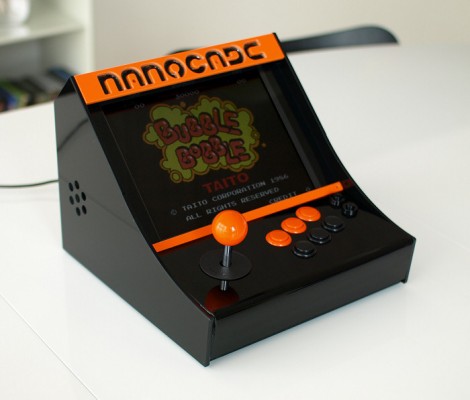
Shiny Acrylic MAME Box

This nice table-top MAME arcade features a two-toned acrylic case. [Fabricio] spent about 50-60 hours designing the 29 parts that make up the enclosure. Originally the sides were meant to be orange but one design flaw meant he had to have them recut and only had enough black stock for the job. But we like it this way. The screen is just over ten inches and inside you’ll find a mini-ITX motherboard with a gig of ram and a solid state drive. The seven page build log features some bending, glue, screwing, and wiring that really show off the depth of the project.

This results a very modern look but if you like your retro gaming to appear vintage we recommend this cocktail cabinet.
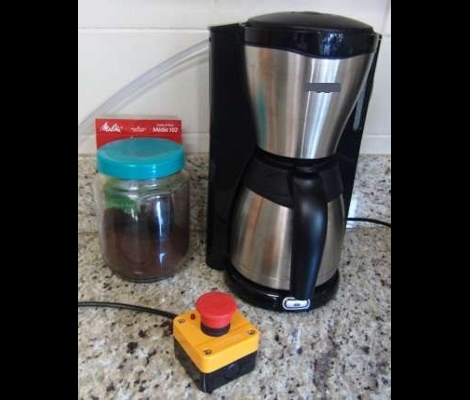
Water-dosing Coffee Maker Augmentation

[Arthur Benemann] has the worst part of making coffee licked. His add-on for a drip coffee maker fills the water to the proper levels for you, saving the drudgery of rinsing out the carafe, carefully filling it to the appropriate level, then pouring it into the machine without getting everything wet. This isn’t limited to a full pot, but is user selectable by the cup based on how many times in a row you hit that red button. One LED gives feedback on the selected mode, then the device uses a washing machine water valve to turn on the tap for the appropriate amount of time. We’re a little bit leery of connecting homebrew hardware to the water pipes in our house. Make sure you’ve done a good job of debugging so that an infinite loop doesn’t flood you out.

Rotary Dial Authenticates Sudo Commands

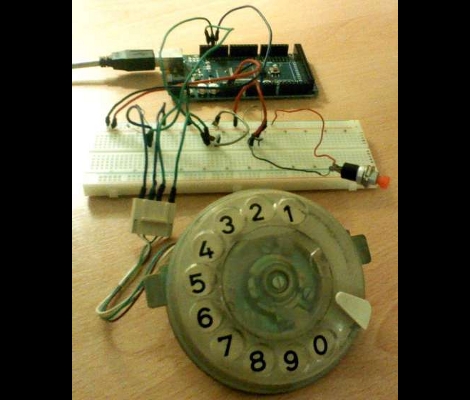
[W1ndman] won’t win any security awards for this build, but it’s an interesting idea. On many Linux-based systems commands can be run with administrator privileges by prefacing them with the keyword ‘sudo’. Normally you’d be asked for a password but [W1ndman] used the Pluggable Authentication Modules (PAM) to authenticate via his own shell script. That script checks a code from this rotary dial for authentication. An Arduino takes care of listening for each digit that is entered and then sends the code via USB for comparison with a stored file. We’re not sure if that stored code is in a plain file or is otherwise protected, but at the very least this prevents you from using ‘sudo’ willy-nilly.

Fermentation Temperature Control

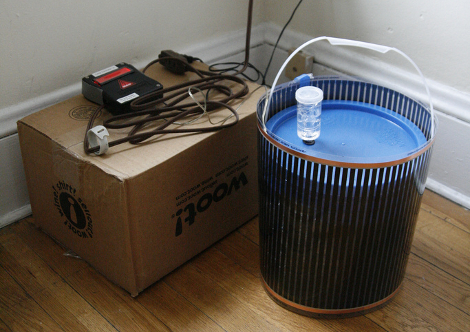
[Eric Friedrich] needed to keep the wort warm enough for yeast to ferment it into beer. To solve the problem he built his own fermentation temperature controler using a microprocessor to turn some heating tape on and off. You can see the heating element embracing that diminutive fermentation bucket in the picture above. This was originally meant for keeping reptile cages warm. It costs less than similar products meant just for brewing and works well for [Eric]. A DS1820 temperature sensor gives feedback to an ATmega168 which then uses a relay to switch the heat on and off. The target temperature can be changed using a potentiometer on the board, with the setting displayed on a character LCD screen on the project enclosure.

Nook Color Gets Honeycomb

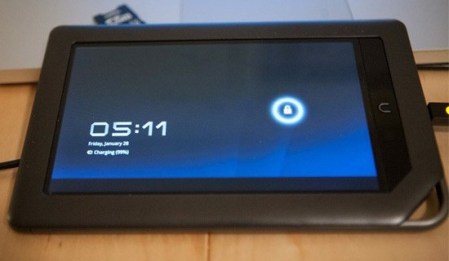
[Deeper-blue] has released all the files necessary to get Android honeycomb working on your nook color. We had a chance to play with the nook color for a bit, but ours was only on Android version 2.1. It seems like they’ve come a long way with the capabilities of this simple e-reader since then.  While he’s built out the majority of the features, it is still lacking some fundamentals, like sound. As you can see in the video after the break, the scrolling is a tiny bit choppy but the applications themselves see to be fairly snappy. We can’t wait to see how this works after a little improvement.


Continue reading “Nook Color Gets Honeycomb”

Disco Death Ray

Wielding the power to melt glass or instantly ignite most day to day materials can be intoxicating pretty fun. With a little math, a lot of patience, and 5,800  1cm pieces of mirror, this build requires welding glasses just to look at the 1-2cm focal point. With an idea rumored to date back to Archimedes, this more portable parabolic project is perfect for your home burning needs. Unfortunately, this setup seems to have burnt itself to death at some point, though that makes room for version two, which will reportedly bump the mirror count to 32,000 or so.

There are plenty of other ways to make a death ray out there as well, including using lasers or lenses. Think you have a better tool of destruction? Be sure to tell us about it.

Keepon Finally Gets A Cheaper Version

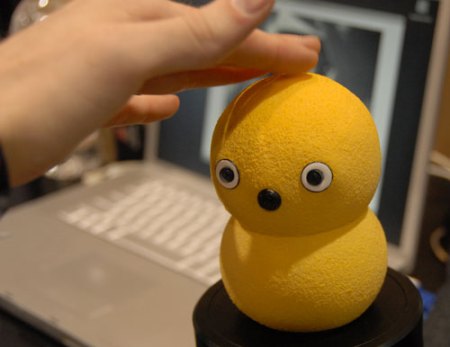
Keepon, the adorable bot meant to help autistic kids with its jovial dance moves, seems to finally be getting a cheaper version. The original cost $30,000 and did a lot more than dance. Actually, we got to play with it a little bit at CES a couple years ago. The commercial version most likely won’t have facial recognition or any of the other fancy features of the first one, but we hope it can dance well.  We’ve actually seen a couple home made versions and we’re hoping that the new one has some major hacking potential. The temptation to have one of these cute little bots around is made even stronger when you see that some of the money is going back into autism research.