Nokia LCD, Nunchuck, And MSP430 Join Forces

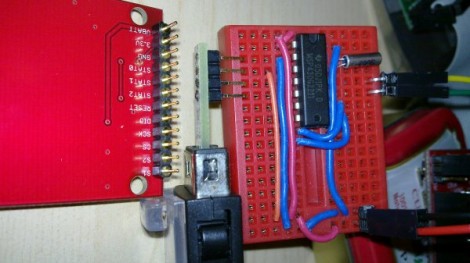
[JB’s] driving a Nokia 6100 LCD using an MSP430 with input from a Wii Nunchuck. He’s using the G2211 microprocessor that came with the Launchpad, and developing his code with MSP-GCC. As you can see in the video after the break, this works but there’s some room for improvement. That’s being said, he is bumping up against the code memory limit, with just around 500 bytes left to work with. The LCD screen is SPI and currently it’s hogging the pins that are used for the hardware i2c. Since he needs an i2c bus to talk to the nunchuck he had to go with software i2c which explains part of his program memory troubles.

We’re in no way experts on this, but it seems like he could save space (and improve the input responsiveness) by rewriting his LCD drivers in order to remap the pins. Then again, it might just be better to move up to a larger MSP430. If you’ve got some advice, make sure to share it by leaving a comment.

Continue reading “Nokia LCD, Nunchuck, And MSP430 Join Forces”
TI Evalbot Development Under Linux

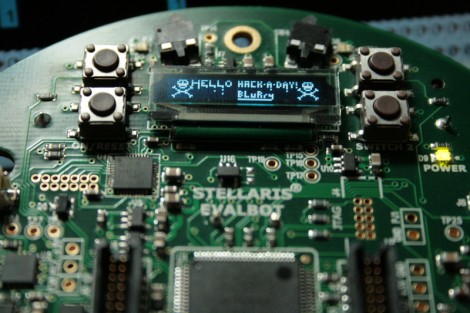
We have some beefs about how Texas Instruments does things, the biggest of which is their lack of support for development under Linux operating systems. But if they build it, someone will try to get Linux involved in one form or another. This time around, [BLuRry] put together a guide to developing for the Evalbot under Linux. He got a shove in the right direction from the code package that went along with that nunchuck-controlled Evalbot. Picking apart that example to the bare essentials he wrote up the process of setting up the cross-compiling toolchain in a virtual machine so as not to clutter your system. From there he details how to set up and use Eclipse when starting a new project. What what did he choose for a Hello World experience? Well a plain “Hello World” was first but right on its heels is the “Hello Hack-A-Day” seen above. So if you’ve got one of these on hand get out there and start coding for it.

Emulating Ink Cartridges

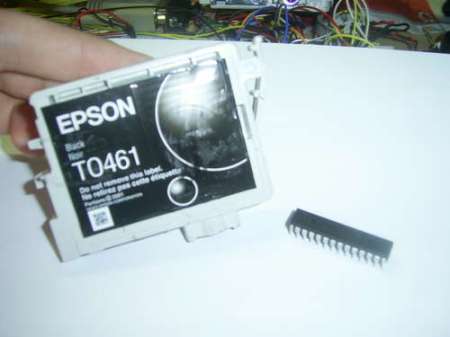
[Smartie_on_computer] wanted to do some experimenting with an epson printer.  After getting a somewhat disassembled one, the first step was to simply get it running. Unfortunately, one of the ink cartridges was missing and these printers refuse to do pretty much anything without all the cartridges installed.  Rather than go purchase a costly cartridge that they didn’t intend to actually use, [Smartie_on_computer], chose to emulate the cartridge using a microcontroller. After some searching for the protocol used on the cartridge, the info ended up being in the patent. [Smartie_on_computer] now has a functional printer that is destined to be a 3d printer in the near future. You can see a video breakdown after the break.

Continue reading “Emulating Ink Cartridges”

Digital Measuring Tape

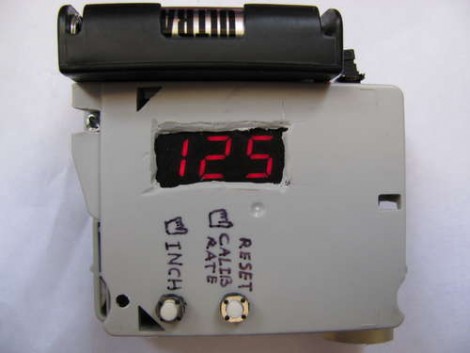
You’ll never come up short with this measuring tape. That’s because there isn’t actually any tape in the device; it measures distance based on the rotation of a wheel. Roll it across the room and you’ll get an accurate measurement of the distance the little bugger traveled. Like the Etch-a-Sketch from Monday this uses the encoder wheel from a mouse as the input. The IR emitter and sensor from the ubiquitous peripheral find a new home on the PCB that hosts the PIC 16F819. It monitors the rotation, turns it into inches, then spits that number out on a 7 segment display. Handy, and cheap!

Bringing An LCD Viewfinder Back To Life

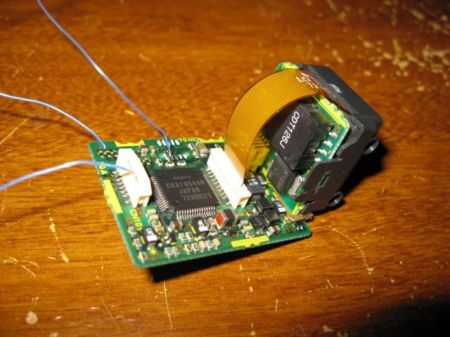
[Foobarbob] posted a pretty simple job of bringing an LCD viewfinder back to life. He doesn’t specify what was wrong, but since he replaced the backlight, we’re guessing that was the main issue.  It was pulled off of a JVC camcorder. The camcorders with LCD viewfinders are getting more and more common at garage sales, so we’re surprised we don’t see more of these used. [Foobarbob] cracked it open, traced out the power lines and replaced the backlight with an LED and a makeshift diffuser made from a bottle cap. His results look great, we could see this being perfect for an HMD, or possibly a home made VR helmet.

Automating Automatic Racing

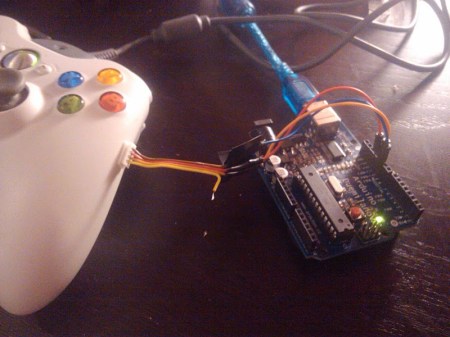
Hackaday forum user [Nikescar] upgraded his XBox360 hard drive. During this upgrade, his Forza 3 game save was lost. He had accumulated millions of in-game dollars and really wanted to get back to where he was. We’re not familiar with the game, but he says that one easy way to make some money is to allow the AI to run races for you while you do other things. Unfortunately, this requries coming back to the system and starting a new race every hour or so. Luckily, [Nikescar] had an arduino lying around doing nothing, so he patched it into the controller and had it carry out a the correct button press sequence on a schedule.  Now his virtual driver makes virtual money while his virtual-person keeps it going. His real person sleeps.

Building Infra Red Light Sources With Regular Lights

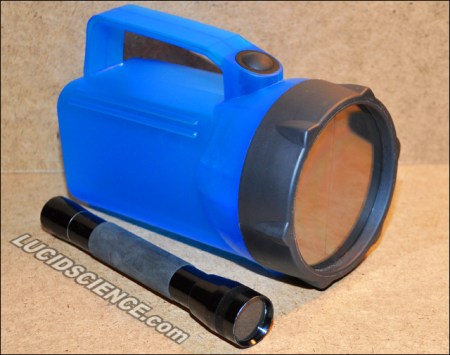
[Oneironaut] sent us another IR hack. This time it is a writeup on the best ways to create IR light sources from regular lights. Since normal flashlight bulbs emit a broad enough spectrum to include visible light and IR light, this basically comes down to filtering. [Oneironaut] explores different light sources and different materials in depth, along with great pictures to show his results. This is a great resource if you’re needing to do some night vision for cheap.