Modchip Hacks PS3 Via USB Port

[youtube=http://www.youtube.com/watch?v=4jOEbZEkp9A]

It’s been a long time coming, but the video above shows a modchip circumventing the PlayStation 3 security by running a game from a hard drive. The sites Ozmodchips.com which sells the modchip, and psx-scene.com which has confirmed them as working are both unstable right now due to heavy traffic. But here’s what we know. The device is called the PS Jailbreak and can be used to dump PS3 games to the hard drive of a PlayStation3 running the most current firmware (3.41). Dumped games can then be played from the hard drive by selecting them from a menu that the modchip spawns. It’ll cost you though. The current preorder price is $169.99 AUD or $147.47 US dollars with a projected delivery date of August 27th.

[Thanks Charlie via Slashdot]
Todays Arduino Moment

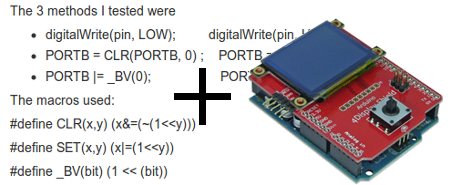
We have gotten a number of Arduino tips in the last couple days, and we thought we would combine them for your convenience. The first tip we received was for some hints provided by [Bill] on some digitalWrite() alternatives. Similar to some previous research we covered, this tip also includes some tips on how to make the direct register writing a little easier by using #define to simplify things. Obviously this wont be as idiot-proof as digitalWrite() is, but we think you can handle it.

Our second tip is for a set of OLED displays from 4dsystems sold as Arduino Shields. They have a couple of different sizes from .96″ to 1.7″, depending on your needs and budget. There is no official display library for them yet, but 4dsystems have been kind enough to provide a few resources to work from. Hopefully we’ll see a few great applications from this, maybe a much bigger pixel Mario? A much smaller Game of Life? Feel free to send us your projects, or leave your ideas in the comments!

Lee Hart’s “Memebership Card”

[youtube=http://www.youtube.com/watch?v=hbsPddZsmVI]

In an act of retro revival, [Lee Hart] has created this “Membership Card“, an altoid tin sized tribute to the 1802 CMOS chip. Made popular in the late 70s in the RCA COSMAC ELF computer, the 1802 stole many a hackers heart. There’s tons of information available if you explore the site, from history to kit building experiences.

[via Retro Thing)

7-segment Sudoku

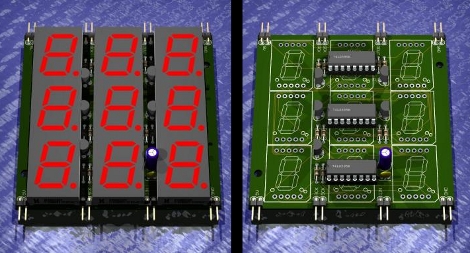
[John Sarik] keeps cranking out new ideas for his digital Sudoku project. This time he’s using 7-segment displays for each digit. The game play works the same as the Nixie Tube version, but this makes things quite a bit easier to build. The board above is one of the nine modules that make up the game. They each use three shift registers to drive the nine 7-segment displays. With the help of five resistors all of the multiplexing is addressed via the serial input on those chips.

Make IPhone A Penetration Testing Tool

[Nicholas Petty] has posted a guide to setting up your iPhone as a penetration tester. You already carry it around with you and, although not too beefy, it does have the hardware you need to get the job done. So if you’re not interested in building a drone or carrying around a boxy access point try this out. The first step is to jailbreak your device and setup OpenSSH so that you can tunnel in for the rest of the setup. From there the rest of the setup is just acquiring build tools and compiling pentesting programs like Aircrack-ng, Ettercap, Nikto2, and the Social Engineering Toolkit. You’ll be up to no good testing your wireless security in no time.

Needs More LEDs, EMSL Biggified Conway’s Game Of Life

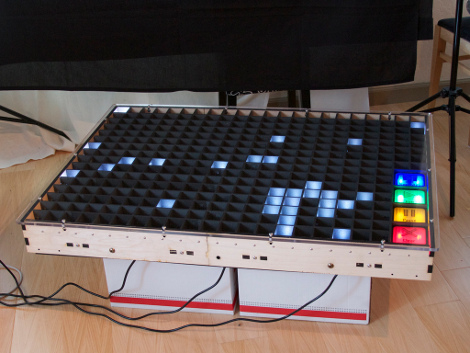
Evil Mad Scientist Laboratories has proven bigger is better with their colossal LED table running Conway’s Game of Life. At the heart of the system is 44 ATmega164Ps controlling 352 LEDs on a 32×44 inch table; and to make it interactive IR LEDs detect the presence of objects.

The display is set up as an exhibit at the San Jose Museum of Art in tribute to [Leo Villareal]. To see a demo, catch a video after the divide.

Related: Colossal LED tables, and Conway’s Game of Life. Why has it taken so long to combine them?

Continue reading “Needs More LEDs, EMSL Biggified Conway’s Game Of Life” →

Drone Cracks WiFi From On High

The WiFi Aerial Surveillance Platform, or WASP for short, is an autonomous drone aircraft that sniffs out WiFi networks. But it packs a much larger punch than that. Built into this US Army surplus target drone you’ll find an ITX form-factor computer with a Via C7 500 MHz processor that is running Backtrack 4, the popular penetration testing Linux suite. But what if you want to do some real heavy lifting that the onboard PC can’t handle quickly? They’ve thought of that too. There’s an integrated 3G modem which allows for control over the Internet and facilitates the outsourcing of load-intensive operations to the cloud. It’s not shooting fireworks from the wings, but this payload has the potential to cause way more trouble.

[Thanks Spore]