PCB Toner Transfer With Dowel

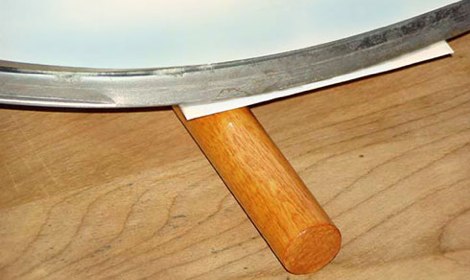
Pulsar Professional FX has a neat tip on their site for getting a really even toner transfer when making your own PCBs. First, the PCB is cut to size, and the paper is tacked to the board. Then, the PCB is placed paper up onto a dowel and rolled back and forth with the iron. Since the board bends slightly over the dowel the toner sticks evenly to the copper. After that, just remove the paper as usual and etch with your preferred method.

The Big Picture: More Robots

big_picture

The Big Picture is Boston.com’s daily news photo blog. Each day they pick a particular story and feature some of the best news photography around. Today they chose robots and have 36 photos highlighting current robot research. This is a followup to a similar post from March. It’s interesting to see all the different forms and tasks robots are taking.

Home Injection Molding

injectionmold

[Kenneth Maxon] is a wizard who only does things one way, beautifully. While out of the average hacker’s production capabilities, his injection molding machine is amazing to behold. The machine has all features a commercial model would. It heats and cools the mold, produces over a ton of pressure to inject plastic with, and ejects parts automatically to name a few.

AVGA: The AVR Based Video Game Platform

avrvideogame

We’ve seen our fair share of AVR projects, but this one’s pretty cool. AVGA is a color video game development platform based on the Atmel AVR family of microcontrollers. As seen in the picture above, one of the AVRs that the project uses is the popular ATMega168. There were several technical hurdles to using the AVRs to run color video games; one of the most difficult problems was figuring out a way to display detailed graphics from AVRs limited onboard RAM. Eventually, the developers figured out a way to display detailed graphics using a TILE-based driver. The TILE driver works by dividing the screen into X and Y coordinates, dividing the graphics into tiles. Then, when a graphic is needed it’s addressed from a reference table that’s stored in the AVR’s onboard RAM, allowing the bitmap graphic to be loaded from a game’s ROM. Currently, the only games available for the platform are a Super Mario clone, a Pacman clone, and a Snake clone. While there are only a few games available, the platform definitely looks promising. If anything, this project serves as a great example for what off the shelf microcontrollers are capable of.

Ecce Robot

[youtube=http://www.youtube.com/watch?v=cI9H4FoA0b4]

According to the video, Ecce Robot is a new paradigm in robotics. We don’t know if that’s true or not, but we really enjoy the drive system. They have mimicked the biological structures in humans using elastic cables and cheap drill motors as muscles. It is intriguing to watch the complexity that even a simple arm lift requires. This does show inefficient this type of set up is, but we still think it is cool. We don’t understand the desire to use cheap drill motors though. Cost aside, the control problem they mention seems like it could be resolved with a little better motor setup. Then again, we’re sure they thought of that. This seems like a perfect time to bring up a common question. Is it worth the inefficiency of trying to mimic our natural biological structures with hobby robotics pieces? What technology would have to be present to make it worth the complexity?

[via Engadget]

Hackit: Ideal Conference Badge?

assembly

In 2006, Defcon 14 premiered a unique electronic badge. All it did was blink, but it raised the bar for what was expected from a hacker conference badge. In 2007, they went from 2 LEDs to 95 in a scrolling marquee. Along with a POV mode, the badge had two capacitive switches to let the user edit the displayed text. Defcon 16’s badge featured an IR transmitter and receiver for transferring files from an SD card. It worked as a TV-B-Gone and had pads to access a USB bootloader. That was the same year that The Last Hope debuted their RFID tracking badges.

This year the official Defcon badge reacted to sound, but they were no longer the only game in town. Ninja Networks brought their 10 character party badges with a built in debugger. The Arduino compatible HackTheBadge 1.0 also made an appearance. With these new entrants into the field, we wondered what you’d want to see in your ideal badge. What badge would you want to see at next year’s Defcon? Leave you comments below and keep in mind that it should be an idea that is easy to cheaply mass produce.

UPDATED: Forgot to mention the Neighborcon 2 badge based on the GoodFET20.

[Photo: Ninja Networks]

Hack A Day Is Hiring


We’ve added a handful of contributors in the last couple months, but we’re still looking for more people to contribute daily posts and help expand the site.

This is a paid, freelancing position that requires professionalism, consistency, and reliability. We want to hear from people that are passionate about software/hardware hacking and growing Hack a Day. To apply, send the following to jobs@hackaday.com

  • A short bio about yourself
  • 3 example daily posts written in the style of Hack a Day
  • 3 software or hardware how-tos you’d like to see. For examples of work we’ve done in the past, look here, here, here, and here.
  • A couple sentences on how you would improve the site either through features or content
  • Any additional reasons why you would make a good fit for Hack a Day

Do not send any attachments. Having your own blog you can show off is a definite plus.

[photo:fbz]