High Altitude Photographic Balloon

[Earl Foster] recently completed his 4th high altitude photographic balloon (HAPB-4) launch. This launch reached a peak altitude of 106,384 feet, and lasted about 3 hours. The final weight of the capsule was 5lb 3-3/8 oz, with all the electronics, GPS, digital camera, and HD video camera. His balloons operate under the exempt rules of FAA Part 101 subpart a governing unmanned balloon flight. This program has been setup to encouraging interest in science, mathematics, and engineering through unmanned ballooning. HAPB-4 uses a Parallax SPIN Stamp microcontroller, this multicore chip offers eight 32-bit processors (cogs) sharing 32kB RAM and ROM. Having eight separate COG’s allows him to log GPS data, control the camera, log and monitor sensors, and control LCD functions simultaneously with minimal hardware. During this flight he did have some equipment failures, but he was still able to capture some nice pictures.
Dell Mini 9 Modification Guide

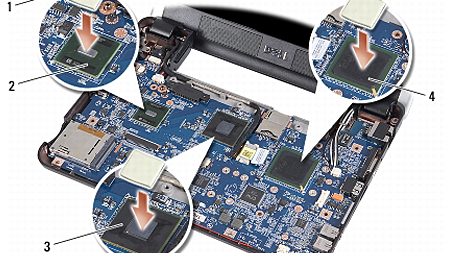
One of the things that made the original Asus Eee PC such a big success was the ability to add almost anything you wanted to it. While this might not have anything to do with Dell releasing a service manual showing you how to disassemble your brand new Mini 9, we’re not gonna fault them for making one available.

The service manuals show the proper way to gain access to the various parts of the Mini 9 right down to the motherboard itself. It’s nice to know that the Mini 9 isn’t locked down where simple things like replacing the RAM or upgrading to a larger SSD won’t void your warranty.

[via jkkmobile]

LCD PIC Graphics Demo

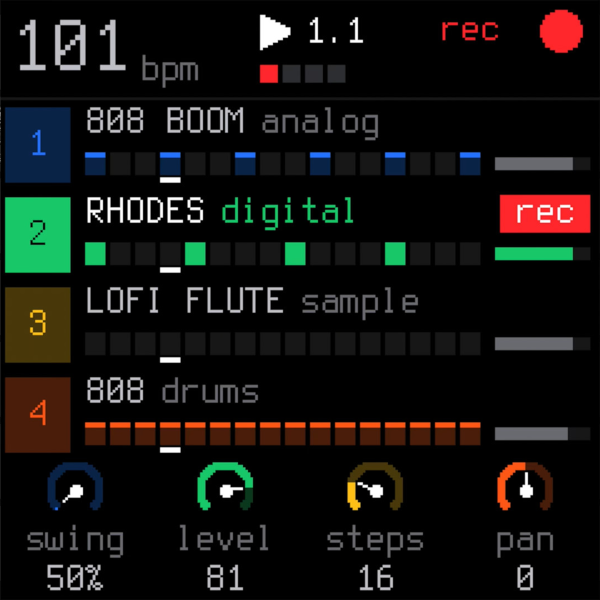
[conville] has been pushing standard HD44780 character displays to the limit. Embedded above is an example spectrum analyzer and text scrolling demo. Below you’ll find a scope demo. Both of these are created using a PIC 16F688 that dynamically rewrites a custom character set to create the animation. You can find the source code on mikrocontroller.net. Continue reading “LCD PIC Graphics Demo” →

The Phone Phreaking Files

[Jason Scott] curated a nice collection of links related to [Phil Lapsley]’s work on phone phreaking. [Lapsley]’s book, The History of Phone Phreaking, will be released in 2009. Meanwhile phone phreak enthusiasts can peruse his site and bone up on some interesting material, including documents that revealed the inner workings of the telephone switchboard(PDF), and the Youth International Party Line (YIPL)/Technological American Party (TAP) FBI files(PDF), which is really intriguing for the various doodles and conversations that were documented. If you have some spare time, we definitely recommend sifting through it.

[via Waxy]

Welcome To The Petacentre

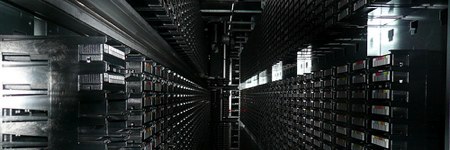
[Cory Doctorow] obtained access to a few data centers that deal in petabyte storage. The demand for data storage and processing doesn’t show any sign of stopping. It’s especially relevant when people need the resources to manage not only things like Google searches, but also email, customer transactions, and in the case of CERN, physics calculations. [Doctorow] drew an interesting conclusion from his experiences with the data centers; any innovation that the petabyte centers work on will eventually drift on down to the ordinary user, in laptop or desktop innovation. The petabyte center is easily duplicated with materials that are available for purchase to the average computer user; the only obstacles are price and space.

[via Boing Boing]

MioPocket 2.0 Release 27

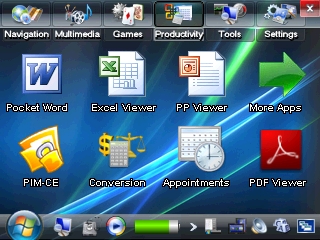
Miopocket Screenshot

GpsPasSion forum member [Ospray] has released a new version of MioPocket. For those of you that don’t know, MioPocket is a great unlock kit for GPS units. It basically unlocks the hidden potential of your GPS so you can access the built-in functionality of a PDA as well as retaining the GPS software. This means you can play music, watch video, play games, read and write office documents, and many other things with the once single-purpose device.

Originally written for Mio brand devices, it has been successfully used on a couple other brands. We’ve seen it on a Navigon 2100 using a modified install. This software can run directly off the SD card, so it can easily be updated or removed.

The fun part is fiddling with the scripts to get the newest releases to work on the Navigon and Magellan devices.