Build Your Own GPS And GLONASS Receiver

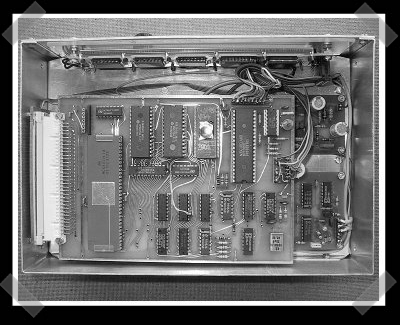
[superlopez] sent in this detailed article (mirrored here and here) which describes how to build a GPS and GLONASS (the Russian version of GPS) receiver. The resulting device is gigantic compared to one of those tiny bluetooth USB GPS units, but the ability to build one’s own receiver is one of those post-apocalyptic skills I sure would like to have. The creator of the article [Matjaz Vidmar] aka [S53MV] also has pages on Packet-Radio (PKT) transceiver improvements (PKT gets my vote for the best post-apocalyptic technology, and the only believable technology featured in the Transformers movie), and a more sophisticated homemade frequency counter than the one featured earlier this summer.

In 2005 we featured a from-scratch GPS receiver as well, thought the project site seems to be down. If your GPS unit just needs a better antenna, check out [Will]’s how-to from last year.
Breathing Walls With Shape Memory Alloy Wire

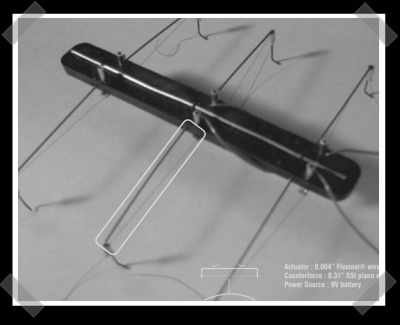
When you need something quietly bending or moving, don’t underestimate SMA’s (or Shape Memory Alloys). The Living Glass project by architects [David Benjamin] and [Soo-in Yang] catalogs an experiment in building interactive, flexible, “breathing”, walls out of SMA wire and microcontrollers. Although they use Basic Stamps, the project could easily be extended to more cost-effective microcontrollers for large surfaces. The project is well documented with videos (AVI) of each prototyping step and even includes the ideas that were ultimately scrapped. Even if you don’t build a wall of interactive gills, this project should give you plenty of ideas for uses of SMA wire embedded in semi-flexible materials.

Interactive Textile Construction

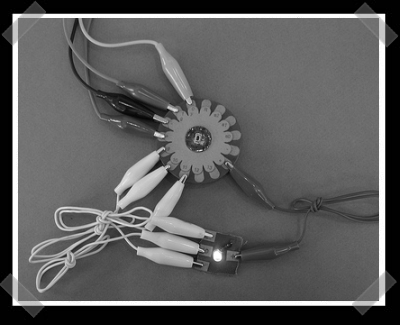
The e-textile construction kit by [Leah Buechley] consists of stitch-able sensors and microcontrollers. Stitch-able refers to the fact that these parts can be sewn with a needle and thread into wearable clothing or other fabric-based housings. A paper (PDF) on the e-textile construction kit project contains the first version. The second version of the e-textile construction kit, the LilyPad Arduino, is available this month through SparkFun’s site. Especially interesting are her instructions for modifying the clock speed on the Arduino to make it suitable for battery powered wearables.

We’ve covered [Leah Buechley]’s work twice in 2005 for her wearable led matrix work.

Update: [Leah] updated her site since we posted this and added this new how-to.

OpenBeacon: Active RFID Platform

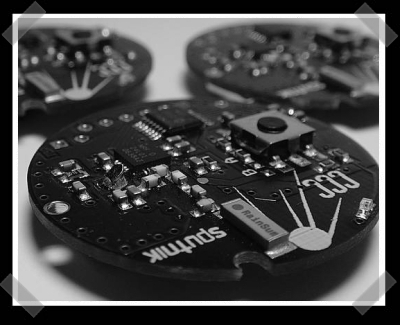
The OpenBeacon project is an open source hardware and software active RFID device. OpenBeacon tags consist of 2.4GHz transceivers and a PIC16F684. One use of the project was to create CCC Sputnik to show the downsides to information culled using data mining from large tracking systems. People who chose to participate and wear the Sputnik tags did so voluntarily to create a database of material for further study. The hardware schematics (PDF) for the first version tags as well as the firmware for all versions has been released. Further creative uses of the OpenBeacon project are strongly encouraged.

As a reminder, the 24C3, the 24th Chaos Communication Congress, call for participation ends on October 12th. The theme this year encompasses all hardware projects and more specifically, steampunk themed submissions. Check out the CCC events blog for more information.

Read Every Bit On A DVD

If you are curious about reading all the bits on a DVD, [tmbinc] has devised a hardware hack that uses a Pioneer DVD drive with leads soldered onto it and a Cypress FX2 microcontroller board to grab the flow of bits and push them over USB2.0. My favorite part of this tutorial is when you slow the spinning DVD down very slightly with your finger with a scope hooked up over what you believe to be the raw data stream from the disk. If the data rate slows when you physically slow down the disk, you probably are grabbing data from the correct pin. [tmbinc] even put together a software tool to process the resulting raw DVD data.

Automatic JTAG Pinout Detection

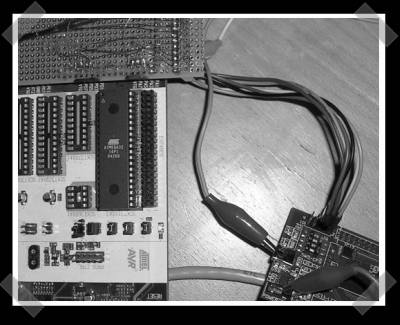
Figuring out the JTAG pinout on a device turns out to be the most time consuming hardware portion of many hacks. [hunz] started a project called JTAG Finder to automatically detect the JTAG pinouts on arbitrary devices using an 8bit AVR ATmega16/32L microcontroller. Check out the slides (PDF) from the talk as they break down how one finds JTAG ports on an arbitrary device, with or without a pinout detection tool. [hunz] is looking for people to pick up the project where he left off.

Once you determine the correct pinout, you will need a JTAG cable: there are two main types, buffered and unbuffered, both of which I have soldered up and tested from these circuit diagrams (image of completed buffered cable here). The software most hardware people use today are the openwince JTAG Tools. To get the JTAG Tools to compile, grab the latest source directly from their CVS repository.

The last time we featured JTAG was with regards to Linksys devices, but the tools listed above can be applied to any device with JTAG.

Fnordlicht: RGB Mixing LED Light


While [Will] goes and hides in his offshore datashelter, Hack-A-Day is happy to welcome back our veteran foreign correspondent [fbz]. She promises future posts will have far less ‘German by example’. -[Eliot]

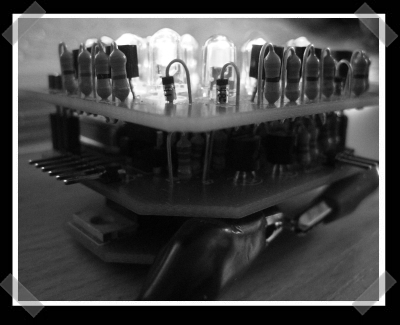
The Fnordlicht is a color mixing LED platform with free hardware schematics and open source firmware initially started by [fd0]. The system is dynamically controllable (via RS-485) and can also work as a standalone with pre-loaded color mixing. I have one of these soldered up and working at home; the circuits come in a stack of three boards with an optional serial level shifter board add-on. There are project pages in German about the Fnordlicht as well, which include some photos of the first prototype. Full kits (“Fnordlicht Bausatz” means “Fnordlicht kit”) and printed circuit boards (“Fnordlicht Platinensatz ohne Bauteile” means “Fnordlicht circuit board set without parts”) can be purchased from their shop, but be sure to ask them first about shipping prices to your location. I love this project, I fire it up and stick it in a corner of my hack room to add some color-changing atmosphere.

A while ago [Eliot] covered the MoMolight, a color changing led project controlled by the colors playing on your monitor.