This excellent content from the Hackaday writing crew highlights recurring topics and popular series like Linux-Fu, 3D-Printering, Hackaday Links, This Week in Security, Inputs of Interest, Profiles in Science, Retrotechtacular, Ask Hackaday, Teardowns, Reviews, and many more.
In the fall of 1957, it seemed as though the United States’ space program would never get off the ground. The USSR had launched Sputnik in October, and this cemented their place in history as the first nation in space. If that weren’t bad enough, they put Sputnik 2 into orbit a month later.
By Christmas, things looked even worse. The US had twice tried to launch Navy-designed Vanguard rockets, and both were spectacular failures. It was time to use their ace in the hole: the Redstone rocket, a direct descendant of the V-2s designed during WWII. The only problem was the propellant. It would never get the payload into orbit as-is.
The US Army awarded a contract to North American Aviation (NAA) to find a propellant that would do the job. But there was a catch: it was too late to make any changes to the engine’s design, so they had to work with big limitations. Oh, and the Army needed it two days before yesterday.
The Army sent a Colonel to NAA to deliver the contract, and to personally insist that they put their very best man on the job. And they did. What the Army didn’t count on was that NAA’s best man was actually a woman with no college degree.
We all have awesome hardware projects to show off. Great photos of them are how you unlock the excitement others see in your work. Whether you’re using a DSLR or the camera in your smartphone, it’s not difficult to capture an amazing picture of the project you pour so much effort into. We want you to unleash your photography skills for the Beautiful Hardware contest. Show us your epic hardware photos and win prizes.
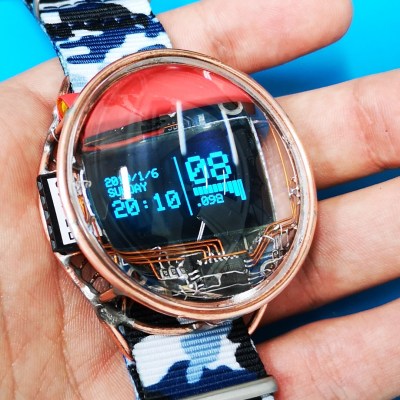
The Skeleton Watch by Mile is a great example of superb photography. Excellent framing, focus, and color make it great.
The only real barrier between us and superb hardware photos is having an eye for framing your shots, and a few simple tricks to get everything else right. Think about good lighting, shooting with an interesting background, framing off to the side and at an angle (as just one example) for more interest, and spending a few moments with an image editor to complement what the camera captured. With this contest, we want you to take those tricks for a spin on your own workbench.
Lee Wilkins put together a simple guide to get you going with spectacular hardware photography. From the basics of photography and the tricks used for making product hype photos, to capturing great images of LEDs and getting the colors just right, this is a comprehensive quickstart. There’s even a collection of great examples to strive for.
There are three top prizes of $100 cash waiting for you. Just start a new project on Hackaday.io and upload the finest photos you can take of some fun hardware. In the left sidebar of that project use the “Submit project to…” menu to enter it in the Beautiful Hardware contest.
There’s been a lot of news lately about the Long Now Foundation and Jeff Bezos spending $42 million or so on a giant mechanical clock that is supposed to run for 10,000 years. We aren’t sure we really agree that it is truly a 10,000 year clock because it draws energy — in part — from people visiting it. As far as we can tell, inventor Danny Hills has made the clock to hoard energy from several sources and occasionally chime when it has enough energy, so we aren’t sure how it truly sustains itself. However, it did lead us to an interesting question: how could you design something that really worked for 10,000 years?
In our continuing series of, ‘point and laugh at this guy’, I present a Kickstarter for the, “World’s First Patented Unhackable Computer Ever”. It’s also a real web site and there’s even a patent (US 10,061,923, not showing up on Google Patents for some reason), and a real product: you can get an unhackable laptop, and you can get it in either space gray or gold finish. This gets fun when you actually dig into the patent; it appears this guy invented protected memory, with one section of memory dedicated to the OS, and another dedicated to the browser. This is a valid, live patent, by the way.
The 2019 New York Maker Faire is off. Yeah, it says it’s still going to happen on the website, but trust me, it’s off, and you can call the New York Hall of Science to confirm that for yourself. Maker Media died recently, and there will be no more ‘Flagship’ Maker Faires. That doesn’t mean the ‘mini’ and ‘featured’ Maker Faires are dead, though: the ‘Maker Faire’ trademark is simply licensed out to those organizers. In the next few weeks, there is going to be a (mini) Maker Faire in Coeur d’Alene, Idaho, Gilroy, California, Edmonton, Alberta, Kingsport Tennessee, and a big ‘ol one in Detroit. This raises an interesting question: where is the money for the licensing going? I’m sure some Mini Maker Faire organizers are reading this; have your checks been cashed? What is the communication with Maker Media like?
Just because you can, doesn’t mean you should. It’s valuable words of wisdom like that and can apply to many things. Commenting on blog posts, for example. Yes, you can throw sticks at a wasp’s nest, that doesn’t mean you should. Yes, you can 3D print Heely adapters for your shoes, but it doesn’t mean you should. It does look dope, though and you’re automatically a thousand times cooler than everyone else.
The C64 Mini is a pocket-sized Linux device with an HDMI port meant to play C64 games. There were high hopes when the C64 Mini was announced, but it turned out the keyboard isn’t actually a mini keyboard. Now someone had the good sense to combine one of these ‘smartphone chips running an emulator in a retro case’ products with a full-sized keyboard. The C64 will be around by Christmas, and yeah, it has a full working keyboard.
For whatever you have built, there is someone who has done it longer, and knows more about it. That is the basic premise of expertise, and for this year’s Hackaday Prize we’re rolling out with a series of mentor sessions. These are master classes that match up experts in product development with the people behind the projects in the Hackaday Prize. We’ve been recording all of these so everyone can benefit from the advice, guidance, and mentorship presented in these fantastic recordings.
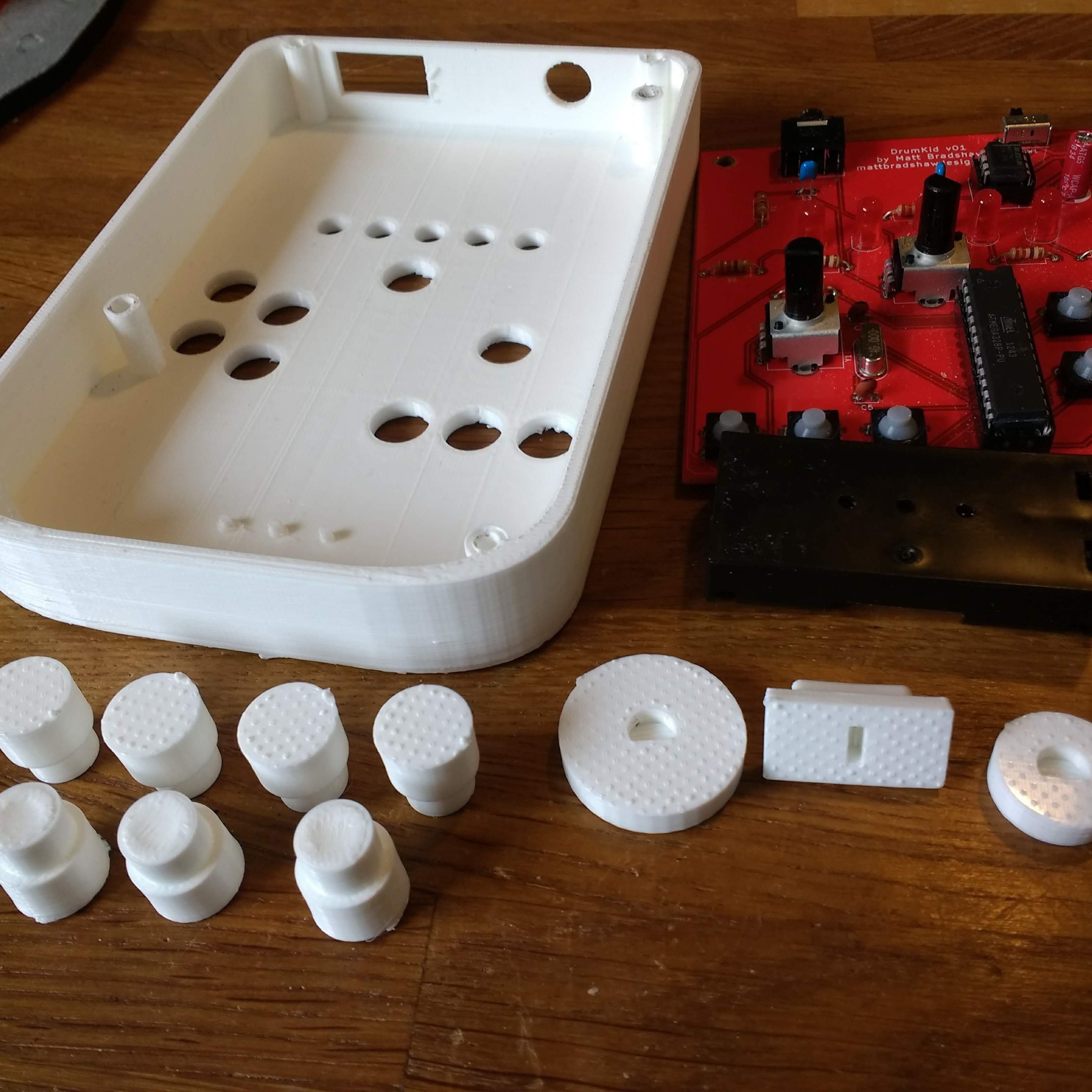
The DrumKid, a random drum synthesizer
Mitch Altman is someone who should be very familiar to all Hackaday readers. He’s the inventor of the TV-B-Gone, that wonderful device that simultaneously turns you into a hero and a villain in any sports bar. He’s the President and CEO of Cornfield Electronics and co-founder of the Noisebridge hackerspace in San Francisco. Mitch is an author and teacher, and seems to be at just about every conference and workshop around the world promoting hackerspaces, Open Source hardware, and mentorship where ever he goes.
The first hardware creator to meet Mitch is Matt Bradshaw, creator of the DrumKid. This is a pocket-sized drum machine that is heavily inspired by Teenage Engineering’s Pocket Operators. Years ago, Matt built a web app that generated drum tracks, and this project is simply taking that idea into the physical realm. For Mitch, this is well-tread territory; years ago, Mitch also built an Arduino-based synth, and for the most part, both Mitch and Matt’s projects are remarkably similar. There were, however, some improvements to be made with Matt’s circuit. The power supply was two AAA batteries and a switching regulator that introduced noise and added cost. Mitch suggested that the ATMega328 could be run directly from three AA batteries reducing the cost and the noise.
eAgrar, a system for monitoring conditions of plants and weather conditions at agricultural fields
The next project up for review is eAgrar, a system for monitoring conditions of plants and the weather in fields. This project comes from Slaven Damjanovic and Marko Čalić. They’ve been developing this device for almost two years building the entire system around the ATMega328. Slaven ran into a problem with this chip in that he didn’t have enough inputs and outputs. The firmware is already written, but thanks to the Arduino IDE, there’s no reason to keep using that ATMega. Mitch suggested using an STM32 or another ARM core. That’s what he’s using for one of his synthesizer projects, and you get more than enough inputs and outputs for the same price as an ATMega.
Finally, we come to Joseph, with his project, the Pilates Reformer. A Pilates Reformer is a bit of exercise equipment that’s only made by three companies and everything costs thousands of dollars. Joseph is bringing that cost down, but there’s a problem: how do you build a hundred or two hundred of these? Mitch suggested simply finding another manufacturer that could build this design, and not necessarily one that builds Pilates machines. This makes sense — if all you’re doing is cutting and connecting structural beams, any manufacturer can do this, that’s what manufacturers do.
This is the third in our series of Hackaday Prize mentor sessions this year, and we have far more we need to edit, and many more we need to record. That doesn’t mean you can’t get help from experts from your prize entry; we’re looking for people who need help with their project and we have a lot of mentors willing to dispense advice. If you’re interested in having someone look over your shoulder, sign up your entry.
Hackaday Editors Mike Szczys and Elliot Williams dish their favorite hacks from the past week. Seems like everyone is trying to mill their own Mac Pro grille and we love seeing how they go about it. Elliot is gaga over a quintet of power latching circuits, Mike goes crazy for a dough sheeter project, and we dig through the news behind methane on Mars, the Raspberry Pi 4 release, and spoofing Presidential text alerts with SDR. If you like mini-keyboards you need to see the Fauxberry, Artificial Intelligence became an art critic this week, and poorly-lit rooms have been solved with a massive mirror system.
Take a look at the links below if you want to follow along, and as always tell us what you think about this episode in the comments!
And note: next week we’re taking a break to go outside and shoot off some 4th of July fireworks, so there will be no podcast and you’ve got some time to listen through our 24 previous episodes for anything you’ve missed. You’ll hear from us again the week after.
Take a look at the links below if you want to follow along, and as always, tell us what you think about this episode in the comments!