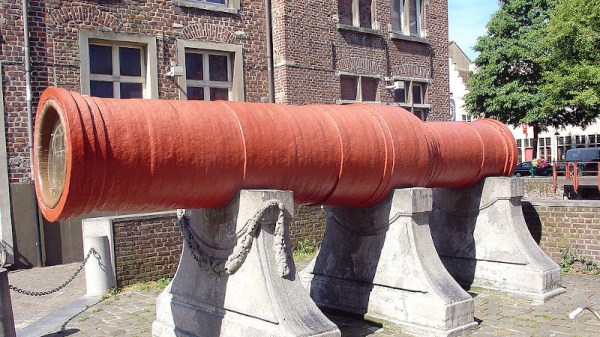
For a happy weekend away in early September, I joined a few of my continental friends for the NewLine event organised by Hackerspace Gent in Belgium. You may have seen some of the resulting write-ups here, and for me the trip is as memorable for the relaxing weekend break it gave me in a mediaeval city as it is for the content of the talks and demonstrations. We took full advantage of the warm weather to have some meals out on café terraces, and it was on the way to one of them that my interest was captured by something unexpected. There at the end of the street was a cannon, not the normal-size cannon you’ll see tastefully arranged around historical military sites the world over, but a truly massive weapon. I had stumbled upon Dulle Griet, one of very few surviving super-sized 15th century siege cannons. It even had a familiar feel to it, being a sister to the very similar Mons Meg at Edinburgh Castle in Scotland.
History616 Articles
The Incredible Tech Of The Vacuum-Seal Flask
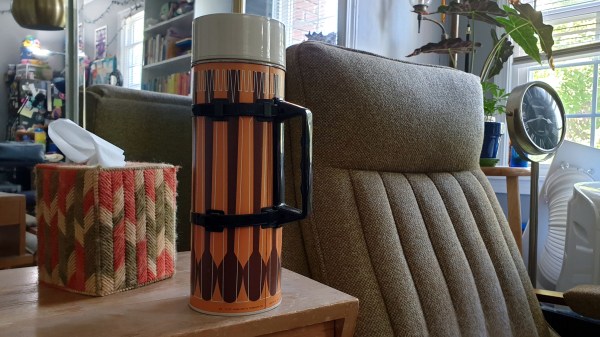
I recently started using a 50-year-old vacuum-seal flask that belonged to my Grandpa so that I don’t have to leave the dungeon as often to procure more caffeine. Besides looking totally awesome on my side desk, this thing still works like new, at least as far as I can tell — it’s older than I am.

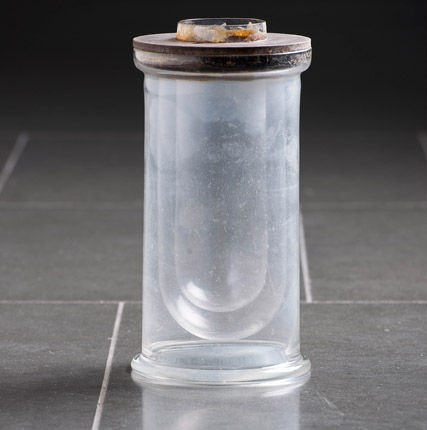
Of course this got me to wondering how exactly vacuum-seal flasks, better known in household circles as Thermoses work, and how they were invented. The vacuum-seal flask is surprisingly old technology. It was first invented by Scottish chemist Sir James Dewar and presented to the Royal Institute in 1892. Six years later, he would be the first person to liquefy hydrogen and is considered a founding father of cryogenics. Continue reading “The Incredible Tech Of The Vacuum-Seal Flask”
Yes, You Can Put Out A Burning Gas Well With A Nuclear Bomb
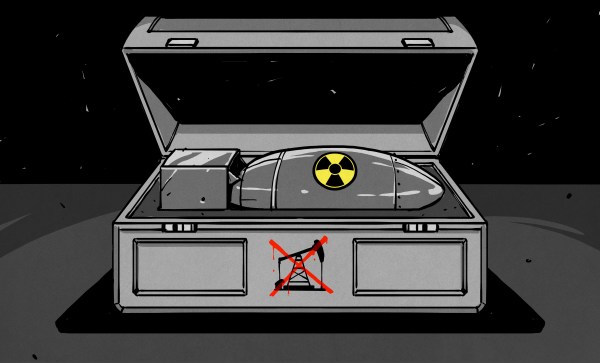
Nuclear explosives were first developed as weapons of war in the pitched environment of World War II. However, after the war had passed, thoughts turned to alternative uses for this new powerful technology. Scientists and engineers alike dreamed up wild schemes to dig new canals or blast humans into space with the mighty power of the atom.
Few of these ever came to pass, with radiological concerns being the most common reason why. However, the Soviet Union did in fact manage to put nuclear explosions to good use for civilian ends. One of the first examples was using a nuke to plug an out-of-control gas well in the mid 1960s.
Continue reading “Yes, You Can Put Out A Burning Gas Well With A Nuclear Bomb”
101 Uses For An Everready — Flashlight History
For some reason, I’m always interested in why things are called what they are. For example, I’ve been compelled in the past to research what Absorbine Senior is. Not that it is important, but Absorbine Junior is a smaller size of horse liniment, so you don’t have to buy a drum of ordinary Absorbine just to rub down your sore thumb. So it isn’t a mystery that I would find myself musing over why we call a flashlight a flashlight.
You don’t think of a flashlight as flashing, under normal circumstances, at least. Turns out the answer lies in the history of the device, its poor beginnings, and our willingness to treat imperfect components as though they were much better than they are. That last point, by the way, still has ramifications today, so even if you aren’t a fan of flashlight history, keep reading.
Portable Lighting
Ever since people learned to use fire, there’s been a desire for portable lighting. Torches, candles, and even oil lamps have all had their place. But burning things for light in small cramped spaces leaves a lot to be desired. It isn’t surprising that people quickly turned to electricity when that seemed to be feasible.
Continue reading “101 Uses For An Everready — Flashlight History”
Gopher, The Competing Standard To WWW In The ’90s Is Still Worth Checking Out
The 30th anniversary of the World Wide Web passed earlier this year. Naturally, this milestone was met with truckloads of nerdy fanfare and pining for those simpler times. In three decades, the Web has evolved from a promising niche experiment to being an irreplaceable component of global discourse. For all its many faults, the Web has become all but essential for billions around the world, and isn’t going anywhere soon.
As the mainstream media lauded the immense success for the Web, another Internet information system also celebrated thirty years – Gopher. A forgotten heavyweight of the early Internet, the popularity of Gopher plummeted during the late 90s, and nearly disappeared entirely. Thankfully, like its plucky namesake, Gopher continued to tunnel across the Internet well into the 21st century, supported by a passionate community and with an increasing number of servers coming online.
Continue reading “Gopher, The Competing Standard To WWW In The ’90s Is Still Worth Checking Out”
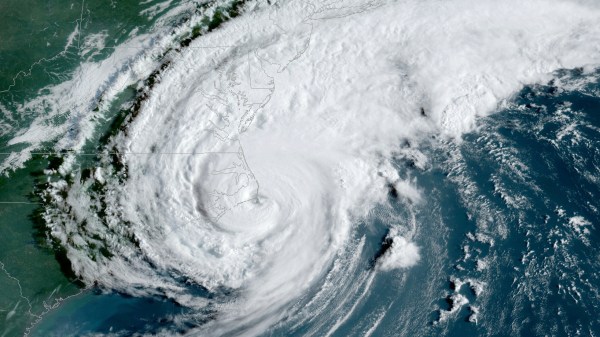
Hurricane Hunting From Outer Space
If you live in the right part of the world, you spend a lot of the year worried about hurricanes or — technically — tropical cyclones. These storms carry an amazing amount of power and can change your life. However, we are relatively spoiled these days compared to the past. It is hard to imagine, but there was a time when a hurricane’s arrival was something of a mystery. Sure, ships would report what they encountered, but finding exact data about a hurricane was a bit hit or miss. We often talk about space technology making life better. Weather forecasting — especially for tropical storms — is one place where money spent in space has made life much better on Earth.
The lack of data about storms can be fatal. The Great Galveston hurricane of 1900 took around 12,000 lives. It might have had a better outcome, but forecasters missed where the storm was heading, announcing that it would go from Cuba to Florida which was just totally wrong. Not that a forecaster couldn’t make a mistake today, but with aircraft and satellite coverage, you’d know very quickly that the prediction was wrong and you’d sound the alarm. In truth, the prediction models have become very good over the years, so the chances of this happening today are virtually nil in any event. But being able to precisely locate and track storms helps reduce the impact of the storm and also feeds data into the models that makes them even more accurate for the future.
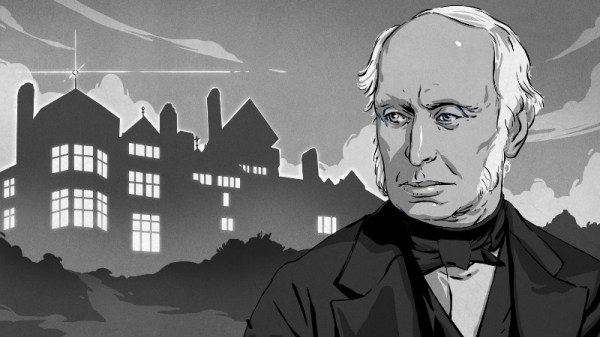
Historical Hackers: The Hacker Of Cragside, Circa 1870
Imagine visiting a home that was off the grid, using hydroelectric power to run lights, a dishwasher, a vacuum cleaner, and a washing machine. There’s a system for watering the plants and an intercom between rooms. Not really a big deal, right? This is the twenty first century, after all.

But then imagine you’ve exited your time machine to find this house not in the present day, but in the year 1870. Suddenly things become quite a bit more impressive, and it is all thanks to a British electrical hacker named William Armstrong who built a house known as Cragside. Even if you’ve never been to Northumberland, Cragside might look familiar. It’s appeared in several TV shows, but — perhaps most notably — played the part of Lockwood Manor in the movie Jurassic World: Fallen Kingdom.
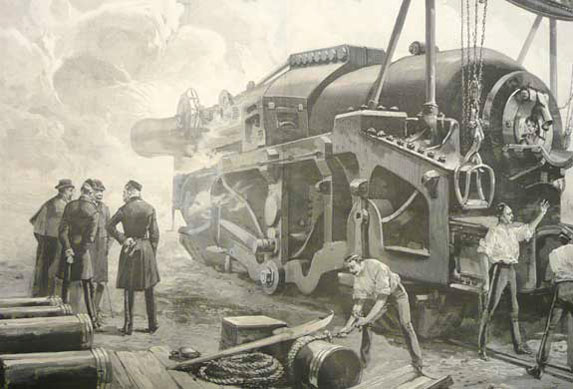
Armstrong was a lawyer by training but dabbled in science including hydraulics and electricity — a hot topic in the early 1800s. He finally abandoned his law practice to form W. G. Armstrong and Company, known for producing Armstrong guns, which were breech-loading artillery pieces ranging from 2.5 inch bores up to 7 inches. By 1859, he was knighted and became the principal supplier of armaments to both the Army and the Navy.
Continue reading “Historical Hackers: The Hacker Of Cragside, Circa 1870”