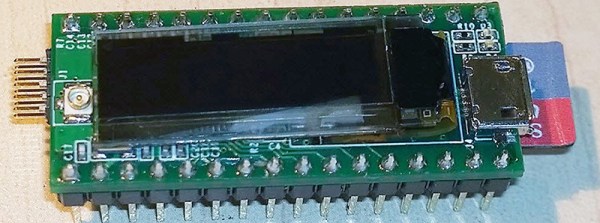
Putting an full microcontroller platform in a DIP format is nothing new – the Teensy does it, the Arduino nano does it, and a dozen other boards do it. [Alex] and [Alexey] aren’t content with just a simple microcontroller breakout board so they’re adding a radio, an OLED, an SD card reader, and even more RAM to the basic Arduino platform, all in a small, easy to use package.
The DIPDuino, as [Alex] and [Alexy] are calling it features an ATmega1284 processor. To this, they’re adding a 128×32 pixel OLED, a micro SD slot, and 1Mbit of SRAM. The microcontroller is a variant that includes a 2.4 GHz Zigbee radio that allows for wireless connections to other DIPDuinos.
What are [Alex] and [Alexey] going to do with their cool little board? They’re planning on using the OLED for a watch, improve their software so the firmware can be updated from the SD card, and one of [Alex]’s friends wants to build a RepRap controller with one of these. There’s a lot of potential with this board, and we’re interested in seeing where the guys take the project from here.