Primer On Servos Hits All The Basics

Servos are pretty basic fare for the seasoned hacker. But everyone has to start somewhere, and there’s sure to be someone who’ll benefit from this primer on servo internals. Who knows – maybe even the old hands will pick up something from a fresh perspective.

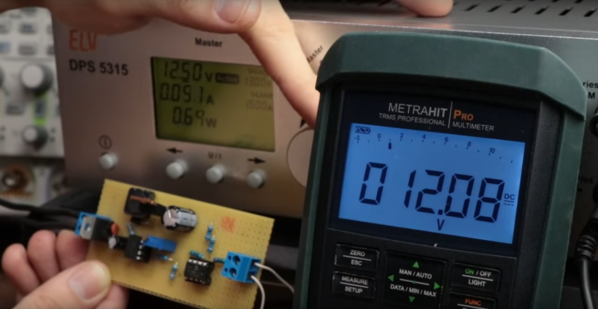
[GreatScott!] has been building a comprehensive library of basic electronics videos over the last few years that covers everything from using a multimeter to programming an Arduino. The last two installments delve into the electromechanical realm with a treatment of stepper motors along with the servo video below. He covers the essentials of the modern RC-type servo in a clear and engaging style that makes it easy for the newbie to understand how a PWM signal can translate into positional changes over a 180° sweep. He shows how to control a servo directly with an Arduino, with bonus points for including a simple 555-based controller circuit too. A quick look at the mods needed to convert any servo to continuous rotation wraps up the video.

If [GreatScott!]’s video whets your appetite for more, be sure to check out [Richard Baguley]’s deeper dive into servos. And when you’re ready to put your new-found knowledge into practice, maybe a nice project would be to convert a hobby servo into a linear actuator.

Continue reading “Primer On Servos Hits All The Basics”

Vintage Radio Transformed Into Custom PC Case

We see a lot of old radio restoration projects around here, and we have to admit to having mixed emotions about some of them. It seems a shame to go through the effort to lovingly restore a vintage Art Deco case only to stuff it with a Raspberry Pi and Bluetooth. Seems like if you’re going to restore a radio, go all the way and bring the original electronics back to life. But this radio “restoration” avoids that issue altogether by cleverly concealing a full PC build in a vintage radio case.

u3nwbpdClearly a labor of love, [SolomonZaraa]’s two-year effort guts the radio but still manages to pay homage to the original beauty of the 1939 vintage Philco 39-80 “tombstone” portable AM radio. The first design decision was to retask the original tuning dial as an analog thermometer using an Arduino and a servo. Then a new back was added with an extension for the motherboard and PSU, a drive cage was added, and a surprise slot for the DVD drive was built into the speaker grille. Nice brass trim and a good refinishing of the case resulted in an impressive and unexpected presentation.

You don’t have to go far in the Hackaday Wayback machine to find an antique radio with updated audio, but we’re pretty sure this is the first antique radio PC case mod we’ve seen. Nicely done, [Solomon]!

[via r/DIY]

Sometimes Square Is Square: Basic Machinist Skills

Is it possible to make an entertaining video about turning a cube of aluminum into a slightly cubier cube? As it turns out, yes it is, and you might even learn something along with the sight gags and inside jokes if you watch [This Old Tony] cover the basics of squaring up stock.

Whether you’re working in wood or metal, starting with faces that are flat, smooth and perpendicular is the key to quality results. [Tony] is primarily a machinist, so he works with a nice billet of aluminum and goes through some of the fundamental skills every metalworker needs to know. When you’re working down to the thousandths of an inch it’s easy to foul up, and tricks such as using a ball bearing between the vise jaws and the stock to prevent canting are critical skills. He covers tramming the mill, selecting which faces to cut and in which order, and ways to check your work on the surface plate and make any corrections if and when things go wrong. Look for cameos by fellow machinist [Abom79] and [Stefan Gotteswinter], including one with [Stefan] in a very compromising position. But a ball in a vise and no [AvE] reference? C’mon!

[Tony] makes a potentially tedious subject pretty entertaining by keeping things light, and we appreciate both the humor and attention to detail. He’s turned out some great videos that we’ve covered before, like making your own springs or a shop-built boring head, and his stuff is really worth checking out.

Continue reading “Sometimes Square Is Square: Basic Machinist Skills”

Making A Cassette Mass Storage Interface

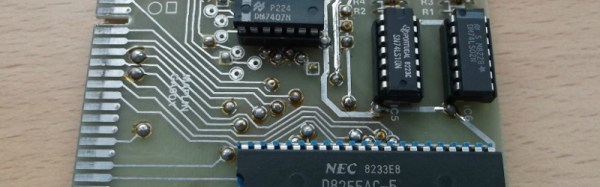
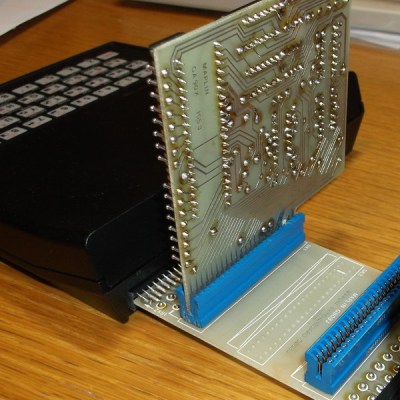
If you are of the generation who were lucky enough to use the first 8-bit home computers in your youth, you will be familiar with their use of cassette tapes as mass storage. Serial data would be converted to a sequence of tones which could then be recorded using a standard domestic cassette recorder, this recording could then be played back into the machine’s decoder and loaded into memory as a complete piece of software. Larger programs could take a while to load, but though it was rather clunky it was a masterful piece of making the best of what was at hand.

[Mike Kohn] was working with some microcontroller infra-red communication projects when he saw that the same techniques could be used to produce a tape interface like those on the home computers of old.

Over the years he has returned to the project a couple of times, and his original Atmel processor has been supplanted by a W65C265SXB development board based on the 16-bit derivative of the 6502. This made generating the tones as straightforward using his processor’s built-in tone generator, but decoding still presented a challenge. His earlier attempts used an LM2917 frequency to voltage converter to decode tones to logic levels, but on further consideration he decided to move to the LM567 tone decoder. This chip is designed specifically for an on-off logic output rather than the 2917’s analogue voltage output.

His recording device was originally a hi-fi separate cassette deck after experimenting with microcassettes, but eventually he used a data recorder designed for a Radio Shack TRS-80. All his code can be found in his GitHub repository.

It’s probably true to say that [Mike] has made a better cassette interface than the one you could have found on your home computer back in the day. We’ve featured a few data cassette hacks over the years, including this Commodore tape deck with an LED counter, and a tape deck emulator capable of holding an entire software archive.

3D Print An Enigma Machine That’s Close To The Real Thing

The Enigma machine as used by the German military during World War Two exerts a curious fascination among our community of hardware hackers and makers. Perhaps it is the mechanical complexity of the machine itself, or maybe the tale of how its encoded messages were decrypted by Allied codebreakers that contributes to this interest, but whatever it is we’ve seen a succession of Enigma-related projects over the years that shows no sign of abating.

The latest Enigma project to come our way is a particularly nice one from a group of first year students at CentraleSupélec Rennes, in Northwestern France. Their Réplique Enigma is a fully mechanical Enigma replica using 3D printing techniques, and unlike so many replicas which use modern electronics it has a set of rotors just like those you would have found in the original. The rotors themselves have a 3D-printed plastic shell which houses brass contacts and the associated writing, while the keyboard and lamp board are both made from plywood. Rather than trying to replicate the original switches from the keyboard they are using modern microswitches, however the keys themselves are upright posts that resemble the original. An AZERTY layout may not have been present on the real Enigma machines, but lends a pleasing twist to the build.

It’s worth browsing all the pages for this build, as the front page does not necessarily capture the whole build. The rotors set this Enigma apart from many of the replicas we’ve featured in the past, so you may find it interesting to take a look and make a few comparisons.

Dumb Terminals And Raspberry Pis

Back in the old days, the cool kids didn’t have an Apple II or a Trash-80. The cool kids had jobs, and those jobs had Vaxxen all over the place. The usual way of working with a Vax would have been a terminal, a VT220 at least, or in the case of [Sudos]’ experiments with a Raspberry Pi, A DEC VT510, a single session, text only serial terminal.

Usually, when we see a ‘new hardware stuffed into old tech’ project like this, the idea is simply to find a use for the old hardware. That makes sense; a dumb terminal from the late 90s should be a bit rarer than a Raspberry Pi Zero. This is not the case for [Sudos]’s build. He recently came across a few Raspberry Pi Zeros at Microcenter, and looking for a use for them, he decided to turn a serial terminal into a Real Unix System™.

As you would expect from a serial terminal, connecting a Raspberry Pi and putting some awesome character graphics on the screen is as simple as a Max3232 board picked up from eBay, a WiFi dongle, and an Ethernet adapter. Connect the Pi to the terminal with a serial adapter cable, and you’re off to the races.

While the VT510 serial terminal is just about the end of the line as far as dedicated terminals go, there are classier options. The VT100 terminal, older than most of the Hackaday readership, features a port on its gigantic board, meant to connect to whatever weirdness was coming out of Maynard in the late 70s. You can attach a BeagleBone to this connector, making for a very slick stealth mod.

Teardown A Classic : Tektronix P6042 Current Probe

[Paul Rako]’s teardown of his treasured P6042 current probe shows why Tektronix commands so much respect among the old hats of the electronics world.

Built in 1969, the P6042 is pretty sparse transistor-wise when compared a modern sensor. The user would clip the current probe, permanently attached to the case since the circuit was tuned for each one, over a wire and view the change in volts on an oscilloscope. When the voltage division on the oscilloscope was set properly the current in a circuit could be easily seen.

The teardown is of a working unit so it’s not completely disassembled, but it also sits as a nice guide on refurbishing your own P6043, if you manage to snag one from somewhere. Aside from capacitors and oxidized switch contacts there’s not much that can go wrong with this one.

As for how it compares, the linear power supply, analog circuit design, and general excellent engineering has the P6042 coming in with a cleaner signal than some newer models. Not bad for a relic! Do any of you have a favorite old bit of measurement kit?