It Happened At Supercon: Six Days Of Fun In A Three Day Con

A weekend for people who love hardware, by people who love hardware. It’s a simple recipe and it makes a delicious event that we call the Hackaday Superconference. If you made it to Pasadena last weekend, I’m sure going back to work on Monday was difficult after three days of far too little sleep and way too much fun. (It was for me.) If you didn’t make it to the con, set a reminder for July 1st to start watching for next year’s early bird tickets. Don’t believe me? Okay, let’s step through the hype of a weekend we’ll all remember.

Check out the recap video above and then join me after the break for a photo-heavy expose of the weekend’s highlights.

Continue reading “It Happened At Supercon: Six Days Of Fun In A Three Day Con”

Supercon Badge Hackers Racing The Clock

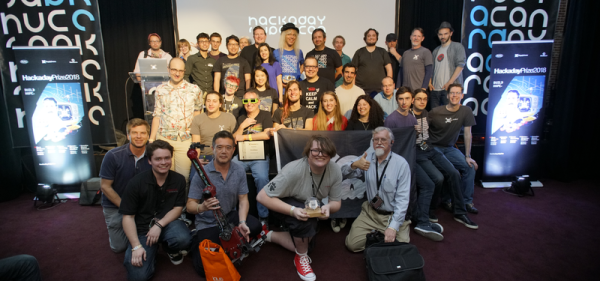
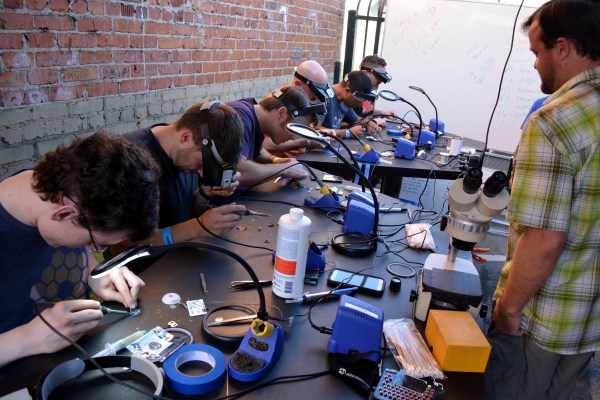
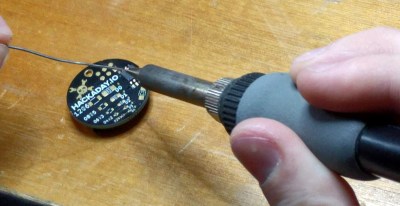
At the end of Hackaday Superconference weekend, we hold a badge hacking ceremony on the main stage where anyone who has done anything with their badge is invited to come on stage and show off their work. Yes, even if it’s just a blinking LED! It was a tremendous pleasure to see not only people taking us at our word and presented blinking LEDs, but that the community in the room welcomed these inductees to hardware hacking with cheers. Before the ceremony, though, there was a lot of frantic work by badge hackers armed with soldering irons and fueled by caffeine. It’s always amazing how much people can accomplish in a single focused weekend.

Continue reading “Supercon Badge Hackers Racing The Clock”

Green LED Means GO For Supercon Badge Hacking

In addition to great speakers and enlightening workshops at Supercon, we have an area set aside for attendees to hack on their conference badges. There is no prerequisite beyond having a badge and a willingness to get hands-on. From hardware beginners to professional embedded system developers, we welcome all skill levels!

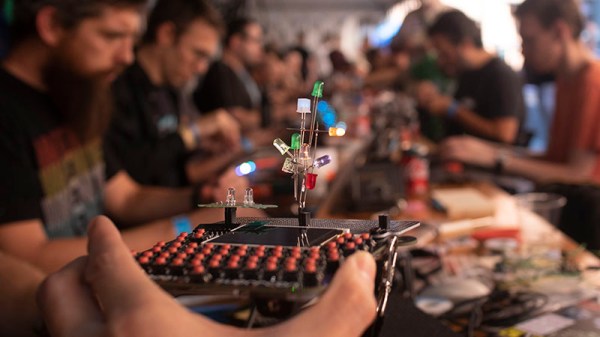
The image above is a free-form LED light sculpture by [4C1dBurn], who had just learned to solder and this is how a new skill was put into practice. In the background is the badge hacking arena: 7 tables set up in a row with 6 seats per table. The doors opened at 9AM and almost all the seats were filled by 9:30AM. There’s a constant flow as people leave to attend a talk or workshop, and others arrive to fill the vacancy.

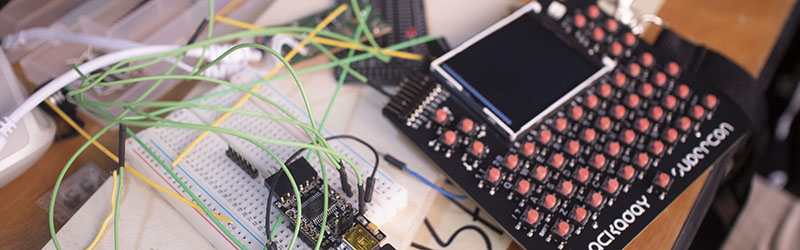
In our hardware hacking overview, we shared an example of an LED array controlled by badge using shift registers. Several badge hackers built on top of this idea. [X] is making a version for surface mount LEDs, and [macegr]’s variant incorporated an USB-to-serial adapter on board to reduce wire clutter. He calls it a “quality of life improvement” and we think it’s brilliant.

Any reduction in wire clutter can only help with the many glorious explosions of wires scattered about. This particular example is a work-in-progress by [carfucar] turning a badge into wireless remote for a large array of WS2812B LED strips.

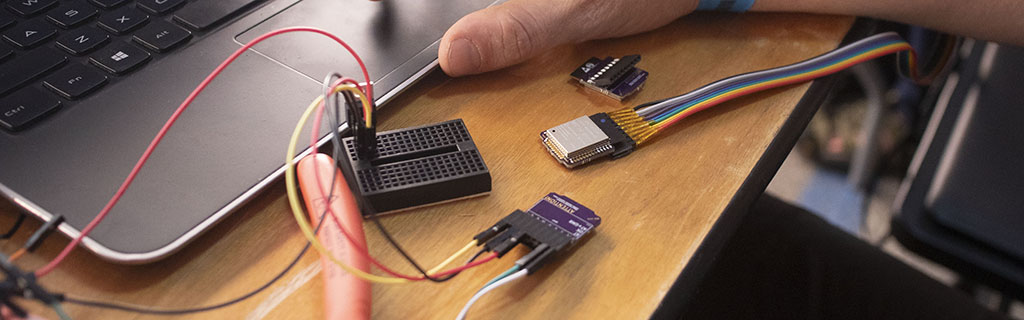
Heeding our call to action in the hardware hacking overview, there are at least two efforts underway to add wireless communication capability to the badge. [Preston] is making good progress teaching a badge to talk to an AVR-IoT module. [morgan] and [Ben] are building a mesh network using ESP32s. If it gets up and running, they’ve brought a bunch of ESP32s to add more nodes to their network.

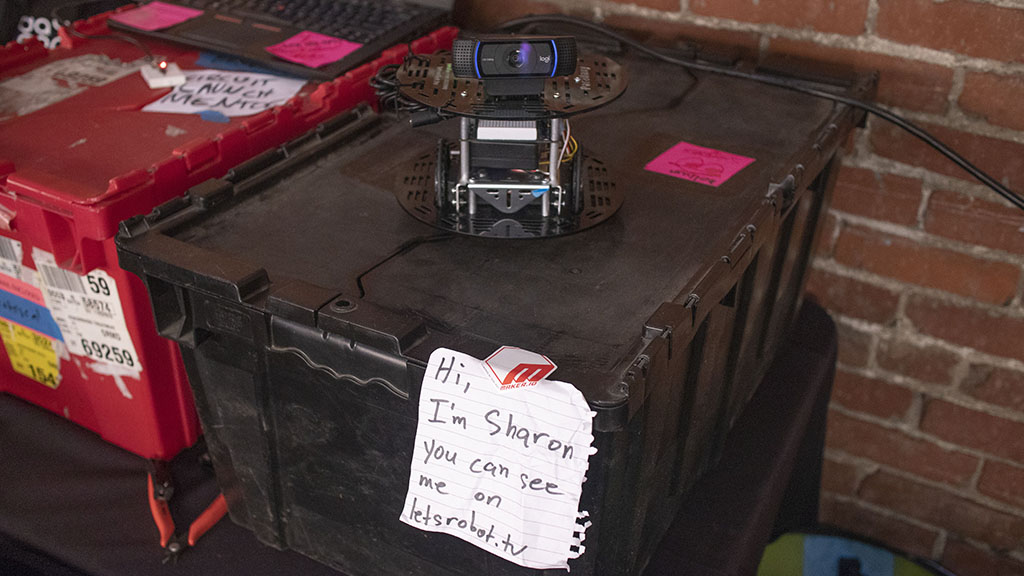
For the talks currently on stage, go to the Supercon event page and click “Livestream” in the upper right corner for the official live stream. Badge hacking will continue all through Supercon, parts of which will be visible through unofficial livestream of badge hacking from attendees like [X]’s robot [Sharon].

Dexter Robotic Arm Wins The 2018 Hackaday Prize

Dexter, an open-source, high-precision, trainable robotic arm has just been named the Grand Prize winner of the 2018 Hackaday Prize. The award for claiming the top place in this nine-month global engineering initiative is $50,000. Four other top winners were also named during this evening’s Hackaday Prize Ceremony, held during the Hackaday Superconference in Pasadena, California.

This year’s Hackaday Prize featured challenges with five different themes. Entrants were asked to show their greatest Open Hardware Design, to build a Robotics Module, to design a Power Harvesting Module, to envision a Human Computer Interface, or to invent a new Musical Instrument. Out of 100 finalists, the top five are covered below. Over $200,000 in cash prizes have been distributed as part of this year’s initiative where thousands of hardware hackers, makers and artists compete to build a better future.
Dexter: High Precision Robotic Arm

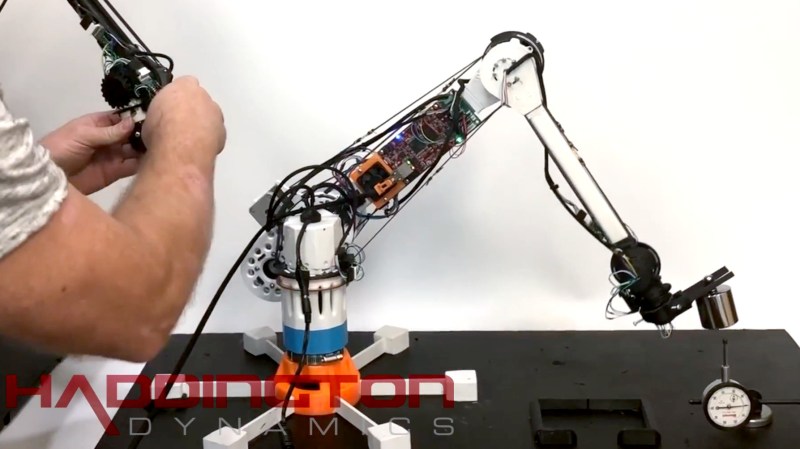
Dexter is the Grand Prize winner of the 2018 Hackaday Prize. This remarkable robotic arm design brings many aspects of high-end automation to an open source design which you can utilize and adapt for your own needs. In addition to impressive precision, the design is trainable — you can move the joints of the arm and record the motion for playback.

The image here shows position data from one arm being moved by a human, controlling another arm in real time. Each joint utilizes a clever encoder design made up of a wheel with openings for UV sensors. Sensing is more than merely “on/off”. It tracks the change in light intensity through each opening for even greater granularity. The parallel nature of an FPGA is used to process this positioning data in real time.
Hack a $35 Wearable to Build Mental Health Devices

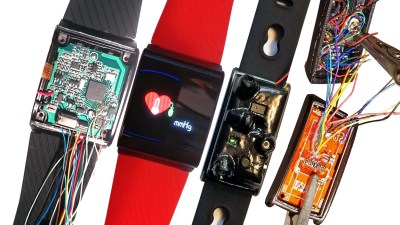
Manufacturing custom electronics is a tricky, costly, and time-consuming process. What if you could sidestep most of that by starting with a powerful, proven consumer good that is modified to your specifications? This project takes existing fitness trackers and customizes the hardware and software to become sensor suites for mental health research. Dig into this one and see how they can help patients become aware of unconscious behaviors (like trichotillomania which is compulsive hair pulling) and change them over time.

Portal Point Generator

This project focuses on an alternative power source for times when traditional infrastructure is not functioning or simply not available. You may be familiar with generators made using DC motors. The Portal Point Generator replicates that simplicity, but goes beyond with instructions for building the generator itself for far greater efficiency. A winding jig is used to make the coils which are placed inside of the 3D printed generator parts along with permanent magnets to complete the build. Here you can see it in testing as a wind generator in Antarctica, but it is easily adapted to other applications like using water wheels.
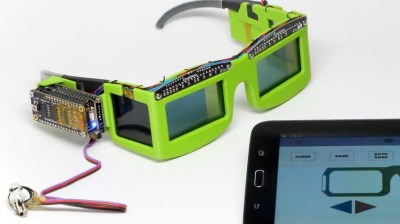
EmotiGlass

There is a body of research that suggest a link between cardiac cycle and anxiety-producing visuals; you may have a different emotional reaction to the things you see based on what part of a heartbeat is occurring when your brain process information from your eyes. This could have profound implications in areas like PTSD research. EmotiGlass uses LCD screens to selectively block the wearer’s vision. This can be synchronized with heat beat, avoiding the instant where a negative emotional response is most likely. Think of them as 3D shutter glasses for mental health research.
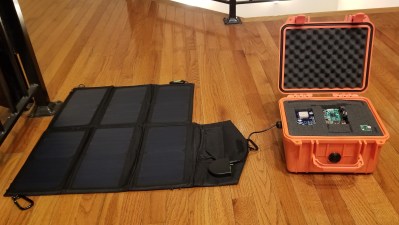
PR-Holonet: Disaster Area Emergency Comms

Recovering from natural disasters is an enormous challenge. The infrastructure that supports the community is no longer in place and traditional communications simply cease to exist. PR-Holonet was inspired by the recovery process after hurricanes in Puerto Rico. It leverages the availability of commercial electronics, solar power sources, and enclosures to build a communications system that can be deployed and operated without the need for specialized training. Once in place, local devices using WiFi can utilize text-based communications transferred via satellite.

Congratulations to all who entered the 2018 Hackaday Prize. Taking time to apply your skill and experience to making the world better is a noble pursuit. It doesn’t end with the awarding of a prize. We have the ability to change lives by supporting one another, improving on great ideas, and sharing the calling to Build Something that Matters.

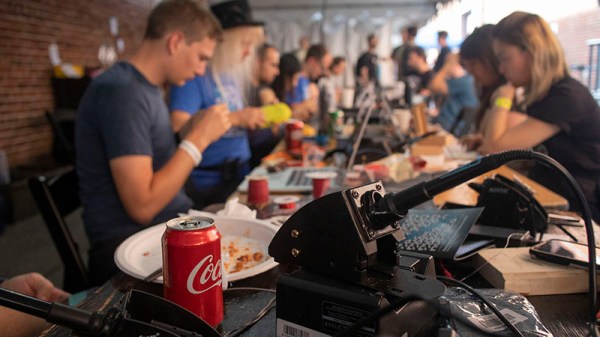
Competitive Soldering Gets Heated At Hackaday Superconference

The Hackaday Superconference is in full swing, and in addition to the greatest hardware hackers, a great gathering of tinkerers, awesome talks, badge hacking, and so much more, we’ve also got competitive soldering. This year, we’re making soldering competitive with the SMD Solder Challenge. It began Friday morning as hackers go heat to head, hand soldering frustratingly tiny parts.

The rules are simple: you’re given a light, a magnifying glass, some solder, wick, flux, and the standard Hakko soldering iron (with the standard tip). The task is to solder up our own special version of the SMD Challenge Kit from MakersBox that includes an SOIC8 ATtiny85 to drive LED/resistor pairs in 1206, 0805, 0603, 0402, and 0201 packages. Scoring is based on time, completion, functionality, neatness, and solder joint quality. May the steadiest hands and sharpest eyes win.

Already, we’ve gone through a few heats of the SMD Soldering Challenge where six hackers sit down, are given five minutes of inspection time, and then whip out their irons. All of this is run by our very own [Al Williams], who serves as the ultimate arbiter of what good soldering is. It’s an amazing competition, and if you don’t think 0201 packages are hand-solderable, you haven’t seen the attendees at the Hackaday Supercon. The top times, by the way, are between 20-30 minutes to complete the entire challenge, with [Sprite_tm] currently at the top of the leaderboard.

You can check out all the talks from the Hackaday Superconference over on our live stream, where we’ll (eventually) be announcing the winners of the SMD Soldering Challenge and the winners of the badge hacking competition later on. Don’t miss the announcement of the winner of the 2018 Hackaday Prize later on this evening!

Livestream The Hackaday Superconference

[youtube=https://www.youtube.com/watch?v=4WxPGLsdbB8&w=560&h=315]

The Hackaday Superconference is happening right now and you can join in on the Livestream. Talks begin at 10 am Pacific time on Saturday and Sunday.

The live stream covers one of two stages at the ultimate hardware conference. Topics focus on hardware creation, ranging from silicon chip fabrication, drop-in circuit designs, firmware frameworks, and 3D printing orbital rockets, to abusing printer cartridges, placing circuits on odd substrates, lighter-than-air electronics, and better techniques for building tech in garments, jewelry, props, and other wearables. Saturday evening you can watch as the Hackaday Prize is awarded live on stage, and Sunday afternoon’s festivities show off hardware and software skills with the badge hacking presentations.

There is so much more going on at Supercon besides the talks. The hacker village began Friday morning and continues through the weekend as badge hacking, the SMD soldering challenge, and other shenanigans continue. Get the inside scoop on those happenings by joining the live chat and following Hackaday on social media with #Supercon.

Corporate Badgelife: Oracle’s Code Card

We tend to think of elaborate electronic conference badges as something limited to the hacker scene, but it looks like the badgelife movement is starting to hit the big time. Now even the “big boys” are getting into the act, and pretty soon you won’t be able to go to a stuffy professional conference without seeing a sea of RGB LEDs firing off. We’ll let the good readers of Hackaday determine if this means it’s officially post-cool or not.

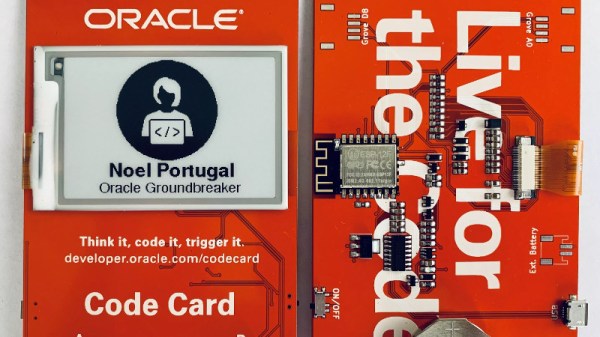
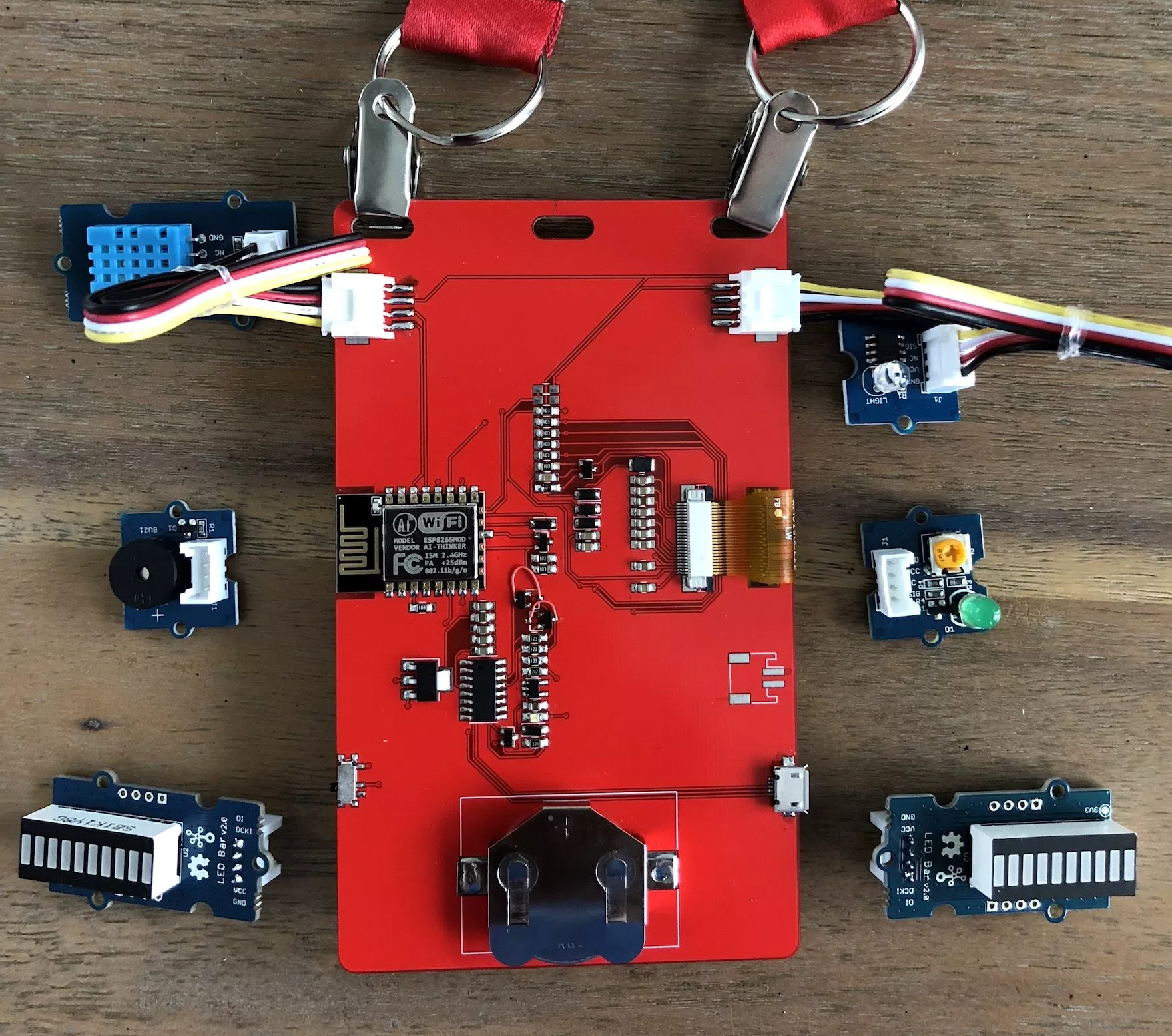
[Noel Portugal] writes in to tell us about how he created the “Code Card” during his tenure with the Oracle Groundbreakers Team. Featuring an ESP8266 and an e-ink screen, the Code Card serves not only as swanky way of identifying yourself, but as a real-world demonstration of physical devices pulling content from Oracle’s Cloud. Gotta keep those corporate overlords happy.

The Code Card is a fairly simple piece of hardware as far as badges go these days, but then the goal was never to be flashy. It does feature dual four-pin Grove System connectors on the backside though, so you can plug in additional sensors and gadgets for the customary badge hacking sessions.

To maximize runtime on the rechargeable coin cell battery, the Code Card only turns on the ESP after the user has pressed one of the buttons on the front. Once the ESP has finished performing whatever task the user requested, its powered back off completely rather than put into standby. Combined with the e-ink screen, power consumption while the device isn’t actively updating the display or pulling down new content is negligible.

[Noel] really went all-out on the software side, going as far as developing a web application which let conference attendees configure their Code Cards from their smartphones. Different functions could be assigned to short and long presses on the badge’s two buttons, and users could even select icons for the various functions from a list of images included in the firmware. A feature where attendees could upload their own images didn’t make the cut, but that surely won’t stop people from hacking around in the published Arduino source code and figuring out how to do it manually.

If you think the Code Card looks a bit familiar, it’s perhaps because it was designed in conjunction with Squarofumi, creators of the Badgy. So even if you aren’t hitting up any of Oracle’s upcoming conferences, you’re not completely out of luck if you want an e-ink badge to play with.