How To Stay Grounded When You Have Zero Potential

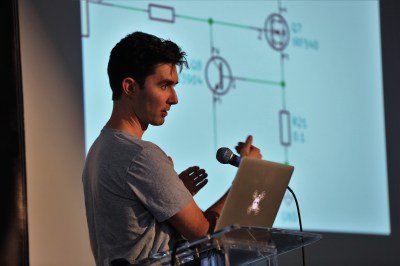
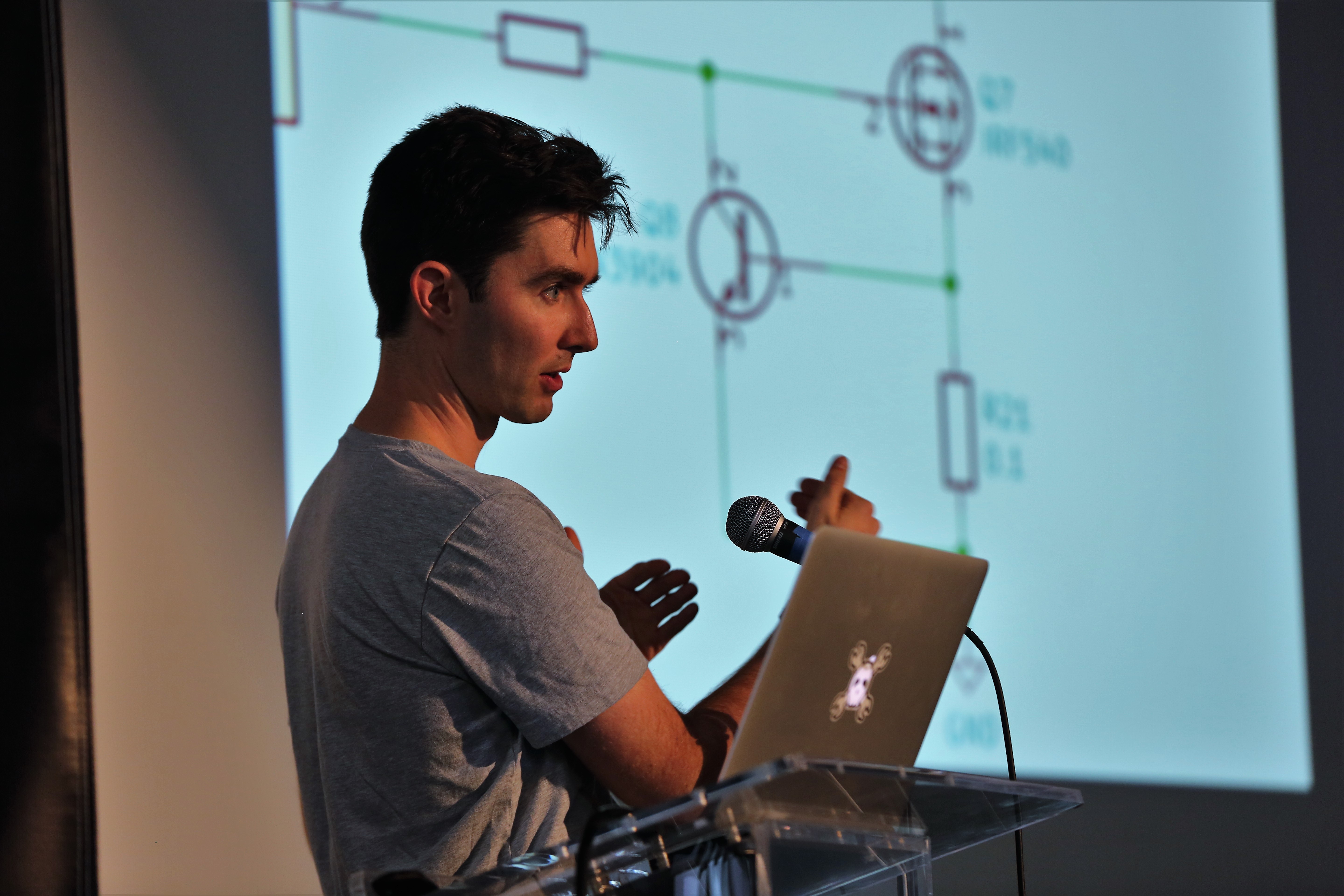
Ground is an interesting topic when it comes to engineering. Either it’s the reference level for a digital circuit (not necessarily at zero volts, either), or it’s the return path for current, or it’s the metal chassis, which shouldn’t be the return path for current or else something’s terribly broken. Erika Earl’s talk at this year’s Hackaday Superconference is all about ground.

The first type of ground to talk about is the ground in your outlets and walls. The AC safety ground is the third pin on your plug that should be attached to the chassis of your washer/dryer on one end, and somehow connected to the neutral wire somewhere near your breaker box. The theory of this being if a conductor touches the chassis of a lamp or appliance, all the current will go along that ground bus saving you from electrocution. It should also trip the circuit breaker.

But really we’re rarely dealing with mains power around here. When it comes to electronic design, we’re mostly dealing with analog grounds and digital grounds in circuits. Sometimes these are the same, sometimes they’re not, but they’re both usually referenced to 0 Volts, Add in some considerations for EMC, and ground loops, and you have an astonishing amount of knowledge wrapped up in having zero potential.

If you want to know about what ground actually is, this isn’t a talk to miss. Erika has tons of experience chasing down grounds as an audio engineer, and her career highlights including the director of hardware engineering at Slate Digital and the Senior Technical Engineer at LA’s legendary Village Recording Studios. There’s a lot of experience here, and if you want to where to find your ground, Erika is the person to ask.

Ken Shirriff Explains His Techniques For Reverse Engineering Silicon

When it comes to reverse engineering silicon, there’s no better person to ask than Ken Shirriff. He’s the expert at teasing the meaning out of layers of polysilicon and metal. He’s reverse engineered the ubiquitous 555 timer, he’s taken a look at the inside of old-school audio chips, and he’s found butterflies in his op-amp. Where there’s a crazy jumble of microscopic wires and layers of silicon, Ken’s there, ready to do the teardown.

For this year’s talk at the Hackaday Superconference, Ken walked everyone through the techniques for reverse engineering silicon. Surprisingly, this isn’t as hard as it sounds. Yes, you’ll still need to drop acid to get to the guts of an IC (of course, you could always find a 555 stuck in a metal can, but then you can’t say ‘dropping acid’), but even the most complex devices on the planet are still made of a few basic components. You’ve got n-doped silicon, p-doped silicon, and some metal. That’s it, and if you know what you’re looking for — like Ken does — you have all the tools you need to figure out how these integrated circuits are made.

Continue reading “Ken Shirriff Explains His Techniques For Reverse Engineering Silicon”

Building Portable Linux Devices: Never Been Easier, But Still Hard

We live in a Golden Age of single-board computers. There was a time when a portable computer that was any good was a relatively rare and expensive device, certainly not something you could expect to replicate for yourself. A Psion, or later a Palm or perhaps a WinCE device would have been a lot more than an impulse purchase, and could not easily have been replicated using the components then available to the experimenter.

Thanks to spin-offs from technology developed for set-top boxes and mobile phones we can now buy any one of a pile of different boards that have almost equivalent power to a desktop computer. The experimenter can leverage that computing power to create their own small portables. Zerophone creator Arsenijs Picugins spoke about the tricky parts of designing a LInux portable at the recent Hackaday Superconference. You’ll find his talk below the break, which makes for a fascinating primer for those tempted to walk in his footsteps.

Zerophone – a Raspberry Pi Smartphone

Minor Details of Portables are the Majority of the Build

In theory, it’s pretty easy to use one of these boards to make a portable computer. Take one of the smaller members of the Raspberry Pi or Beaglebone families, add a battery and a display, and away you go. But as always the devil is in the detail, and for a truly successful build there are a wealth of variables to attend to.

In his talk, Arsenijs takes us through the challenges of power supplies, connectors, and interfaces. In particular there is considerable challenge to running an SBC from a battery small enough to be portable, as efficiency concerns and the ability to easily recharge make for a critical set of choices. Then we learn of another pitfall, that of using USB as a default interface. Power loss in converting 5V to 3.3V that is inconsequential for a desktop computer is a battery-killer in a small device, so we’re pointed at the array of alternatives.

Zerophone screen menu [via @ZeroPhoneOSHW]

Screen Size is a Tricky Spec to Settle

If you’ve been tempted by one of those cheap Raspberry Pi touch screens, you’ll certainly understand that while a full desktop on a screen the size of a playing card looks cool, the reality is almost unusable. Your device will require a user interface that fits its form factor, which from his experience, Arsenijs suggests is best achieved through the medium of buttons rather than a touchscreen on smaller screens. There are a variety of UI and display libraries he introduces us to which make the whole process significantly easier.

Arsenijs’ Zerophone Raspberry Pi smartphone was a finalist in the 2017 Hackaday Prize, and remains an exemplary portable project from which many others can gain inspiration. We are privileged that he was able to bring his experience to speak at the Superconference, and his talk makes for a fascinating watch.

Continue reading “Building Portable Linux Devices: Never Been Easier, But Still Hard”

Katrina Nguyen Automates Her Mice

When embarking on a career in the life sciences, it seems like the choice of which model organism to study has more than a little to do with how it fits into the researcher’s life. I once had a professor who studied lobsters, ostensibly because they are a great model for many questions in cell biology; in actuality, he just really liked to eat lobster. Another colleague I worked with studied salt transport in shark rectal glands, not because he particularly liked harvesting said glands — makes the sharks a tad grumpy — but because he really liked spending each summer on the beach.

Not everyone gets to pick a fun or delicious model organism, though, and most biologists have had to deal with the rats and mice at some point. It’s hard to believe how needy these creatures can be in terms of care and feeding, and doubly so when feeding is part of the data you’re trying to collect from them. Graduate student Katrina Nguyen learned this the hard way, but rather than let her life be controlled by a bunch of rodents, she hacked a solution that not only improved her life, but also improved her science. She kindly dropped by the Hackaday Superconference to tell us all about how she automated her research.

Continue reading “Katrina Nguyen Automates Her Mice”

Bill Gross On Why Your Startup Will Succeed

Bill Gross is one of the great heros when it comes to technology incubators. Twenty years ago, he founded Idealab, a business whose business plan is to create more businesses. This started out with just a handful of companies in 1996, and has since gone on to found 150 companies, that have collectively raised three and a half billion dollars. Out of these companies, more than half have either gone through successful IPOs and acquisitions, or are currently operating. That investment has generated a 13.5x return, and created more than 10,000 jobs.

Obviously, when you want to talk about what goes into a successful startup, Bill Gross is the person you want to talk to. We were happy to have him Keynote the Hackaday Superconference this year, and the lessons he shared might surprise you, especially if you’re interested in starting your own business.

Continue reading “Bill Gross On Why Your Startup Will Succeed”

Hackaday Assembling At 35C3

Hackaday is going to be at the 35th annual Chaos Communication Congress (35C3), December 27th – 31st, and we’re putting together an assembly. If you’re coming to 35C3, come join us!

If you’ve never been to a Congress before, it’s an amazing scene. This year over 15,000 hackers will take over the Leipzig Congress Hall, bringing whatever they’re working on with them, and showing off their last-minute dazzlers. Congress is awesome in both senses of the word: simultaneously incredible and a little bit intimidating.

With the scale of the Congress approaching absurd proportions, it’s nice to have a home base. “Assemblies”, small-ish gatherings of friends, members of a hackerspace, or even just like-minded folks, join forces and get some table space and Ethernet connections to call their own, and this year we’ll be flying the Jolly Wrencher.

November 28th is the deadline for changing our headcount, so if you’d like to take part, click over to the Hackaday 35C3 Assembly IO project ASAP and leave a comment or join the team so we have a good estimate. If you’ve already got a home away from home, we’ll keep some extra seats warm for you to come by and chat. [Elliot] will also be wearing his press hat, so if you’ve got a project in desperate need of a Hackaday writeup you’ll know where to find him.

Hackaday, assemble!

Of Roach Killer And Rust Remover: Sam Zeloof’s Garage-Made Chips

A normal life in hacking, if there is such a thing, seems to follow a predictable trajectory, at least in terms of the physical space it occupies. We generally start small, working on a few simple projects on the kitchen table, or if we start young enough, perhaps on a desk in our childhood bedroom. Time passes, our skills increase, and with them the need for space. Soon we’re claiming an unused room or a corner of the basement. Skills build on skills, gear accumulates, and before you know it, the garage is no longer a place for cars but a place for pushing back the darkness of our own ignorance and expanding our horizons into parts unknown.

It appears that Sam Zeloof’s annexation of the family garage occurred fairly early in life, and to a level that’s hard to comprehend. Sam seems to have caught the hacking bug early, and by the time high school rolled around, he was building out a remarkably well-equipped semiconductor fabrication lab at home. Sam has been posting his progress regularly on his own blog and on Twitter, and he dropped by the 2018 Superconference to give everyone a lesson on semiconductor physics and how he became the first hobbyist to produce an integrated circuit using lithographic processes.

Continue reading “Of Roach Killer And Rust Remover: Sam Zeloof’s Garage-Made Chips”