Finalists Announced For The 2020 Hackaday Prize

In light of everything going on in 2020, the 7th annual Hackaday Prize is devoted to nurturing ideas that could literally help change the world. In a first, we partnered with several nonprofits to help identify some of today’s most difficult problems, ranging from conservation and disaster relief to the need for advanced assistive technology. With over $200,000 up for grabs, including microgrants to help teams work full-time on their projects, this year’s competition was designed to help bring critical solutions to fruition which otherwise might never see the light of day.

But it hasn’t been easy. The global pandemic has made it far more difficult to collaborate on projects in the way we’re all used to, parts have become harder to source, and many makers found themselves so engaged with grassroots efforts to combat COVID-19 that they found little time for anything else. But despite all of this uncertainty, we received hundreds of incredible entries from all over the globe.

It’s never easy to select who will move on to the next round of the competition. But with the help of our nonprofit partners, the panel of expert judges was able to whittle the list of entries down to the 34 finalists that produced some of the most impressive and impactful ideas the Hackaday Prize has ever seen. Let’s take a look at just a few of the projects that will be vying for the top prizes in November.

Continue reading “Finalists Announced For The 2020 Hackaday Prize”

New Contest: Circuit Sculpture Challenge

We’re bringing back one of our most popular contests, the Hackaday Circuit Sculpture Challenge! Make your functional circuits go beyond utility by turning them into art!

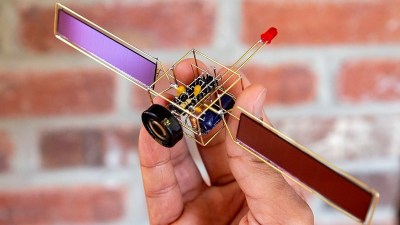
Solar-powered circuit sculpture by [Mohit Bhoite] which was featured last year.
Wire and circuit boards are a fantastic media for creating beautiful projects, and for this one we want both the copper and the boards (or lack of) to be part of the beauty. Your sculpture could be crisp and angular bends in brass rod, a rat’s nest of enamel wire, PCBs with organic shapes, or something completely wild. Your only constraint is that there needs to be some type of working circuit involved.

Three entries will be chosen as top winners in the Most Functional, Most Beautiful, and Best Video categories and be awarded $200 in components from Digi-Key who are sponsoring this contest and also putting together a calendar with images of the top twelve sculptures.

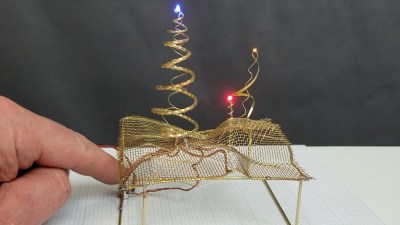
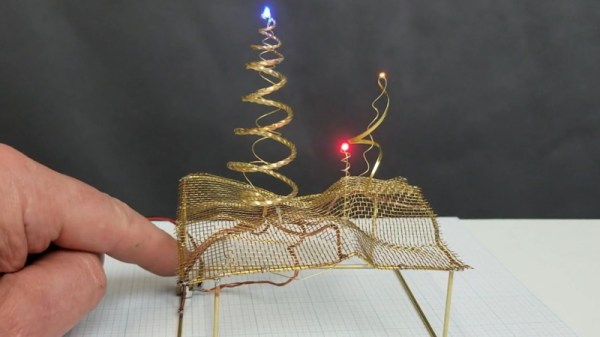
The Wonderlandscape by [Michael Aichlmayr] takes the “sculpture” part of Circuit Sculpture to new levels.
Tell us the story of your creation, including a deep dive into how you built the sculpture and what trial and error you went through to pull it off. Many circuit sculptures in the past have included jig-building to get the wire bends just right, so we have a fourth prize of $100 in Tindie credit for the Best Jig build.

Get your project started now on Hackaday.io and use that “Submit Project To:” button in the left sidebar of your project page to enter it in the Circuit Sculpture Challenge. You have until November 10th to submit your entry.

Tech At Home Winners Who Made The Best Of Their Quarantine

Back in April we challenged hackers to make the best of a tough situation by spending their time in isolation building with what they had laying around the shop. The pandemic might have forced us to stay in our homes and brought global shipping to a near standstill, but judging by the nearly 300 projects that were ultimately entered into the Making Tech At Home Contest, it certainly didn’t stifle the creativity of the incredible Hackaday community.

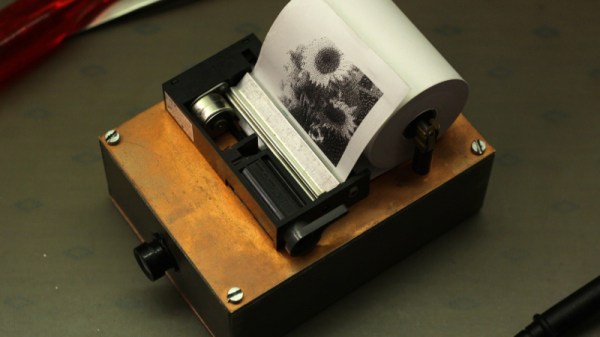
While it’s never easy selecting the winners, we think you’ll agree that the Inverse Thermal Camera is really something special. Combining a surplus thermal printer, STM32F103 Blue Pill, and OV7670 camera module inside an enclosure made from scraps of copper clad PCB, the gadget prints out the captured images on a roll of receipt paper like some kind of post-apocalyptic lo-fi Polaroid.

The HexMatrix Clock also exemplified the theme of working with what you have, as the electronics were nothing more exotic than a string of WS2811 LEDs and either an Arduino or ESP8266 to drive them. With the LEDs mounted into a 3D printed frame and diffuser, this unique display has an almost alien beauty about it. If you like that concept and have a few more RGB LEDs laying around, then you’ll love the Hive Lamp which took a very similar idea and stretched it out into the third dimension to create a standing technicolor light source that wouldn’t be out of place on a starship.

Each of these three top projects will receive a collection of parts and tools courtesy of Digi-Key valued at $500.

Runners Up

Out friends at Digi-Key were also kind enough to provide smaller grab bags of electronic goodies to the creators of the following 30 projects to help them keep hacking in these trying times:

The Making Tech At Home Contest might be over, but unfortunately, it looks like COVID-19 will be hanging around for a bit. Hopefully some of these incredible projects will inspire you to make the most out of your longer than expected downtime.

Assemble Your (Virtual) Robotic Underground Exploration Team

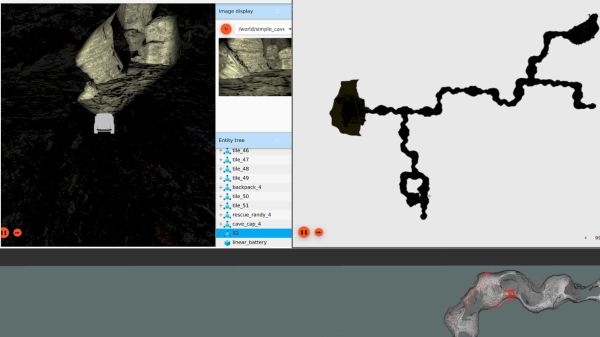
It’s amazing how many things have managed to move online in recent weeks, many with a beneficial side effect of eliminating travel making them more accessible to everyone around the world. Though some events had a virtual track before it was cool, among them the DARPA Subterranean Challenge (SubT) robotics competition. Recent additions to their “Hello World” tutorials (with promise of more to come) have continued to lower the barrier of entry for aspiring roboticists.

We all love watching physical robots explore the real world, which is why SubT’s “Systems Track” gets most of the attention. But such participation is necessarily restricted to people who have the resources to build and transport bulky hardware to the competition site, which is just a tiny subset of all the brilliant minds who can contribute. Hence the “Virtual Track” which is accessible to anyone with a computer that meets requirements. (64-bit Ubuntu 18 with NVIDIA GPU) The tutorials help get us up and running on SubT’s virtual testbed which continues to evolve. With every round, the organizers work to bring the virtual and physical worlds closer together. During the recent Urban Circuit, they made high resolution scans of both the competition course as well as participating robots.

There’s a lot of other traffic on various SubT code repositories. Motivated by Bitbucket sunsetting their Mercurial support, SubT is moving from Bitbucket to GitHub and picking up some housecleaning along the way. Together with the newly added tutorials, this is a great time to dive in and see if you want to assemble a team (both of human collaborators and virtual robots) to join in the next round of virtual SubT. But if you prefer to stay an observer of the physical world, enjoy this writeup with many fun details on systems track robots.

A Twisted Tale Of Woven Wires

A little over a year ago, we ran a contest that challenged readers to leave the comfort of their PCBs and breadboards. We wanted to see circuits built in three dimensions, with extra points awarded for creativity and artistic flair. Truth be told there was initially some concern that the “Circuit Sculpture” contest was a bit too abstract for the Hackaday community, but the overwhelming number of absolutely gorgeous entries certainly put those doubts to rest.

In a recent video, [Michael Aichlmayr] walks viewers through the creation of his mesmerizing entry Wonderlandscape, which ended up taking honorable mention in the Circuit Sculpture contest for Best Metalworks. Though this is much more than just a simple walk-through of a project. Sure you’ll see how brass bar stock was artfully twisted and wrapped to create a metallic winterscape that looks like it could have come from Bob Ross’s hitherto unknown cyberpunk period, but that’s only half the story.

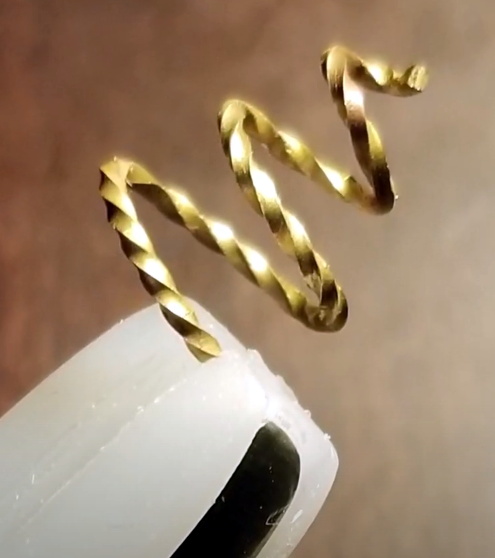
The brass bar was twisted by hand with pliers.

In the video, [Michael] recalls how he discovered the burgeoning electronic sculpture community, and points to a few exceptional examples that got him hooked on finding the beauty that’s usually hidden inside of a plastic enclosure. Eventually he heard about the Circuit Sculpture contest, and decided it was the perfect opportunity to build something of his own. That’s right, Wonderlandscape is his very first attempt at turning electronics into art.

But the best may be yet to come. [Michael] explains that, due to the time constraints of the contest, he had to use metal stock purchased from the crafts store. But his ultimate goal is actually to melt down salvaged brass and bronze components and make his own wire and rods. We can’t wait to see what he’ll be able to accomplish when he starts working with his own custom made metal, and are eagerly awaiting the future video that he says will go over the techniques he’s been working on.

This story is a great reminder of how stepping out of your comfort zone once and awhile can be a good thing. Entering the contest with no previous experience was a risk to be sure, but [Michael] came out the other side more experienced and with a few new friends in the community. So why not enter our latest contest and see where it takes you?

Continue reading “A Twisted Tale Of Woven Wires”

New Contest: Making Tech At Home

Put that parts bin to good use and build something! That’s the gist of the Making Tech at Home contest where your inner pack rat can shine by building from the parts you have on hand.

So what are you supposed to build? We’re not particular, we just want it to be cool. Grab everyone’s attention with an awesome project, and then win our hearts with the story of where you found the components.

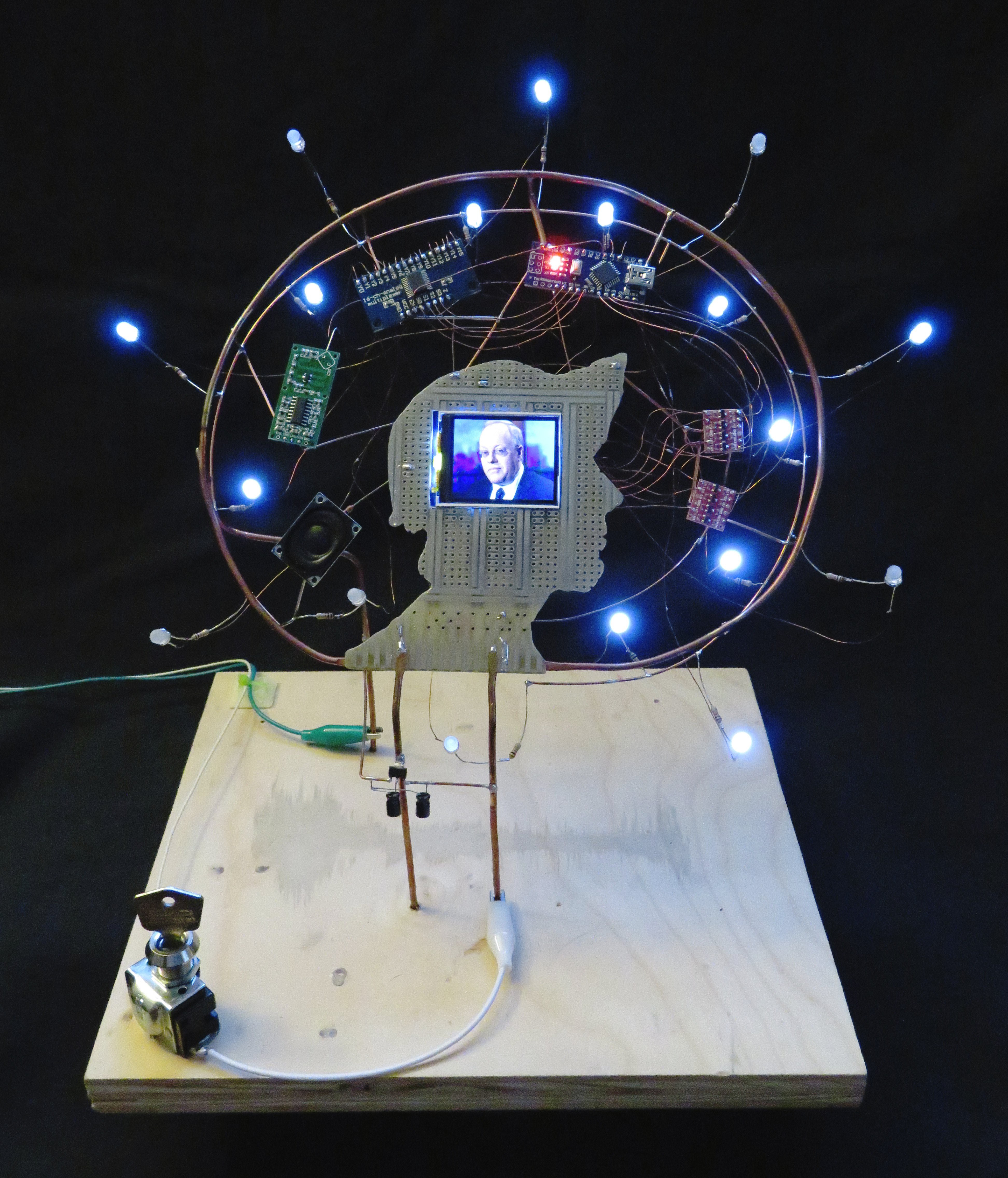
Daniel Domínguez’s Parts Bin Self Portrait is an excellent example

An excellent example is the Parts Bin Self Portrait seen here that was a runner-up in the Circuit Sculpture contest. [Daniel Domínguez] talks about cutting out his silhouette from a scrap of prototyping board, pulling dev boards out of the parts box, and finding a ceiling fan on the side of the road which ended up donating the wire from the windings of its motor.

Your story is what’s important here. You can build a sleek and beautiful bit of gear that doesn’t look hacky at all — tell us about what the finished project does, but we also need to hear what parts you had on hand, where they came from, and what led you to use them. There is an element of satisfaction when that broken thermostat that you’ve been squirreling way for ten years, or the accidentally ordered reel of 0402 resistors, ends up getting used. Dust off that electronics hoard and get building!

Prizes Sent Out Throughout the Contest

This contest runs until July 28th, but you won’t have to wait that long to score some loot. Thirty entries will win a grab bag of stuff from Digi-Key and we’ll pick a few projects every week as we work toward that number. Help us decide what to send in those grab bags by voting for the gear you like the most.

Once the contest wraps up, three top winners will receive a mega grab bag stuffed with $500 worth of components. You know… to add to your parts bin for all those future builds.

If you’re anything like us, people deliver their broken stuff to you because they’ve heard you build things out of broken electronics. You feel torn about keeping old hardware around, but feel guilty about sending it to the landfill. When you order parts you get multiples just so you have them on hand for the next project. You were made for this competition, and no matter who the prizes go to, we want a look inside your parts bin.

A Jaw-Dropping Demo In Only 256 Bytes

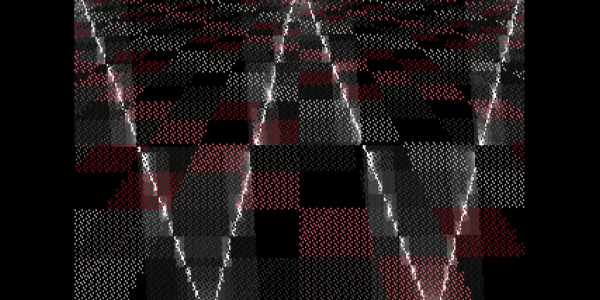
“Revision” is probably the Olympics of the demoscene. The world’s best tiny graphics coders assemble, show off their works, and learn new tricks to pack as much awesome into as few bytes as possible or make unheard-of effects on limited hardware. And of course, there’s a competition. Winning this year’s 256-byte (byte!) competition, and then taking the overall crowd favorite award, was [HellMood]’s Memories.

If you watch it in the live-stream from Revision, you’ll hear the crowd going (virtually) wild, and the announcer losing his grip and gasping for words. It’s that amazing. Not only are more effects put into 28 bytes than we thought possible, but there’s a full generative MIDI score to go with it. What?!?

But almost as amazing is [HellMood]’s generous writeup of how he pulled it off. If you’re at all interested in demos, minimal graphics effects, or just plain old sweet hacks, you have your weekend’s reading laid out for you. [HellMood] has all of his references and influences linked in as well. You’re about to go down a very deep rabbit hole.

Continue reading “A Jaw-Dropping Demo In Only 256 Bytes”