The Hackers And The Hurricane

When natural disasters strike, particularly if they are in some of the less remote parts of the world, we see them unfolding in real-time on our television screens. They become a 24-hour rolling news exercise in disaster titillation, each fresh horror ghoulishly picked over by breathless reporters live-telecasting from windswept streets, and endlessly rehashed by a succession of in-studio expert guests.

Then once the required image of a dusty child being pulled from the rubble or a tearful mother describing her daughter being swept away is in the can, a politician somewhere is found in bed with a model or a tinpot dictator rattles his sabre, and the world moves on. The BAFTA or the Emmy is a certainty for this one, did you see the anguish!

Meanwhile on the ground, the situation remains the same. There is no power, no sanitation, no communications, no food, and help seems very far away. In the wake of the recent hurricane season across the Caribbean, there are millions of people whose worlds have been wrecked, and several international governments have faced significant criticism for their lethargic response.

In our world of hardware hackers and makers, we are on the whole practical people. We exist to make, and do, rather than to endlessly talk. Seeing the plight of the victims of Irma, Jose, or Maria leaves us wanting to do practical things to help, because that’s what we do. But of course, we can do nothing, because we’re thousands of miles away and probably lack whatever skills or training are in demand on the islands.

It’s heartening then to hear of just a few moments when our wider community has managed to be in the right place at the right time to offer some help. We’ve had a couple in our tips line lately we’d like to share.

[Csp3r] writes about the Derbycon conference held in Louisville, at which [Carlos Perez] and [Jose Quinones Borreros], information security specialists from Puerto Rico, were in attendance. They mentioned a need for emergency radios, and the community at the conference came together to raise money for much more than just a few radios. $15,000 was raised in all, spent on radios, solar chargers, generators, flashlights, USB battery packs, and tools. This amounted to a significant bulk, so Hackers For Charity helped secure some space on an aid flight to the island.

Then [Bruce Perens, K6BP] writes about a request from the American Red Cross to the ARRL for 50 radio amateurs to help with their relief efforts in Puerto Rico. They will perform the role you might expect of enabling essential communications, as well as to quote the ARRL: “help record, enter, and submit disaster-survivor information into the ARC Safe and Well system”. This is a request unprecedented in its scale, and reflects the level of damage across the island.

For most of us, the best we can do when helping out with these events will be to drop coins into an OXFAM or Red Cross collecting tin and leave it to the experts. But as we’ve noted above, for just a few of us the opportunity to do something a bit more useful presents itself. If you find yourself in that position, make it count!

We’ve looked at the role of amateur radio in public service before, and we’ve even featured it in one or two projects. This emergency box for example has all you’d need to provide this type of service.

Cyclone Catarina image from the ISS, [Public domain].
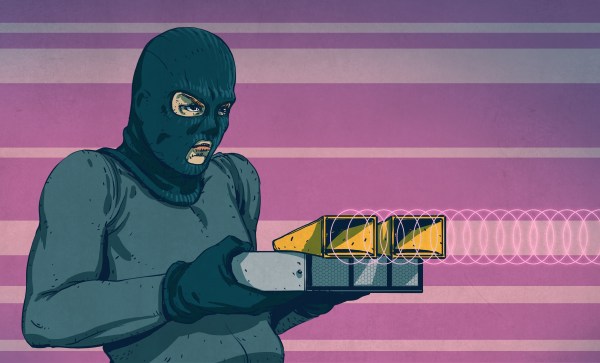
Cuban Embassy Attacks And The Microwave Auditory Effect

If you’ve been paying attention to the news, you may have seen a series of articles coming out about US staffers in Cuba. It seems that 21 staffers have suffered a bizarre array of injuries ranging from hearing loss to dizziness to concussion-like traumatic brain injuries. Some staffers have reported hearing incapacitating sounds in the embassy and in their hotel rooms. The reports range from clicking to grinding, humming, or even blaring sounds. One staffer described being awoken to a horrifically loud sound, only to have it disappear as soon as he moved away from his bed. When he got back into bed, the mysterious sound came back.

Cuba has denied any wrongdoing. However, the US has already started to take action – expelling two Cuban diplomats from the US in May. The question though is what exactly could have caused these injuries. The press has gone wild with theories of sonic weaponry, hidden bugs, and electronic devices, poisons, you name it. Even Julian Assange has weighed in, stating “The diversity of symptoms suggests that this is a pathogen combined with paranoia in an isolated diplomatic corps.”

So what’s going on? Bizarre accidents? Cloak and dagger gone awry? Mass hysteria among the US state department, or something else entirely? Continue reading “Cuban Embassy Attacks And The Microwave Auditory Effect”

AI: This Decade’s Worst Buzz Word

In hacker circles, the “Internet of Things” is often the object of derision. Do we really need the IoT toaster? But there’s one phrase that — while not new — is really starting to annoy me in its current incarnation: AI or Artificial Intelligence.

The problem isn’t the phrase itself. It used to mean a collection of techniques used to make a computer look like it was smart enough to, say, play a game or hold a simulated conversation. Of course, in the movies it means HAL9000. Lately, though, companies have been overselling the concept and otherwise normal people are taking the bait.

The Alexa Effect

Not to pick on Amazon, but all of the home assistants like Alexa and Google Now tout themselves as AI. By the most classic definition, that’s true. AI techniques include matching natural language to predefined templates. That’s really all these devices are doing today. Granted the neural nets that allow for great speech recognition and reproduction are impressive. But they aren’t true intelligence nor are they even necessarily direct analogs of a human brain.

Continue reading “AI: This Decade’s Worst Buzz Word”

SHACamp 2017, A Personal Review

There are a series of stages to coming down from a festival. After the hectic rush of travel there are the several days of catching up on lost sleep and picking up the threads of your life again, then once a semblance of order has been regained there’s that few weeks of emptiness. Your life will never be the same again, it’s all so mundane.

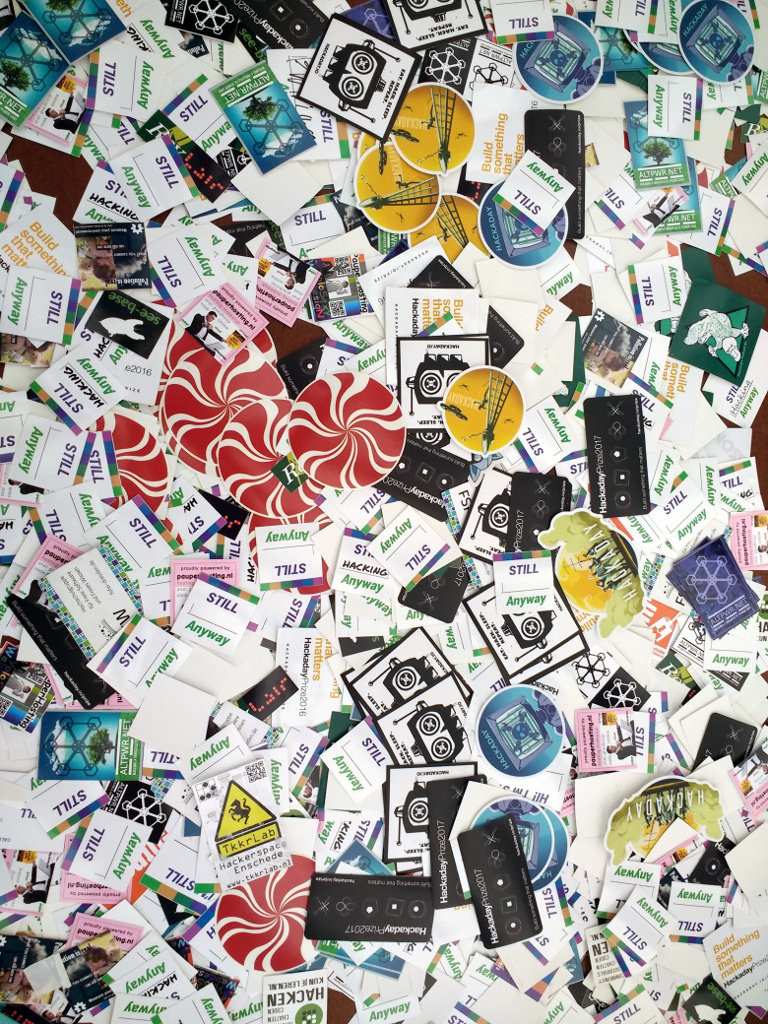
I'm pleased to say the Hackaday and Tindie stickers were very popular.
I’m pleased to say the Hackaday and Tindie stickers were very popular.

It’s now a couple of weeks since the SHACamp 2017 hacker festival in the Netherlands was in full swing, and the write-up below has slowly taken shape over that time amid the other work of being a Hackaday scribe and editor. It’s early morning here in Southern England as I write this, so on the equivalent day while I was at SHACamp at this time I would have been carrying a large pack of stickers for distribution on the swapping table through the rising sunlight of a camp still largely asleep after the previous night’s revelry. Past our German and Dutch immediate neighbours, down the ramp from the dyke, the cardboard tent depot on my left and the food court on my right, to the information tent. Greet the bleary-eyed volunteer at the end of their graveyard shift, and spread plenty of Hackaday and Tindie stickers on the table for the masses. And then? Find a coffee, and sally forth into the field for another day among one of the most stimulating communities on Earth. My community. Your community.

The sticker table is a good place to start if you wish to get a handle on a large hacker camp. On it you will find the logos of a cross-section of the diverse organisations and groups present. There are a few commercial ones like my Jolly Wrenchers and Tindie the puppy, there are some from voluntary organisations or interest groups, but mostly they are the logos of a continent’s — even the wider world’s in some cases —  hackspaces and makerspaces. Here you see the breadth of the attendees, as the logos of spaces from thousands of miles away you’ve never encountered before mingle. This isn’t quite a global gathering, but there is a sense of global community around it.

How Do You Describe a Hacker Camp?

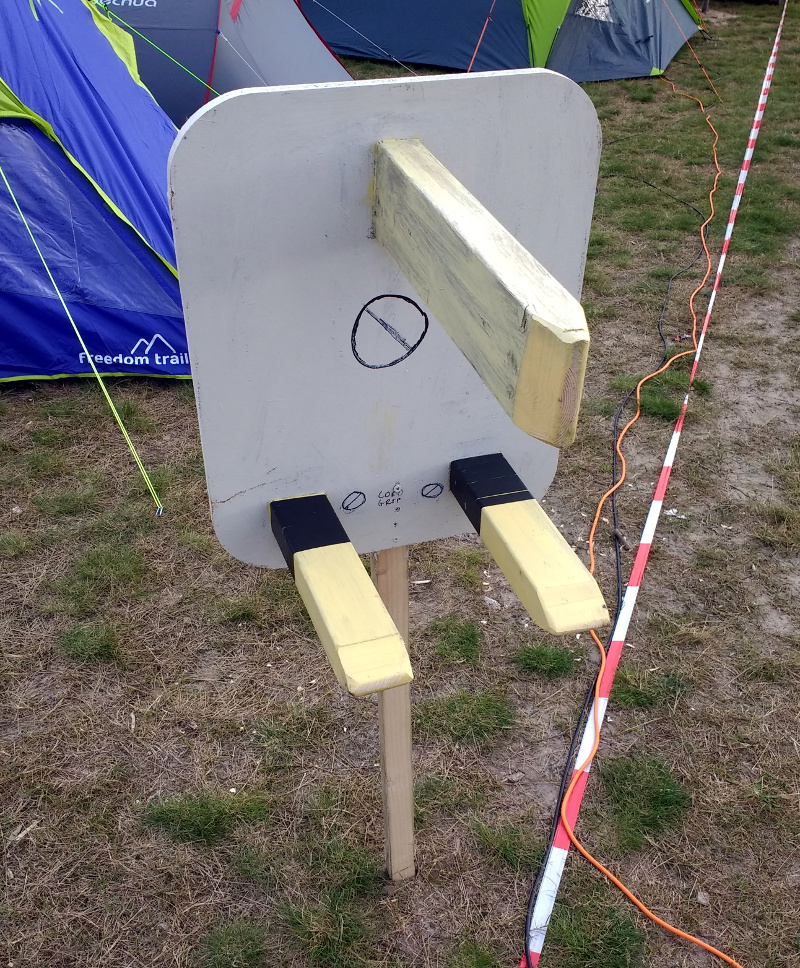
You shall find us by our clearly superior yet dangerous to barefoot pedestrians fused right-angled mains connector.

So before I take you through my experience of SHA, it’s best to start by describing a hacker camp in more general terms. When I’m describing a camp like SHA to the kind of people who don’t read Hackaday, I put it as similar to the music festivals they are used to but without the bands. Instead the audience provides the entertainment through the work they bring to the event or do at the event, and through a comprehensive program of talks and lectures. Oh — and this is the bit that makes their eyes open wide — every structure on site from the smallest one-man tent to the largest marquee has mains power and high-speed Internet. Sometimes people grasp what SHA is from this description, sometimes they don’t.

Different groups, be they individual hackspaces, people from a particular country, or other special interest groups, congregate in villages, collections of tents, marquees, and gazebos in which they set up whatever cool stuff they’ve brought along. My tent with its Hackaday flag was in a village composed of a mix of British hackspaces up on the dyke, which [Michael] from MK Makerspace had marked with a sign consisting of a huge BS1363A mains plug. More than one person pointed out it would have been better lying flat on the ground with pins in the air, ready to catch an unwary Monty Python foot.

Continue reading “SHACamp 2017, A Personal Review”

Eclipse 2017: Report From An Extinct Volcano

Location, location, location — what’s critical to real estate is also critical to eclipse watching, and without sounding too boastful, those of us atop South Menan Butte, an extinct volcano in southeast Idaho, absolutely nailed it. Not only did we have perfect weather, we had an excellent camping experience, great food, a magnificent natural setting, and a perch 800 feet above a vast plain stretching endlessly to the east and west. Everything was set up for a perfect eclipse experience, and we were not disappointed.

Continue reading “Eclipse 2017: Report From An Extinct Volcano”

Hands On With The SHACamp 2017 Badge

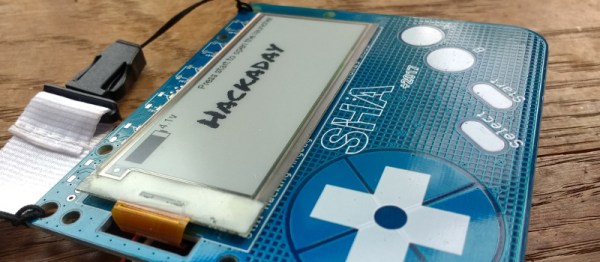
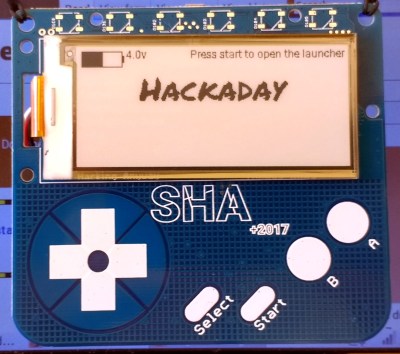
The badge has become one of the defining features of a modern hacker camp, a wearable electronic device that serves as both event computer and platform for some mild software and hardware hacking. Some events have had astoundingly sophisticated badges while others are more simple affairs, and the phenomenon has even spawned an ecosystem of unofficial badges which have nothing to do with the event in question.

The SHACamp 2017 badge is the latest to come the way of a Hackaday writer, and certainly contains enough to be taken as representative of the state of hacker camp badges in 2017. It doesn’t have a star turn like CCCCamp 2015’s software defined radio, instead it’s an extremely handy little computer in its own right.

Continue reading “Hands On With The SHACamp 2017 Badge”

Bibles You Should Read: PoC || GTFO

PASTOR LAPHROAIG ANNOUNCES THE PUBLICATION OF WHAT WILL TORMENT THE ACOLYTES OF THE CHURCH OF ROBOTRON! NO MAN SHALL BE SPARED AND THE INQUISITION WILL BEGIN PROMPTLY!

For the last few years, Pastor Manul Laphroaig and friends have been publishing the International Journal of PoC || GTFO. This is a collection of papers and exploits, submitted to the Tract Association of PoC || GTFO, each of which demonstrates an interesting exploit, technique, or software toy in the field of electronics. Imagine, if 2600 or Dr. Dobb’s Journal were a professional academic publication. Add some whiskey and you have PoC || GTFO.

This is something we’ve been waiting a while for. The International Journal of PoC || GTFO is now a real book bible published by No Starch Press. What’s the buy-in for this indulgence? $30 USD, or a bit less if you just want the Ebook version. The draw of the dead tree version of PoC includes a leatherette cover, gilt edges, and the ability to fit inside bible covers available through other fine retailers. There are no rumors of a children’s version with vegetable-based characters.

PoC || GTFO, in reality, is an almost tri-annual journal of reverse engineering, computer science, and other random electronic computational wizardry, with papers (the Proof of Concept) by Dan Kaminsky, Colin O’Flynn, Joe FitzPatrick, Micah Elisabeth Scott, Joe Grand, and other heroes of the hacker world. What does PoC || GTFO present itself as? Applied electrons in a religious tract publication. The tongue is planted firmly in the cheek here, and it’s awesome.

Continue reading “Bibles You Should Read: PoC || GTFO”