The Electrifying Debate Around Where Lightning Comes From

Along with many other natural phenomena, lightning is probably familiar to most. Between its intense noise and visuals, there is also very little disagreement that getting hit by a lightning strike is a bad thing, regardless of whether you’re a fleshy human, moisture-filled plant, or conductive machine. So it’s more than a little bit strange that the underlying cause of lightning, and what makes certain clouds produce these intense voltages along ionized air molecules, is still an open scientific question.

Many of us have probably learned at some point the most popular theory about how lightning forms, namely that lightning is caused by ice particles in clouds. These ice particles interact to build up a charge, much like in a capacitor. The only issue with this theory is that this process alone will not build up a potential large enough to ionize the air between said clouds and the ground and cause the lightning strike, leaving this theory in tatters.

A recent study, using data from Earth-based radio telescopes, may now have provided fascinating details on lightning formation, and how the charge may build up sufficiently to make us Earth-based critters scurry away to safety when dark clouds draw near.

Continue reading “The Electrifying Debate Around Where Lightning Comes From”

Teardown: Alcatel Telic 1 Minitel Terminal

For British teenagers in the 1980s, the delights of 8-bit computers such as the Sinclair Spectrum, Commodore 64, or BBC Micro were firmly restricted to the offline arena. We would read about the BBS scene on the other side of the Atlantic, but without cheap local calls and with a modem costing a small fortune, the chances of us ever experiencing one was zero. When we took the British school rite of passage of a trip to France though, we were astounded to see that every French person was not merely online, but that they were doing so with a neat little all-in-one terminal. We’d just been introduced to the French Minitel system, and in that minute shared a glimpse of the future.

Un Réseau Trés Français

The Minitel terminal is a small CRT monitor with a fold-down alphanumeric keyboard.
My Alcatel Minitel terminal

In the 1970s and 1980s, so-called videotext systems, terminal-based phoneline access to information services on central computers, were seen as an obvious next step for telephone network operators with an interest in profitable new products. In most countries this resulted in services such as the UK’s Prestel, a subscription service relying on costly hardware, but France Télécom instead pursued the bold path of making the terminals free to subscribers with free access to phone listings and yellow pages, but a business model based on pay-to-use premium services.

Thus, through the 1980s all French households had a Minitel terminal beside the phone, and the service became a runaway success. Ever since seeing Minitel terminals as a tourist I’d been fascinated by the service, so here in the 2020s when a friend was visiting their family in France I asked whether he could pick up an old Minitel terminal for me. Thus I found myself parting with around $25 and being rewarded with a slightly battered Minitel cardboard box containing one of the familiar brown Alcatel terminals. I certainly wasn’t expecting one in its original packaging. Continue reading “Teardown: Alcatel Telic 1 Minitel Terminal”

Hair Today Gone Tomorrow: Four Men Go To Fix A Wafer Prober

I’ve had a fairly varied early part of my career in the semiconductors business: a series of events caused me to jump disciplines a little bit, and after one such event, I landed in the test engineering department at Philips Semiconductors. I was tasked with a variety of oddball projects, supporting engineering work, fixing broken ATE equipment, and given a absolute ton of training: Good times!  Here’s a story that comes straight off the oddball pile.

We needed to assemble a crack team of experts and high-tail it to deepest darkest Wales, and sort out an urgent production problem. The brief was that the wafer probe yield was disastrous and the correlation wafer was not giving the correct results. Getting to the punch line is going to require some IC fabrication background, but if you like stories about silicon, or red-bearded test engineers, it’s worth it. Continue reading “Hair Today Gone Tomorrow: Four Men Go To Fix A Wafer Prober”

Remembering The MIT Radiation Laboratory

Back in the late 80s, our company managed to procure the complete 28 volume MIT Radiation Laboratory (Rad Lab) series, published in 1947, for the company library. To me, these books were interesting because I like history and old technology, but I didn’t understand why everyone was so excited about the acquisition. Only a cursory glimpse at the volumes would reveal that the “circuits” these books described used vacuum tubes and their “computers” were made from mechanical linkages. This was the 1980s, and we worked with modern radar and communications systems using semiconductors, integrated circuits, and digital computers. How could these old musty books possibly be of any practical use? To my surprise, it turned out that indeed they could, and eventually I came to appreciate the excitement. I even used several of them myself over the years.

Radiation Lab? Nuclear Radar?

In the years leading up to WW2, the idea of a civilian organization of scientists that would operate independently of the military and government bureaucracies was being championed by Dr. Vannevar Bush. The military and scientists had not worked well together during the first World War, and it looked like science and technology would be playing a much bigger role in the future.

It seemed certain that America would enter the conflict eventually, and Dr Bush and others believed that a new organizational framework was called for. To that end, the National Defense Research Committee (NDRC), which later became the Office of Scientific Research and Development (OSRD) was pitched to President Roosevelt and he approved it in June of 1940.

Almost immediately, a gift fell in the lap of the new organization — the Tizard Mission which arrived in the states from the UK in Sep 1940. They brought a literal treasure chest of technical innovations from the British, who hoped that US industry’s cooperation could help them survive what looked like certain and imminent invasion. One of those treasures was the cavity magnetron, which our own Dan Maloney wrote about a few years ago.

Within a few weeks, under the guidance of young Welshman “Taffy” Bowen, they had reviewed the design and gathered up the necessary equipment to fire it up. A 10 kV anode power supply and a 1,500 gauss electromagnet were procured, and the scientists gathered at the Bell Radio Laboratories in Whippany New Jersey on Sunday, Oct. 6, 1940. They powered up the cavity magnetron and were blown away by the results — over 10 kW of RF at 3 GHz (10 cm) from something the size of a bar of soap. Continue reading “Remembering The MIT Radiation Laboratory”

Underwater Tanks Turn Energy Storage Upside-Down

Pumped hydro storage is one of the oldest grid storage technologies, and one of the most widely deployed, too. The concept is simple – use excess energy to pump a lot of water up high, then run it back through a turbine when you want to get the energy back later.

With the rise in renewable energy deployments around the world, there is much interest in finding ways to store energy from these often-intermittent sources. Traditional pumped hydro can help, but there is only so much suitable land to work with.

However, there could be a solution, and it lurks deep under the waves. Yes, we’re talking about underwater pumped hydro storage!

Continue reading “Underwater Tanks Turn Energy Storage Upside-Down”

Save Money And Have Fun Using IEEE-488

A few months ago, I was discussing the control of GPIB equipment with a colleague. Based on only on my gut feeling and the briefest of research, I told him that the pricey and proprietary GPIB controller solutions could easily be replaced by open-source tools and Linux. In the many weeks that followed, I almost abandoned my stance several times out of frustration. With some perseverance, breaking the problems into bite-sized chunks, and lots of online searching to learn from other people’s experiences, my plan eventually succeeded. I haven’t abandoned my original stance entirely, I’ve taken a few steps back and added some qualifiers.

What is GPIB?

Example of HP-IB block diagram from the 1970s, from hp9845.net

Back in the 1960s, if test equipment was interconnected at all, there weren’t any agreed-upon methods for doing so. By the late 60s, the situation was made somewhat better by card-cage controller systems. These held a number of interface cards, one per instrument, presenting a common interface on the backplane. Although this approach was workable, the HP engineers realized they could significantly improve the concept to include these “bridging circuit boards” within the instruments and replacing the card cage backplane with passive cables. Thus began the development of what became the Hewlett-Packard Interface Bus (HP-IB). The October 1972 issue of the HP Journal introduced HP-IB with two main articles: A Practical Interface System for Electronic Instruments and A Common Digital Interface for Programmable Instruments: The Evolution of a System. Continue reading “Save Money And Have Fun Using IEEE-488”

Shelf Actualization

If you are old enough, you may remember that, for a time, almost every year was the year that home video was going to take off. Except it never was, until VHS tape machines appeared. We saw something similar with personal computers. Nowadays, we keep hearing about the home robot, but it never seems to fully materialize or catch on. If you think about it, it could be a problem of expectations.

What we all want is C3PO or Rosie the Robot that can do all the things we don’t want to do. What we usually get is something far less than that. You either get something hideously expensive that does a few tasks or something cheap that is little more than a toy.

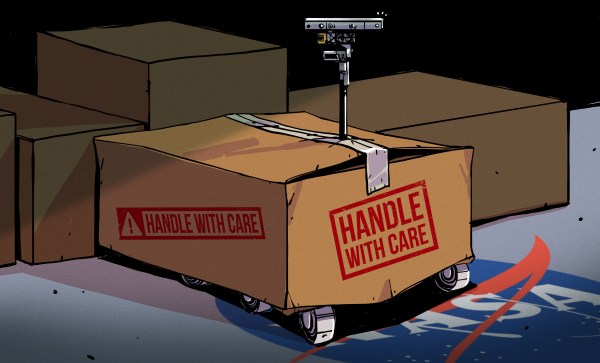
Labrador Systems is trying to hit the middle ground. While no one would confuse their Caddie and Retriever robots with C3PO, they are useful but also simple, presumably to keep the cost down which are expected to cost about $1,500. The robots have been described as “self-driving shelves.” You can watch a video about the devices below.

Continue reading “Shelf Actualization”