Reviewing Nuclear Accidents: Separating Fact From Fiction

Few types of accidents speak as much to the imagination as those involving nuclear fission. From the unimaginable horrors of the nuclear bombs on Nagasaki and Hiroshima, to the fever-pitch reporting about the accidents at Three Mile Island, Chernobyl and Fukushima, all of these have resulted in many descriptions and visualizations which are merely imaginative flights of fancy, with no connection to physical reality. Due to radiation being invisible with the naked eye and the interpretation of radiation measurements in popular media generally restricted to the harrowing noise from a Geiger counter, the reality of nuclear power accidents in said media has become diluted and often replaced with half-truths and outright lies that feed strongly into fear, uncertainty, and doubt.

Why is it that people are drawn more to nuclear accidents than a disaster like that at Bhopal? What is it that makes the one nuclear bomb on Hiroshima so much more interesting than the firebombing of Tokyo or the flattening of Dresden? Why do we fear nuclear power more than dam failures and the heavy toll of air pollution? If we honestly look at nuclear accidents, it’s clear that invariably the panic afterwards did more damage than the event itself. One might postulate that this is partially due to the sensationalist vibe created around these events, and largely due to a poorly informed public when it comes to topics like nuclear fission and radiation. A situation which is worsened by harmful government policies pertaining to things like disaster response, often inspired by scientifically discredited theories like the Linear No-Threshold (LNT) model which killed so many in the USSR and Japan.

In light of a likely restart of Unit 1 of the Three Mile Island nuclear plant in the near future, it might behoove us to wonder what we might learn from the world’s worst commercial nuclear power disasters. All from the difficult perspective of a world where ideology and hidden agendas do not play a role, as we ask ourselves whether we really should fear the atom.

Continue reading “Reviewing Nuclear Accidents: Separating Fact From Fiction”

Secrets Of The Old Digital Design Titans

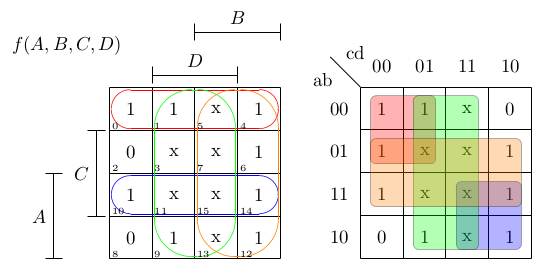
Designing combinatorial digital circuits seems like it should be easy. After all, you can do everything you want with just AND, OR, and NOT gates. Bonus points if you have an XOR gate, but you can build everything you need for combinatorial logic with just those three components. If all you want to do is design something to turn on the light when the ignition is on AND door 1 is open OR door 2 is open, you won’t have any problems. However, for more complex scenarios, how we do things has changed several times.

In the old days, you’d just design the tubes or transistor circuits you needed to develop your logic. If you were wiring up everything by hand anyway, you might as well. But then came modules like printed circuit boards. There was a certain economy to having cards that had, say, two NOR gates on a card. Then, you needed to convert all your logic to use NOR gates (or NAND gates, if that’s what you had).

Small-scale ICs changed that. It was easy to put a mix of gates on a card, although there was still some slight advantage to having cards full of the same kind of gate. Then came logic devices, which would eventually become FPGAs. They tend to have many of one kind of “cell” with plenty of logic gates on board, but not necessarily the ones you need. However, by that time, you could just tell a computer program what you wanted, and it would do the heavy lifting. That was a luxury early designers didn’t have. Continue reading “Secrets Of The Old Digital Design Titans”

FDM Filament Troubles: Keeping Hygroscopic Materials From Degrading

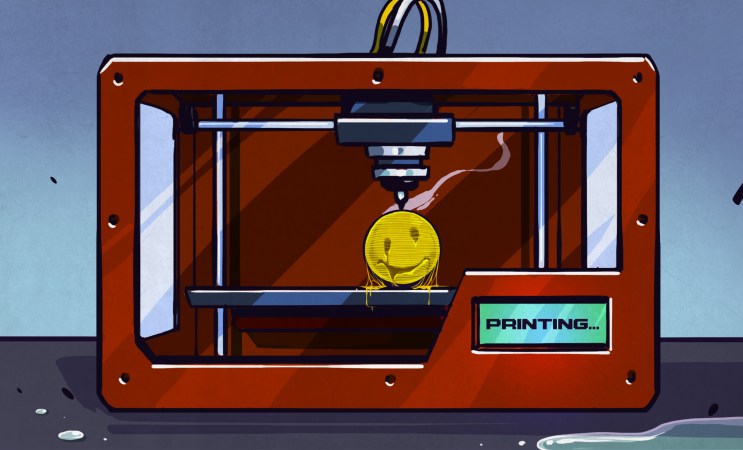
Despite the reputation of polymers used with FDM 3D printing like nylon, ABS, and PLA as being generally indestructible, they do come with a whole range of moisture-related issues that can affect both the printing process as well as the final result. While the concept of ‘baking’ such 3D printing filaments prior to printing to remove absorbed moisture is well-established and with many commercial solutions available, the exact extent to which these different polymers are affected, and what these changes look like on a molecular level are generally less well-known.

Another question with such hygroscopic materials is whether the same issues of embrittlement, swelling, and long-term damage inflicted by moisture exposure that affects filaments prior to printing affects these materials post-printing, and how this affects the lifespan of FDM-printed items. In a 2022 paper by Adedotun D. Banjo and colleagues much of what we know today is summarized in addition to an examination of the molecular effects of moisture exposure on polylactic acid (PLA) and nylon 6.

The scientific literature on FDM filaments makes clear that beyond the glossy marketing there is a wonderful world of materials science to explore, one which can teach us a lot about how to get good FDM prints and how durable they will be long-term.

Continue reading “FDM Filament Troubles: Keeping Hygroscopic Materials From Degrading”

Smart Ball Technology Has Reached Football, But The Euros Show Us It’s Not Necessarily For The Better

Adidas brought smart balls to Euro 2024, for better or worse. Credit: Adidas

The good old fashioned game of football used to be a simple affair. Two teams of eleven, plus a few subs, who were all wrangled by a referee and a couple of helpful linesmen. Long ago, these disparate groups lived together in harmony. Then, everything changed when VAR attacked.

Suddenly, technology was being used to adjudicate all kinds of decisions, and fans were cheering or in uproar depending on how the hammer fell. That’s only become more prevalent in recent times, with smart balls the latest controversial addition to the world game. With their starring role in the Euro 2024 championship more than evident, let’s take a look at what’s going on with this new generation of intelligent footballs.

Continue reading “Smart Ball Technology Has Reached Football, But The Euros Show Us It’s Not Necessarily For The Better”

Illustrated Kristina with an IBM Model M keyboard floating between her hands.

Keebin’ With Kristina: The One With The 24-Hour Macro Pad

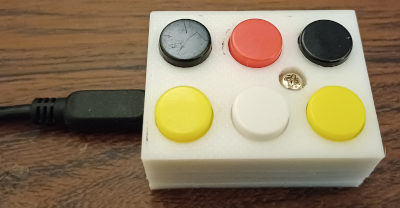
They say Rome wasn’t built in a day, but this great little music-controlling macro pad by [nibbler] actually was. Why? Because as Hackaday’s own [Donald Papp] reminded us, we all need a win sometimes, especially as projects drag on and on without any end in sight.

A small macro pad with six buttons.
Image by [nibbler] via Toxic Antidote
As [nibbler] points out, what really constitutes a win? Set the bar too low and it won’t feel like one at all. Too high, and you may become too discouraged to cross the finish line. With that in mind, [nibbler] set the bar differently, limiting themselves to what could be done in the one day per week they have to devote time to electronic matters.

One-day turnaround usually means using parts on hand and limiting oneself to already-learned skills and techniques. No problem for [nibbler], who, armed with an Arduino Leonardo Tiny and a some colorful push buttons, set about designing a suitable enclosure, and then putting it all together. Was this a win? [nibbler] says yes, and so do I.

Continue reading “Keebin’ With Kristina: The One With The 24-Hour Macro Pad”

Embedded Python: MicroPython Is Amazing

In case you haven’t heard, about a month ago MicroPython has celebrated its 11th birthday. I was lucky that I was able to start hacking with it soon after pyboards have shipped – the first tech talk I remember giving was about MicroPython, and that talk was how I got into the hackerspace I subsequently spent years in. Since then, MicroPython been a staple in my projects, workshops, and hacking forays.

If you’re friends with Python or you’re willing to learn, you might just enjoy it a lot too. What’s more, MicroPython is an invaluable addition to a hacker’s toolkit, and I’d like to show you why. Continue reading “Embedded Python: MicroPython Is Amazing”

PCB Design Review: HAB Tracker With ATMega328P

Welcome to the Design Review Central! [VE3SVF] sends us their board, and it’s a HAB (High Altitude Balloon) tracker board. It’s got the venerable ATMega28P on it, a LoRa modem and a GPS module, and it can be powered from a LiIon battery. Stick this board with its battery onto a high-altitude balloon, have it wake up and transmit your coordinates every once in a while, and eventually you’ll find it in a field – if you’re lucky. Oherwise, it will get stuck hanging on a tree branch, and you will have to use a quadcopter to try and get it down, and then, in all likelihood, a second quadcopter so that you can free the first one. Or go get a long ladder.

The ATMega328P is tried and true, and while it’s been rising in price, it’s still available – with even an updated version that sports a few more peripherals; most importantly, you’re sure to find a 328P in your drawer, if not multiple. Apart from that, the board uses two modules from a Chinese manufacturer, G-Nice, for both GPS and Lora. Both of these modules are cheap, making this tracker all that more accessible; I could easily see this project being sold as a “build your own beacon” kit!

Let’s make it maybe a little nicer, maybe a little cheaper, and maybe decrease the power consumption a tad along the way. We’ll use some of the old tricks, a few new ones, and talk about project-specific aspects that might be easy to miss.

Continue reading “PCB Design Review: HAB Tracker With ATMega328P”