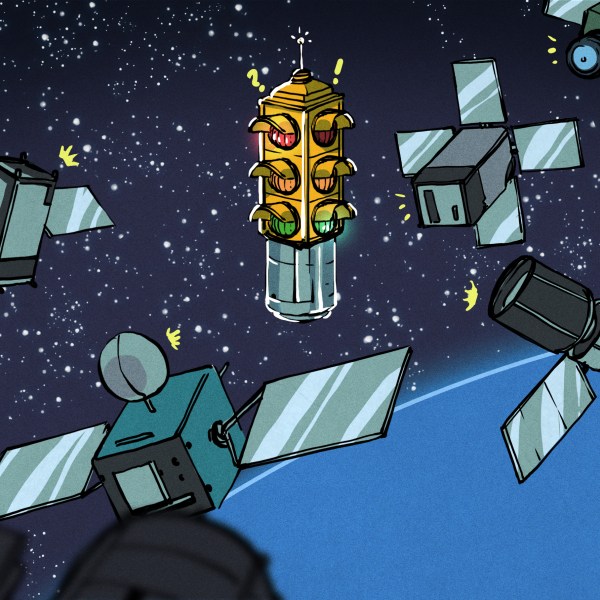
Spoofing LIDAR Could Blind Autonomous Vehicles To Obstacles

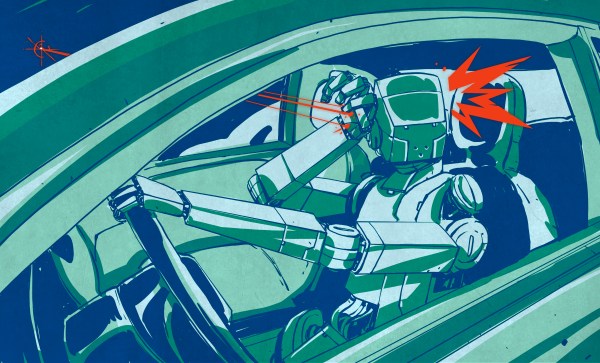
Humans manage to drive in an acceptable fashion using just two eyes and two ears to sense the world around them. Autonomous vehicles are kitted out with sensor packages altogether more complex. They typically rely on radar, lidar, ultrasonic sensors, or cameras all working in concert to detect the road conditions ahead.

While humans are pretty wily and difficult to fool, our robot driving friends are less robust. Some researchers are concerned that LiDAR sensors could be spoofed, hiding obstacles and tricking driverless cars into crashes, or worse.

Continue reading “Spoofing LIDAR Could Blind Autonomous Vehicles To Obstacles”

How To Repair? The Death Of Schematics

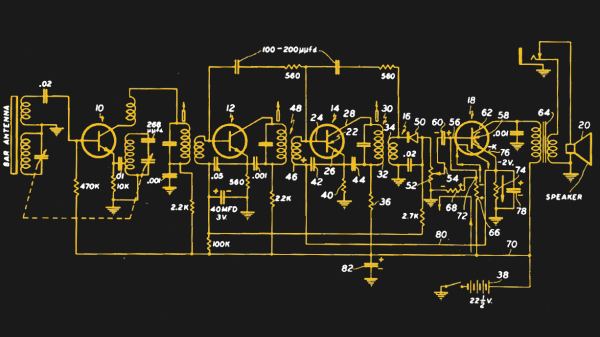
There was a time when, if you were handy with a soldering iron, you could pretty easily open up a radio or TV repair business. You might not get rich, but you could make a good living. And if you had enough business savvy to do sales too, you could do well. These days there aren’t many repair shops and it isn’t any wonder. The price of labor is up and the price of things like TVs drops every day. What’s worse is today’s TV is not only cheaper than last year’s model, but probably also better. Besides that, TVs are full of custom parts you can’t get and jam-packed into smaller and smaller cases.

Case in point, I saw a “black Friday” ad for a 40-inch 1080p flatscreen with a streaming controller for $98. Granted, that’s not huge by today’s standards and I’m sure it isn’t a perfect picture. But for $98? Even a giant high-quality TV these days might cost a bit more than $1,000 and you can get something pretty great for well under $500.

Looking back, a Sears ad showed a great deal on a 19″ color TV in 1980. The price? $399. That doesn’t sound too bad until you realize that today that would be about $1,400. So with a ratio of about 3.5 to 1, a $30/hour service call would be, today, $105. So for an hour’s service call with no parts, I could just buy that 40″ TV. Add even one simple part or another hour and I’m getting close to the big league TVs.

Did you ever wonder how TV repair technicians knew what to do? Well, for one thing, most of the time you didn’t have to. A surprising number of calls would be something simple like a frayed line cord or a dirty tuner. Antenna wires destroyed by critters was common enough. In the tube days, you could pretty easily swap tubes to fix the bulk of actual problems.

Continue reading “How To Repair? The Death Of Schematics”

FDA’s Approval Of Cell Culture Chicken: The Rise Of Fresh Meat Without The Animal?

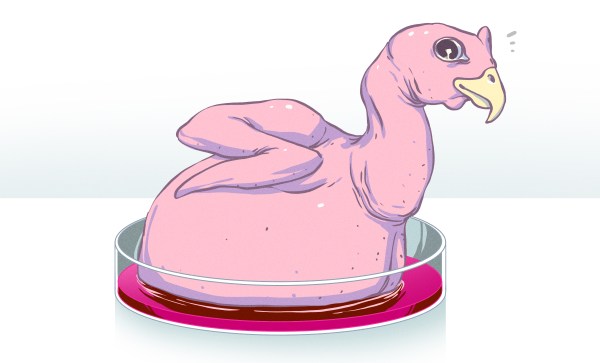
On November 14th of this year, the FDA cleared the path for Upside Foods to sell its cell-culture-based chicken products within the US. This is the first product of its kind to be cleared for commercial sale within the Americas, with only Singapore having previously cleared a similar product for sale, back in December of 2020. This latter product comes courtesy of another California start-up called Eat Just.

Since that initial approval in Singapore, Eat Just has begun to set up a 2,800 square meter (~30,000 square feet) production facility in Singapore that is scheduled to begin producing thousands of kilograms of slaughter-free meat starting in the first quarter of 2023. This would make it the top-runner in the cultured meat industry, which to this point has seen dozens of start-ups, but precious few actual products for sale.

With CEO Josh Tetrick of Eat Just projecting price equality between their cultured meat and meat from animals by 2030, could the FDA’s approval herald the dawn of slaughter-free meat? There are obviously still hurdles, but as we’ll see, the idea is not nearly as far-fetched as one might think.

Continue reading “FDA’s Approval Of Cell Culture Chicken: The Rise Of Fresh Meat Without The Animal?”

Hackaday Podcast 193: Found Computers, Internet Over WhatsApp, Two-Factor C64, Shifting Cars, And Self-Shooting Fighter Planes

This week, Editor-in-Chief Elliot Williams and Staff Writer Dan Maloney review the literature on a hack-packed week of action. We’ll find a Linux machine inside just about anything, including curb-side TVs and surprisingly secure EV chargers. No Internet? No problem — just tunnel IP through WhatsApp! We’ll see that 3D printers can be repurposed for lab automation of the cheap, build the worst — but coolest — 2FA dongle of all time, and see how a teetering tower of cards can make your old motherboard think any ISA card is plugged into it. Worried that driving an EV is going to be a boring experience? Don’t be — maybe you’ll still get to jam through the gears. But if you do, rest assured there’ll be plenty of careful engineering done to see if it’s safe. Err, at least we hope so…

Download the podcast for safe keeping.

Check out the links below if you want to follow along, and as always, tell us what you think about this episode in the comments!

Continue reading “Hackaday Podcast 193: Found Computers, Internet Over WhatsApp, Two-Factor C64, Shifting Cars, And Self-Shooting Fighter Planes”

This Week In Security: Mastodon, Fake Software Company, And ShuffleCake

Due to Twitter’s new policy of testing new features on production, the interest in Mastodon as a potential replacement has skyrocketed. And what’s not to love? You can host it yourself, it’s part of the Fediverse, and you can even run one of the experimental forks for more features. But there’s also the danger of putting a service on the internet, as [Gareth Heyes] illustrates by stealing passwords from, ironically, the infosec.exchange instance.
Continue reading “This Week In Security: Mastodon, Fake Software Company, And ShuffleCake”

TV Repair By Mail

I don’t think there was ever a correspondence school called the “Close Cover Before Striking School” but since book matches — which used to be a thing when most people smoked — always had that text on them anyway perhaps there should have been. There was a time when electronic magazines, billboards, and even book matches were constantly bombarding us with ads to have a career in electronics. Or computers. Or TV repair. So while we think of distance learning as a new idea, really it is just the evolution of these old correspondence schools which date back quite some time.

How far exactly? Hard to say. There’s evidence of some distance learning going back as far as 1728. In 1837, there was a correspondence course to learn shorthand. By 1858, the University of London started its external program for correspondence work and the University of Chicago had a home study division in 1892.  Radio was an early choice of topic, too. In the United States, the United Wireless Telegraph company started a training school — later the Marconi Institute — in 1909. However, it is doubtful that there was any correspondence training going on there until much later.

Continue reading “TV Repair By Mail”

Will The Fax Machine Ever Stop Singing?

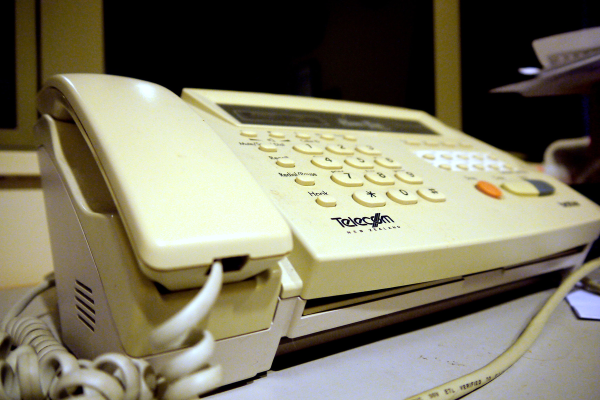
Throughout the 80s and 90s, you couldn’t swing a stapler around any size office without hitting a fax machine. But what is it about the fax machine that makes it the subject of so much derision? Is it the beep-boops? The junk faxes? Or do they just seem horribly outdated in the world of cloud storage and thumb drives? Perhaps all of the above is true. While I may be Hackaday’s resident old school office worker et cetera, it may surprise you to learn that I don’t have a fax machine. In fact, the last time I had to fax something, I recall having to give my email address to some website in order to send a single fax for free.

Over across the pond, the UK government has decided to nix the requirement for fax services under something called the Universal Service Order (USO) legislation, which essentially ensures that residents all across the UK have access to phone services at a price they can afford. The UK’s Office of Communications, aka Ofcom, have announced recently that they are in agreement with the government. Since the industry is moving away from the public switched telephone network (PSTN) to IP telephony, the fax machine won’t work the same way.

Continue reading “Will The Fax Machine Ever Stop Singing?”