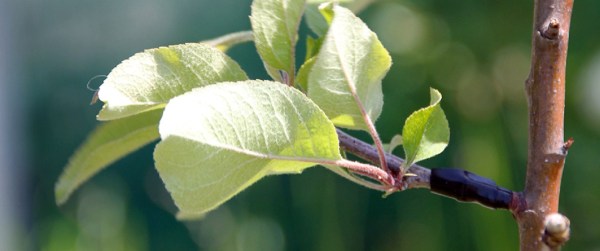
If you’ve been to downtown San Francisco lately, you might have noticed something odd about the decorative trees in the city: they’re now growing fruit. This is thanks to a group of people called the Guerrilla Grafters who are covertly grafting fruit-bearing twigs to city tress which would otherwise be fruitless. Their goal is to create a delicious, free source of food for those living in urban environments.
Biology-related hacks aren’t something we see every day, but they’re out there. For those unfamiliar with grafting, it’s a process that involves taking the flowering, fruiting, or otherwise leafy section of one plant (a “scion”) and attaching them to the vascular structure of another plant that has an already-established root system (the “stock”). The Guerrilla Grafters are performing this process semi-covertly and haven’t had any run-ins with city officials yet, largely due to lack of funding on the city’s part to maintain the trees in the first place.
This hack doesn’t stop at the biological level, though. The Grafters have to keep detailed records of which trees the scions came from, when the grafts were done, and what characteristics the stock trees have. To keep track of everything they’ve started using RFID tags. This is an elegant solution that can be small and inconspicuous, and is a reliable way to keep track of all of one’s “inventory” of trees and grafts.
It’s great to see a grassroots movement like this take off, especially when it seems like city resources are stretched so thin that the trees may have been neglected anyway. Be sure to check out their site if you’re interested in trying a graft yourself. If you’re feeling really adventurous, you can take this process to the extreme.
Thanks to [gotno] for the tip!