Fail Of The Week: Capturing Data From A Laser Rangefinder

fotw-laser-measuring-tape

We’re changing it up this week with a reverse engineering fail which [Itay] pointed out to us. A couple of years ago [Nate] over at Sparkfun agreed to help a friend with a project that required precise distance measurement. He knew that laser rangefinders are a good way to go and mentions their use in golfing and the building trades. He picked up this handheld version billed as a laser tape measure. He put up a valiant effort to reverse engineer the PCB in hopes of finding a hook for the measurement data.

Obviously his endeavor failed or we wouldn’t be talking about it in this column. But there’s a lot to learn about his methods, and a few of the comments associated with his original post help to shed light on a couple of extra things to try.

Continue reading “Fail Of The Week: Capturing Data From A Laser Rangefinder”

3D Printering: Advances In 3D Printing At Maker Faire

printering

mould

Needless to say, the World Maker Faire had a ton of 3D printers. It’s really becoming an obligatory fixture of any booth, whether you’re Microsoft announcing to the world Windows 8 now supports 3D printer drivers (don’t ask), or you just have a Makerbot Replicator on your table for some street cred.

Even the 3D Printing section of the faire wasn’t without a lot of what we’ve all seen before. Yes, the RepRap Morgan and Simpson made a showing, but 3D printing to most people attending the faire is just plastic trinkets, Minecraft figures, and single-thickness vases and jars.

Deep in the outskirts of the faire, right by the Porta Potties and a generator, one booth showed everyone how 3D printing should be done. It was AS220 Labs‘ table, and they’re doing their best to make 3D printers more than just printing out owl sculptures and plastic octopodes.

Continue reading “3D Printering: Advances In 3D Printing At Maker Faire”

Retrotechtacular: Fundamentals Of AM And FM Radio Communication

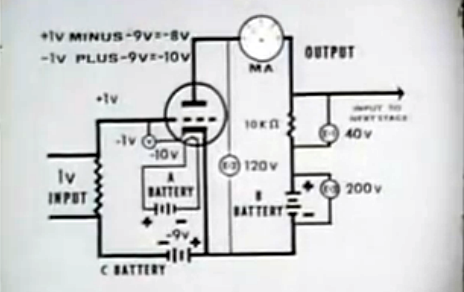
How radios send and receive information can seem magical to the uninformed. For some people, this week’s Retrotechtacular video, “Frequency Modulation – Part 1 Basic Principles”, from the US Army Department of Defense 1964 will be a great refresher, and for others it will be their first introduction into the wonderful world of radio communications.

The stated objective is to teach why FM radio communication reduces interference which normally afflicts AM radio communications. Fundamentals of AM and FM is a better description, however, because the first part of the video nicely teaches the principles of AM and FM radio communications. It isn’t until later in the clip that it delves into interference, advantages of FM modulation, and detailed functioning of FM radio. The delivery is slow at times and admittedly long, yet the pace is perfect for a young ham to follow along with plenty of time to soak in the knowledge. If you’re still on the fence about becoming a ham here’s some words or encouragement.

Though the video isn’t aimed at ham radio users it does address core knowledge needed by amateur radio hobbyists. Amateur radio is full of many exciting communication technologies and you should have a clear understanding of AM and FM communication methodologies before getting on Grandpa’s information super highway. Once you have your ham license (aka ticket) you have privileges to create and test amazing ham related hacks, like [Lior] implementing full programmable control of a Baofeng UV5R ham radio using an Arduino.

Join us after the break to watch the video.

Continue reading “Retrotechtacular: Fundamentals Of AM And FM Radio Communication”

Hackaday Links: September 22, 2013

hackaday-links-chain

First we start with some protection… for your USB charged devices. Here’s a USB Condom which acts as a pass-through for the power rails but not the data lines. This prevents untrusted charger security exploits. [Thanks Markus]

[OutKastz] seems to think he’s uncovered a price matching conspiracy at Best Buy. His post references an HDTV video wall he has built. But he also discovered that there are two different version of the same television sold as the same SKU. His theory is that this prevents the big box from matching prices on half of their inventory.

When you’re in need of some breadboarding action with your Raspberry Pi and want to make it as painless as possible you need to build your own Pi Cobbler. This is the diy version of an Adafruit product, built using a couple of pin headers, stripboard, and an IDE cable.

Speaking of Adafruit, did you see Ladyada’s teardown of an ICEdot crash sensor?

[Phineas] is showing off a really really small hexacopter. Check out the maiden flight, as well as first indoor and first outdoor tests.

Perhaps this coded entry system will inspire a future project for you. It uses piezo elements to enter a code which unlocks the back door to the company. The glass door already had a series of large dots painted on it. This turns out to be a nice interface for a four button code system.

Many projects use a Raspberry Pi as a web server. But there is more than just one flavor available. [Jeremy Morgan] performed a variety of Pi server benchmarks using Nginx, Monkey, Lighttpd, and Apache. [Thanks Walter]

Can an old TV antenna reflector be used to boost the range of a WiFi dongle? We’re a bit skeptical. Let us know what you think in the comments.

And finally, we do wish there was more information on this upright piano used to play Doom [Thanks Itay].


Fail Of The Week: Smoking Pulse Sensor And BLE Disappointment

fotw-ble-and-pulse-sensor

We think [Thomas Brittain] is onto something. We often post to our personal blogs so that we have a reference to how we did something. But he also keeps a long post that documents his abandoned projects. It ends up serving as a quick start if he ever decides to pick up the torch once again. Lucky for us he’s included his failures in the write up. This Fail of the Week features the top two posts on his Incomplete Works page. The first is an attempt to make his own pulse sensor. The second is a miserable experience with a cheap Bluetooth Low Energy module.

Continue reading “Fail Of The Week: Smoking Pulse Sensor And BLE Disappointment”

3D Printering: Alternative Filaments

printering

ABS and PLA are the backbones of the 3D printing world. They’re both easy to obtain and are good enough for most applications. They are not, however, the be-all, end-all filaments for all your 3D printing needs. Depending on your design, you may need something that is much tougher, much more flexible, or simply has a different appearance or texture. Here are a few alternative plastics for your RepRap, Makerbot, or other 3D printer:

Continue reading “3D Printering: Alternative Filaments”

Retrotechtacular: Linotype Machines, Mechanical Marvels

For this week’s Retrotechtacular we’re looking at Linotype Machines; mechanical marvels that brought about the mass production of printed media.

It was a cold dreary day in 1876, when a German inventor living in America named [Ottmar Mergenthaler] was approached by [James O. Clephane], who required a faster way of producing legal briefs. Various patents existed for newspaper typewriters but they did not work very well, so [Mergenthaler] set to work on a new design. Traditionally type sets were cast on one machine, and stamped on another to create the text. On a train [Mergenthaler] thought, why not just combine the machines? And with that the idea for a revolutionary machine was born.

The Linotype Machine has a library of matrices, which are character molds that create the slug — the name for a cast line-of-type. The operator uses a keyboard to input the line of text, which then releases the matrices of the corresponding letters. These are then transferred to the casting station, where type metal is cast into the matrices in a process called hot metal typesetting. The matrices are then returned to the library, and the cast lines of text are cooled, removed, and used for stamping in the mass production of printed media. It sounds simple enough, but now realize the entire machine is mechanically automated; as long as you keep filling it with type metal, you can continue producing slugs simply by typing on the keyboard.

The machines were used from the late 19th century all the way up to the 60’s and 70’s until they were replaced by more efficient offset lithography and computer typesetting.

After the break, check out the fascinating documentary from the 1960’s, you will marvel at the mechanical workings of the machine. If you don’t have 35 minutes to blow, at least check out 1:30 to 6:45 for the basic overview. But you probably won’t be able to stop watching.

Continue reading “Retrotechtacular: Linotype Machines, Mechanical Marvels”