Vampire Charger Is A Rugged Anything-to-5VDC Converter

USB sockets providing 5 VDC are so ubiquitous as a power source that just about any piece of modern portable technology can use them to run or charge. USB power is so common, in fact, that it’s easy to take for granted. But in an emergency or in the wake of a disaster, a working cell phone or GPS can be a life saver and it would be wise not to count on the availability of a clean, reliable USB power supply.

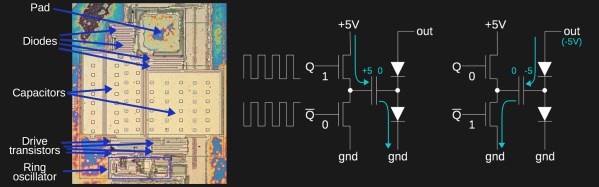
That’s where the Vampire Charger by [Matteo Borri] and [Lisa Rein] comes in. It is a piece of hardware focused on turning just about any source or power one might possibly have access to into a reliable source of 5 VDC for anything that can plug in by USB. This is much more than a DC-DC converter with a wide input range; when they say it is made to accept just about anything as an input, they mean it. Found a working power source but don’t know what voltage it is? Don’t know which wire is positive and which is negative? Don’t even know whether it’s AC or DC? Just hook up the alligator clips and let the Vampire Charger figure it out; when the light is green, the power’s clean.

The Vampire Charger was recently selected to move on to the final round of The Hackaday Prize, netting $1000 cash in the process. The next challenge (which will have another twenty finalists receiving $1000 each) is the Human-Computer Interface challenge. All you need to enter is an idea and some documentation, so dust off that project that’s been waiting for an opportunity, because here it is.

Open Source Power Converter For The Masses

GaN or Gallium Nitride Transistors have been in the news for their high-frequency and high-efficiency applications. Anyone interested in the Power Converter domain will love this open-source project by Siemens. The offering is called SDI TAPAS and it is a multipurpose GaN FET based board with a TMS320F28x controller onboard.

A quick look at the schematic reveals a lot of stuff going on like current and voltage sense chips along with a neatly designed GaN power stage with by-the-book drivers. There is a plethora of connectors on-board including one for the Raspberry Pi which is an added bonus. The git repository comes with sample code to get you off the ground, with examples running BLDC motors as well as connect it to Siemens MindSphere Cloud Platform.

This platform can be used in a number of functions in addition to motor control, such as battery charging, solar energy harvesting, and wireless charging. There is a presentation(PDF) that is available for download, and if you are looking for use cases there are a number of user build projects on their community site. The schematic and board designs can be used to make your own, or you could ask them for a sample board and they might give away more on their community site.

For those starting out, you might appreciate this tutorial on Buck Converter Efficiency to get a feel for the hardware that goes into such experiments.

IHC Badge: It’s Not (Quite) A Nokia

Electronic conference badges are an integral part of our culture, and have featured many times here. The norm for a badge is an exquisitely designed printed circuit board with some kind of microcontroller circuit on it, often a display, and some LEDs.

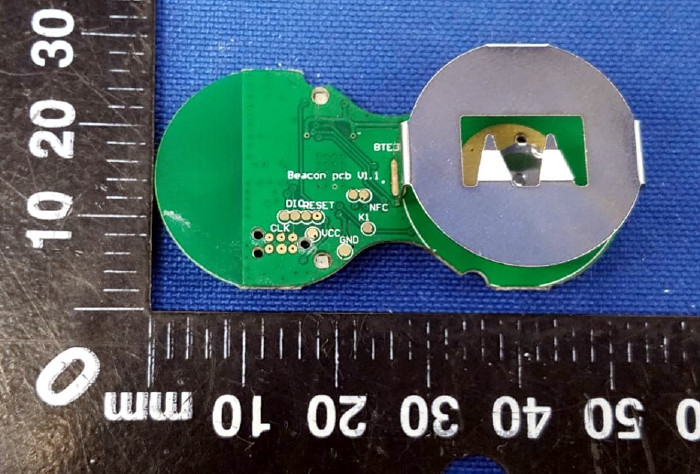
This is not enough though for [Mastro Gippo], for he has given us an interesting alternative, the shell of a Nokia 3310 mobile phone fitted with a new motherboard holding an ESP32 module, and of course that classic display. It is to be the badge for IHC Camp, which initialism if you hadn’t guessed stands for Italian Hacker Camp, and which will run from the 2nd to the 5th of August 2018 in Padova, Italy. It’s worth reminding readers, at the time of writing IHC tickets are still available, so get ’em while they’re hot!

The board itself is a beautiful piece of work, and aside from the Nokia’s keyboard and display it holds the ESP module and an STM32F103 microcontroller that handles all the peripherals. There is no microphone, after all this is a badge rather than a phone, but there is space for a LoRa module. He’s done another fascinating post about the PCB design, including the on-board wireless antenna.

We have seen a lot about badges from the #BadgeLife scene surrounding the USA’s DEFCON courtesy of our colleague [Brian Benchoff], so it is particularly interesting to see badges from the opposite side of the Atlantic. This is an artform whose journey still has a way to go, and we’ll be along for the ride!

The C.H.I.P Returns, Maybe

Remember the C.H.I.P? The little ARM-based and Linux-capable single board computer that was launched in 2015 at what was then a seemingly impossibly cheap price of $9, then took ages to arrive before fading away and the company behind it going under? Like a zombie, it has returned from the dead!

So, should we be reaching for the staples of zombie movies, and breaking out the long-playing records? Or should we be cautiously welcoming it back into the fold, a prodigal son to the wider family of boards? Before continuing, it’s best to take a closer look.

The C.H.I.P that has returned is a C.H.I.P Pro, the slightly more powerful upgraded model, and it has done so because unlike its sibling it was released under an open-source licence. Therefore this is a clone of the original, and it comes from an outfit called Source Parts, who have put their board up for sale via Amazon, but with what looks suspiciously like a photo of an original Next Thing Co board. We can’t raise Source Parts’ website as this is being written so we can’t tell you much about its originator and whether this is likely to be a reliable supplier that can provide continuity, so maybe we’d suggest a little caution until more information has emerged. We’re sure that community members will share their experiences.

It’s encouraging to see the C.H.I.P Pro return, but on balance we’d say that its price is not the most attractive given that the same money can buy you powerful boards that come with much better support. The SBC market has moved on since the original was a thing, and to make a splash this one will have to have some special sauce that we’re just not seeing. If they cloned the Pocket C.H.I.P all-in-one computer with keyboard and display, now that would catch our attention!

It all seemed so rosy for the C.H.I.P at launch, but even then its competitors doubted the $9 BoM, and boards such as the Raspberry Pi Zero took its market. The end came in March this year, but perhaps there might be more life in it yet.

Thanks [SlowBro] for the tip.

A Slightly Scientific Examination Of Epoxies

Two-part epoxy is one of those must-have items in your toolbox, albeit kept in a ziploc bag to keep all that goo off the rest of your tools. It’s a glue with a million uses, but which brand is best? Should you keep some cheap five-minute epoxy around, or should you splurge for the fancy, long-setting JB Weld. It’s not a perfect analysis, but at least [Project Farm] has done the experiment. This is a test of which two-part epoxy you can find at your local home supply store is strongest.

The epoxies tested include Gorilla epoxy, Devcon Plastic Steel, Loctite Epoxy Weld, JB Weld original, JB Weld Kwik Weld, and JB ExtremeHeat. This more or less covers the entire gamut of epoxies you would find in the glue aisle of your local home supply store; the Gorilla epoxy is your basic 5-minute epoxy that comes in a double barrel syringe, and the JB Welds are the cream of the crop.

The testing protocol for this experiment consisted of grinding a piece of steel clean, applying a liberal blob of each epoxy, and placing three bolts, head down, in each puddle. The first test was simply suspending weights in 2.5-pound increments to each bolt as a quick test of shear strength. Here, the losers in order were the JB Weld ExtremeHeat, JB Weld KwikWeld, Loctite, Gorilla Epoxy, Devcon Plastic Steel, and finally the JB Weld Original. Your suspicions are confirmed: those fancy new versions of JB Weld aren’t as good as the original. The fact that they’re worse than 5-minute epoxy is surprising, though. The second test — torquing the bolts out of the epoxy — gave similar results, with Devcon Plastic Steel beating the JB Weld Original just barely.

So, what do these results tell us? Cheap five-minute epoxy isn’t terrible, and actually better than the fancy new versions of JB Weld. Loctite is okay, and the Devcon and original JB Weld are at the top of their game. That’s not that surprising, as you can cast cylinder heads for engines out of JB Weld.

Continue reading “A Slightly Scientific Examination Of Epoxies”

Hot Camera Contest: Build A Battery Powered Thermal Camera

Here’s a challenge for all you hardware hackers out there. Peter Jansen has opened up the Hot Camera Contest on Hackaday.io to use a thermal imaging camera in a battery-powered project.

The challenge here is simple. Use a Flir Lepton thermal imaging camera module in a battery-powered configuration. There’s a catch, though: this is a project to use the Lepton in radiometric mode, where the camera spits out an actual temperature value for each pixel. Yes, this is a documented feature in the Flir Lepton module, but so far very few people are using it, and no one has done it with a small, battery-powered device.

The rules for this challenge are to use the Flir Lepton 2.5 in radiometric mode using either the Raspberry Pi Zero W or ESP32. Any software in this challenge must spit out absolute temperature values in a text format, and there must be a demonstration of putting the Flir Lepton into low-power mode. There are two challenges here, one for the Raspi and one for the ESP32; and winner will be named for each.

Getting More from a Fascinating Sensor

The Flir Lepton is a tiny little thermal camera that’s been available to the Maker community for some time now, first through GroupGets and now through Sparkfun. For a pair of Benjamins, the specs are very impressive: the Lepton has a resolution of 60×80 pixels and everything is can be read over an SPI port. The Lepton gives any project thermal imaging, and the PureThermal board turns the Lepton into a USB device.

Peter Jansen is the creator of the Open Source Science Tricorder (yes, it’s a tricorder) which took Fourth Prize in the 2014 Hackaday Prize. You can understand how he became interested in portable, and we’re sure whatever project he has in mind for this battery-powered Flir will be awesome.

This really is a great example of what the Hackaday.io community is capable of. The goal here is to create useful Open Source drivers for some very interesting hardware, and there’s some prizes to sweeten the pot. Peter has a $125 Sparkfun gift card on offer for each of the two winners. And the challenge of solving a tricky problem and making designs easier for others is a powerful motivator. Who doesn’t like a challenge?

How Low Can You Go? Tiny Current Generator

Current limited power supplies are a ubiquitous feature of the bench, and have no doubt helped prevent many calamities and much magic smoke being released from pieces of electronics. But for all their usefulness they are a crude tool that has a current resolution in the range of amps rather than single digit milliamps or microamps.

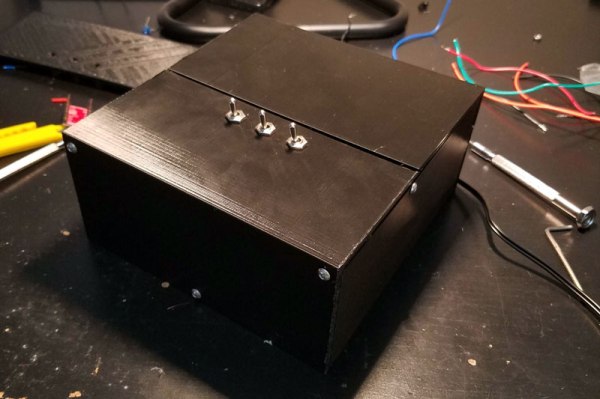
To address this issue, [Yann Guidon] has produced a precision current source, a device designed to reliably inject tiny currents. And in a refreshing twist, it has an extremely simple circuit in the form of a couple of PNP transistors. It has a range from 20 mA to 5 µA which is set and fine-tuned by a pair of pots, and it has a front-panel ammeter hacked from a surplus pocket multimeter, allowing the current to be monitored. Being powered by its own internal battery (and a separate battery for the ammeter) it is not tied to the same ground as the circuit into which its current is being fed.

[Yann] is a prolific builder whose work has featured here more than once. Take a look at his rubidium reference and his discrete component clocks, for example, and his portable LED flash.