Dimming The Living Room Lights Using Your TV Remote

As part of a complete home theater setup [Andy] wanted to be able to control the lights from his couch. He started thinking about the best way to do this when he realized that his TV remote has buttons on it which he never uses. Those controls are meant for other components made by the same manufacturer as the TV. Since he doesn’t have that equipment on hand, he built his own IR receiver to switch the lights with those unused buttons.

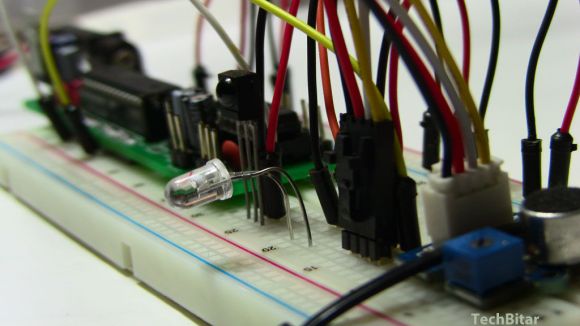
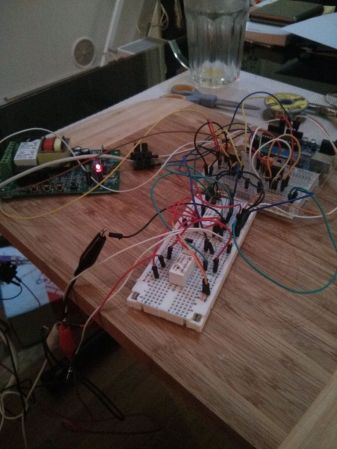
He monitors and IR receiver using an AVR microcontroller. It is powered from mains via the guts from a wall wart included in the build. Also rolled into the project is a solid state relay capable of switching the mains feed to the light circuit. [Andy] mentions that going with a solid state part mean you don’t get that clicking associated with a mechanical relay. An electrical box extension was used to give him more room for mounting the IR receiver and housing his DIY circuit board.

Raspberry Pi Reaches Critical Mass As XBMC Hardware

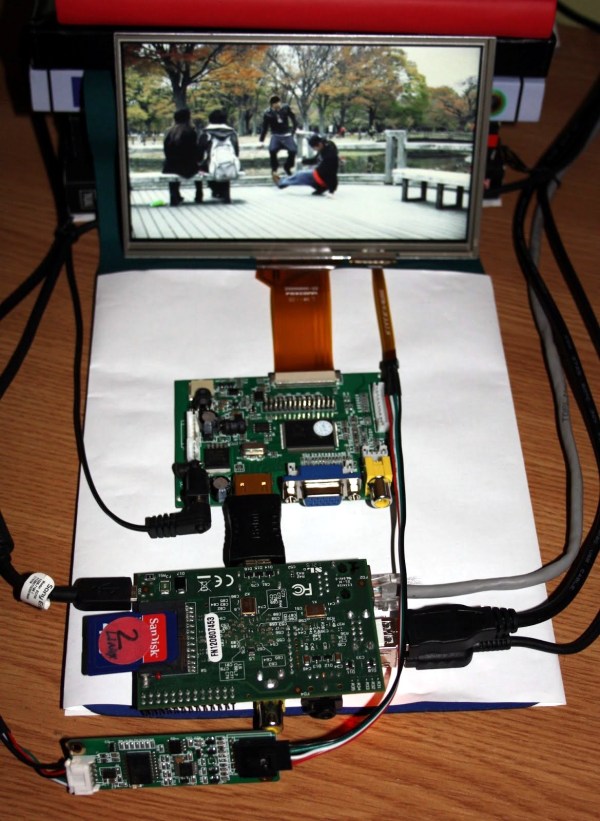
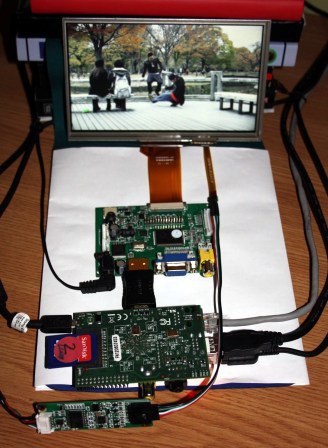
For years I’ve been dreaming of a streaming media device that could just be stuck to the back of a television. Since XBMC has been far and away my favorite set-top box software, I’ve closely monitored hardware developments that can run that package. Now I think it’s time to declare that the Raspberry Pi has achieved the base specifications to be branded the XBMC device that rules them all.

There are a huge range of opinions on this topic, but please hear me out after the break to see what has brought me to this conclusion.

Continue reading “Raspberry Pi Reaches Critical Mass As XBMC Hardware”

Controlling Google TV From A Raspberry Pi (or Other Networked Devices)

Google TV is a network connected television. It does what you would think: plays television programs, streams media from the internet, and allows you to open URLs on your TV. But one nice feature is that it can also be controlled over the network rather than just via an IR remote. Google publishes apps which make this simple with a smartphone. But the communications protocols are open source, so [Leon Nicholls] wrote a Google TV remote control library in Java.

The video after the break shows him pairing a Raspberry Pi with his television. The image above is the pairing verification code you must enter on the remote hardware before control is authorized. Apparently this is a step that needs to happen every time if using Google’s Anymote library. [Leon] improved that, by saving the pairing data so that the first authorization is all that it takes.

He figures this could be used for home automation. We’re not sure what we’d use it for but we’d love to hear your ideas in the comments.

Cheap Electronic Dartboard Hacked To Use Android For Scoring

[Dan] took a $13 electronic dartboard and made it work with an Android device. The idea behind it is that these cheap electronic models feature a very sparse display. At this price that doesn’t surprise us. He wanted to add the features you’d find on a coin-op model like the ones found in bars. So he added some hardware that lets him use Android as the scoreboard.

To do this all he needs is the ability to detect when a dart has hit the board and what value was registered. The board is really nothing more than a 62-button input device organized as an 8×8 matrix. He soldered jumpers between the pins and a DIP socket. After the work was done he programmed his Cordium BASIC microcontroller, a 28-pin chip, and dropped it right in. It communicates with a serial Bluetooth module which provides the connectivity with an Android phone. You can see a very quick clip of the app embedded after the break.

This would be just perfect if you’re using an Android set-top-box on a TV near the dart board.

Continue reading “Cheap Electronic Dartboard Hacked To Use Android For Scoring”

Bluetooth Control For Your DSLR Or Just About Any Other IR Operated Device

Just the other day we were reading a Reddit thread asking about how to control a television with a smartphone. The conversation started by talking about adding an IR LED to the phone.  Then it was suggested that there should be standalone Bluetooth devices that convert commands to IR, and came around to the ideas that TV’s should ship with native Bluetooth hardware. We couldn’t agree more but we’re also not about to replace our TV just for this option. That’s why we were delighted to find this project waiting on our tip line. It’s a method of controlling a camera shutter from a smartphone using Bluetooth. But the technique will work for any device which uses an infrared remote control.

The video after the break shows two different devices controlling the camera shutter. As you can see in the diagram above, the iPhone is the master controller, connecting to a Bluetooth headset mounted on the camera. That headset was altered to feed the speaker connections into an IR LED pointed at the camera’s receiver. The iPhone plays an encoded audio track matching the IR remote command, resulting in the properly formatted message flashing on the LED. The watch doesn’t have the ability to playback audio, but it can send a message to the phone, which then plays the proper audio track through the headset.

Continue reading “Bluetooth Control For Your DSLR Or Just About Any Other IR Operated Device”

Rooting A NeoTV Set Top Box From The Couch

The NeoTV is a set top box built by Netgear to compete with the likes of Roku. It streams video from the usual Internet sources like Netflix, Hulu Plus, and YouTube. [Craig] recently cracked his unit open, and in the process discovered that the NeoTV can be rooted using nothing but the remote control.

He starts with a hardware overview. The box houses a single-board ARM design with a 128MB of NAND and 256MB of RAM. The serial port is easy to find, but it does not provide a root shell (which often is one of the easiest ways to root a device). He next turns to poking around the unencrypted firmware update to see what he can learn. That’s how he discovered that the SSID value when connecting to WiFi is fed into a system() command. This glaring security hole lets you run just about anything you want on the device by issuing commands as fake SSID names. It’s just a matter of a little Linux know-how and [Craig] now has root access on his device.

GD-ROM Drive Emulated To Use SD Cards Instead

This board is the prototype which [Deunan] has been working on in order to use an SD card in place of a GD-ROM drive. The idea is to fully implement the hardware protocol used by a GD-ROM drive so that it can be completely replaced. The end goal is to do away with the optical drive on a Dreamcast game console.

As these game systems age, the optical drive is the most likely part to fail first as it involves moving parts and a lens that may degrade over time (we’re basing that assumption on our experience with DVD-ROM and RW). This may sound like a way to play pirated games, but [Deunan] makes it clear in his question and answer post that the firmware for his prototype is written to only play proper disc images and will probably not play the rips which are found in the darker recesses of the interwebs.

He’s been at this for quite a while. Here’s an earlier project he did that uses an FPGA board for the hardware.

[Thanks Walt]