Every Frame A Work Of Art With This Color Ultra-Slow Movie Player

One of the more recent trendy builds we’ve seen is the slow-motion movie player. We love them — displaying one frame for a couple of hours to perhaps a full day is like an ever-changing, slowly morphing work of art. Given that most of them use monochrome e-paper displays, they’re especially suited for old black-and-white films, which somehow makes them even more classy and artsy.

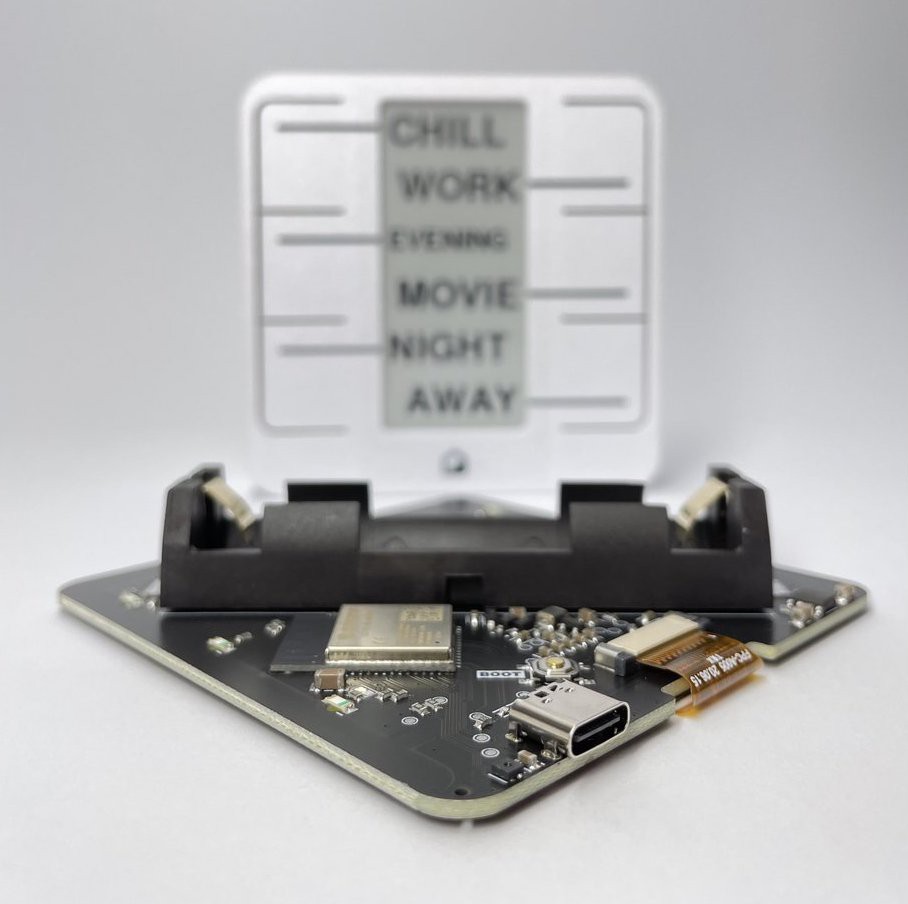
But not every film works on a monochrome display. That’s where this full-color ultra-slow motion movie player by [likeablob] shines. OK, full color might be pushing it a bit; the build centers around a 5.65″ seven-color EPD module. But from what we can see, the display does a pretty good job at rendering frames from films like Spirited Away and The Matrix. Of course there is the problem of the long refresh time of the display, which can be more than 30 seconds, but with a frame rate of one every two hours, that’s not a huge problem. Power management, however, can be an issue, but [likeablob] leveraged the low-power co-processor on an ESP32 to handle the refresh tasks. The result is an estimated full year of battery life for the display.

We’ve seen that same Waveshare display used in a similar player before, and while some will no doubt object to the muted color rendering, we think it could work well with a lot of movies. And we still love the monochrome players we’ve seen, too.

ESP8266 Smart Vents Keep Tabs On Home Temps

Have you ever found that, despite having a central heating and air conditioning system, that not all the rooms in your home end up being the temperature you want them to be? Maybe the dining room gets too hot when the heater is running, or the bedroom never seems to cool off enough in the summer months. If that sounds like your house, then these motorized “smart vents” from [Tony Brobston] might be exactly what you need.

The idea here is pretty simple: an ESP8266 and a servo is built into the 3D printed vent register, which allows it to control the position of its louvers. When connected to your home automation system via MQTT, the vents allow you to control the airflow to each room individually based on whatever parameters you wish. Most likely, you’ll want to pair these vents with an array of thermometers distributed throughout the house.

While [Tony] says the design still needs some testing, he’s released smart vents in a range of sizes from 2×10 to 6×12 inches. He’s also provided excellent documentation on how to print, assemble, and program the devices. It’s clear that a lot of care and thought went into every element of this project, and we’re excited to see how it can be developed further by the new ideas and contributors that will inevitably pop up now that it’s gone public.

Want to add some automation to your HVAC, but don’t have a fancy central unit? Don’t worry, as long as your heater or air conditioner has an infrared remote, you should be able to wedge a WiFi-enabled microcontroller in into the equation.

Continue reading “ESP8266 Smart Vents Keep Tabs On Home Temps”

Chips Remembered: The Scenix/Ubicom/Parallax SX

If you are a bibliophile, going to a used bookstore is a distinctly pleasant experience. Sure, you might discover an old book that you want to read. But at least some of the endorphin rush comes from seeing old friends. Not humans, but books you read years or even decades ago. Most often, you don’t buy the book — you probably have one stashed in a box somewhere. But it is a happy feeling to see an old friend and maybe thumb through it reading a passage or two among shelves of musty books. I wish we had something like that for chips. Outside of a few notable exceptions, chips tend to have a short life span of popularity and then give way to other chips. This is especially true of CPUs. One that I especially miss is the Scenix/Ubicom/Parallax SX chip.

I had a bookstore-like experience with this processor the other day. I produced a few products based around these chips and I have a small stash of them left. I jealously guard the hardware needed to program them “just in case.” Well, naturally, someone needed a few for some reason so I had to dig it all up. Knowing these might be some of the last of the unprogrammed SX chips in the world made me a little nostalgic.

The Story

In the late 1990s, a company called Scenix started producing a microcontroller called the SX in a few footprint sizes. So the SX18 was, for example, an 18-pin part. By 1999, they were already in full swing with the SX18 and SX28 and they introduced the SX52.

Of course, a lot of companies produced microcontrollers. The Scenix offering was a bit special. In those days, the Microchip PIC was the king of the hill. The PIC is an odd beast that evolved from a very limited controller made to be small and inexpensive. Notably, while it could support relatively high clock frequencies — 20 MHz was common — each normal instruction took 4 clock cycles. So when your crystal said 20 MHz, you were running instructions at 5 MHz.

Continue reading “Chips Remembered: The Scenix/Ubicom/Parallax SX”

This Simple Media Player Will Inspire Beginners And Invite Experimentation

While it would have been considered science-fiction just a few decades ago, the ability to watch virtually any movie or TV show on a little slab that fits in your pocket is today no big deal. But for an electronics beginner, being able to put together a pocketable video player like this one would be quite exciting, and might even serve as a gateway into the larger world of electronics design.

For inspiration, [Alex] from Super Make Something on YouTube looked to the Rickrolling keychain media players we featured back in January. His player is quite a bit larger and more capable, with a PCB design that allows the player to be built in multiple configurations, from audio-only to full video and a LiPo battery. The guts of the player center around an ESP32 module, with an audio amp and speakers plus a 1.8″ LCD screen with SD card reader for storing media files. Add in a few controls and switches and a little code, and you’ll be playing back media files in a snap. Build info and demo in the video below.

It may be a simple design, but we feel like that’s the whole point. [Alex] has taken pains to make this as approachable a build as possible. All the parts are cheap and easily available, and the skills needed to put it together are minimal — with the possible exception of soldering down the ESP32 module, which lacks castellated edge terminals. For a beginner, getting a usable media player by mixing together just a few modules would be magical, and the fact that it’s still pretty hackable afterward is just icing on the cake.

Continue reading “This Simple Media Player Will Inspire Beginners And Invite Experimentation”

Discreet CO2 Monitor Hides Elegant Internal Layout

Outwardly, this sleek CO2 monitor designed by [Daniel Gernert] might look like something cooked up in Amazon’s consumer electronics division. But open up that 3D printed case, and you’ll find a surprisingly low parts count that’s been cleverly packed in so as to make the most of the enclosure’s meager internal dimensions.

No wasted space here.

There are, if you can believe it, just three principle components to this device: a Seeed Studio Seeeduino XIAO microcontroller, a Infineon S2GO PAS CO2 sensor board, and a ring of WS2812B LEDs. You could even delete the ring altogether and replace it with a single addressable LED to accomplish the same goal, but we’d say the full ring is money-well-spent if you’re going to spin up your own copy.

Functionality is very straightforward — the LED ring will indicate the detected CO2 concentration by lighting up green and working its way through yellow and onto red. The sensor has no wireless capability, but if you plug it into your computer, you can get a local readout of current conditions.

We love environmental monitoring solutions here almost as much as we love intricately designed 3D printed enclosures. If you’d like to see another project where those two concepts aligned, check out this printable ESP8266 sensor enclosure.

screenshot from the video linked, showing example code that lights up an LED, and in a small window, also shows the LED lit up on a small Pi Pico board connected over USB

Your MicroPython Board Can Be Your Tinkering Peripheral

[Brian Pugh] has shared a cool new project that simultaneously runs on desktop Python and MicroPython – the Belay library. This library lets you control a MicroPython device seamlessly from your Python code – interacting with real-world things like analog/digital trinkets, servos, Neopixels and displays, without having to create your own firmware or APIs.

You need a serial-connected MicroPython board – even an ESP8266 should do. Then, you can intersperse your Python code with MicroPython-written functions, and call them whenever you need your connected device to do something – keeping the entire logic of your project within a single device. [Brian] provides quite a few examples, even for more complex things like displays. No doubt, there are limitations, but this looks to be a powerful tool in a hacker’s arsenal.

Readers might be reminded of an Arduino library called Firmata – an old-time way to do such connectivity. We’ve also previously covered a Pi Pico firmware that does a similar thing, and even features a breakout board for all your experimentation needs!
Continue reading “Your MicroPython Board Can Be Your Tinkering Peripheral”