These 20 Projects Won $1000 For Assistive Technologies

For the last seven months, Hackaday has been hosting the greatest hardware competition on Earth. The Hackaday Prize is a challenge to Build Something That Matters, asking hardware creators around the world to focus their skills to change the world.

The results have been spectacular. In five rounds of design challenges, we’ve seen more than 1000 entries and so far eighty of them have won $1000 and a chance to win the Grand Prize: $150,000 and a residency at the Supplyframe DesignLab in Pasadena.

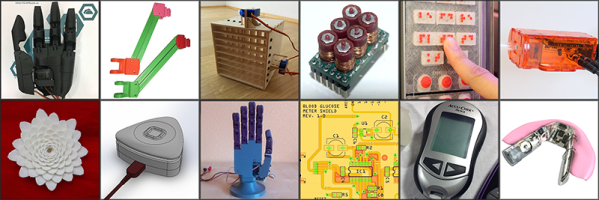
Last week, we wrapped up the last challenge for the Hackaday Prize: Assistive Technologies. We’re now happy to announce twenty of those entries that have been selected to move to the final round and have been awarded a $1000 cash prize. Congratulations to the winners for the Assistive Technologies portion of the Hackaday Prize:


Who Will win the 2016 Hackaday Prize?

The finalists from each round are now being sent to our fantastic panel of judges. One of them will be awarded the Hackaday Prize. In addition to the prestige, they will win $150,000 and a residency at the Supplyframe DesignLab in Pasadena. Four more of the finalists will receive the other cash prizes of $25k, $10k, $10k, and $5.

Find out who will win live at the Hackaday Superconference on November 5th. The greatest hardware conference on the planet — the two-day hardware spectacular with an awesome speaker lineup, great workshops, and a fantastic community — includes the Hackaday Prize part. There’s still time to get a ticket to participate in this hardware spectacular and witness the crowning of the winner of The Hackaday Prize.

Certification For Open Source Hardware Announced

Today at the Open Hardware Summit in Portland, Alicia Gibb and Michael Weinberg of the Open Source Hardware Association (OSHWA) launched the Open Source Hardware Certification program. It’s live, and you can certify your own hardware as Open Hardware right now.

What Is Open Source Hardware?

Open Source Hardware can’t be defined without first discussing open source software. At its very core, open source software is just a copyright hack, enabled by a worldwide universal computer network. The rise of open source software is tied to the increasing ease of distributing said software, either through BBSes, Usenet, and the web. Likewise, Open Source Hardware is tied to the ease of distributing, modifying, and building hardware.

In the 1980s, there were no services that could deliver a custom circuit board to anywhere on the planet for a dollar per square inch. When open software began, CNC machines were expensive tools, now you can build a very good machine for just a week’s wages. We are currently living at the dawn of Open Source Hardware, enabled by the creation of Open Source design tools that have themselves been used to create physical tools. Inexpensive 3D printers, open source oscilloscopes, circuit board plotters, and the entire hackerspace movement are as revolutionary as the Internet. These devices and the Internet are the foundations for Open Hardware and software, respectively.  The objections to why hardware is incompatible with Open Source no longer apply and small-scale manufacturing techniques are only going to get better.

Continue reading “Certification For Open Source Hardware Announced”

Blue LED Streetlights Keeping You Awake?

If you’ve played around with “white” LEDs, you already know that there’s no such thing. There’s warm white and cool white and any numbers of whites in-between. And when white LEDs were new, the bluer “cool white” variety were significantly more prevalent.

Enough US states have swapped out their old street lights with LEDs that it may be having a measurable effect on people and on the animals around us. This is the claim in a recent position paper by the American Medical Association’s Council on Science and Public Health. (Report as PDF.)

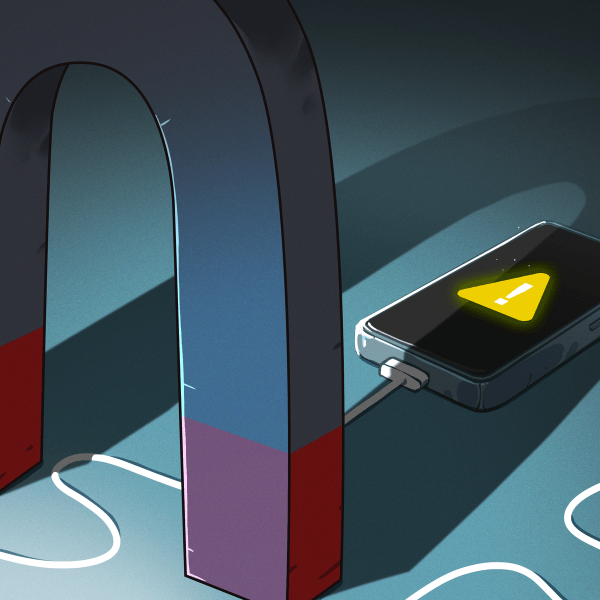
Science strongly suggests that heavy doses of light can keep people from falling asleep, and that brighter LED streetlamps may be making the problem worse. The AMA report goes a step further, and pins extra blame on the color of the light. Blue light apparently suppresses the production of melatonin which helps you sleep at night. And it’s not just humans whose circadian rhythms are getting messed up — the effects are seen throughout the animal kingdom.

Continue reading “Blue LED Streetlights Keeping You Awake?”

Basement 3D Printer Builds Are Too Easy. Try Building One On Mars.

[Tony Stark Elon Musk] envisions us sending one million people to Mars in your lifetime. Put aside the huge number or challenges in that goal — we’re going to need a lot of places to live. That’s a much harder problem than colonization where mature trees were already standing, begging to become planks in your one-room hut. Nope, we need to build with what’s already up there, and preferably in a way that prepares structures before their inhabitants arrive. NASA is on it, and by on it, we mean they need you to figure it out as part of their 3D Printed Hab Challenge.

The challenge started with a concept phase last year, awarding $25k to the winning team for a plan to use Martian ice as a building material for igloo-like habs that also filter out radiation. The top 30 entries were pretty interesting so check them out. But now we’re getting down to the nitty-gritty. How would any of these ideas actually be implemented? If you can figure that out, you can score $2M.

Official rules won’t be out until Friday, but we’d love to hear some outrageous theories on how to do this in the comments below. The whole thing reminds us of one of the [Brian Herbert]/[Kevin J. Anderson] Dune prequels where swarms of robot colonists crash-land on planets throughout the universe and immediately start pooping out building materials. Is a robot vanguard the true key to planet colonization, and how soon do you think we can make that happen? We’re still waiting for robot swarms to clean up our oceans. But hey, surely we can do both concurrently.

Arduino Vs. Arduino: Arduino Won

For the last two years, Arduino LLC (the arduino.cc, Massimo one) and Arduino SRL (the arduino.org, Musto one) have been locked in battle over the ownership of the Arduino trademark. That fight is finally over. Announced at the New York Maker Faire today, “Arduino” will now go to Arduino Holding, the single point of distribution for new products, and a non-profit Arduino Foundation, responsible for the community and Arduino IDE.

Since early 2015, Arduino — not the Arduino community, but the organization known as Arduino — has been split in half. Arduino LLC sued Arduino SRL for trademark infringement. The case began when Arduino SRL, formerly Smart Projects SRL and manufacturers of the Arduino boards with a tiny map of Italy on the silk screen, began selling under the Arduino name. Arduino LLC, on the other hand, wanted to internationalize the brand and license production to other manufacturers.

While Arduino and Arduino have been tied up in court for the last few years, from the outside this has look like nothing else but petty bickering. Arduino SRL forked the Arduino IDE and bumped up the version number. Later, an update from SRL was pushed out to Amazon buyers telling them Arduino.org was the real Arduino. Resellers were in a tizzy, and for a time Maker Faires had two gigantic Arduino booths. No one knew what was going on.

All of this is now behind us. The open source hardware community’s greatest source of drama is now over.

I spoke with Massimo after the announcement, and although the groundwork is laid out, the specifics aren’t ready to be disclosed yet. There’s still a lot to work out, like what to do with the Arduino.org Github repo, which TLD will be used (we’re rooting for .org), support for the multitude of slightly different products released from both camps over the years, and finer points that aren’t publicly visible. In a few months, probably before the end of the year, we’ll get all the answers to this. Now, though, the Arduino wars are over. Arduino is dead, long live Arduino.

Very, Very Tiny X86 Systems

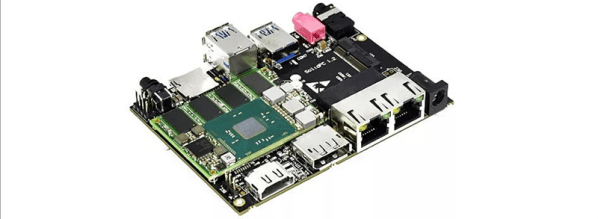
The most interesting market for Intel in recent years has been very, very small form factor PCs. ARM is eating them alive, of course, but there are still places where very small and very low power x86 boards make sense. The latest release from SolidRun is the smallest we’ve seen yet. The SolidPC Q4 is one of the smallest x86 implementation you can find. It’s based around the MicroSoM, a module even smaller than a Raspberry Pi, and built around a carrier board that has all the ports you could ever want from the tiniest PC ever.

The SolidPC Q4 is technically only a carrier board featuring a microSD slot, Displayport, HDMI 1.4B, two RJ45 ports with the option for PoE, three USB 3.0 Host ports, jacks for mic and stereo sound, and an M.2 2230 connector for a wireless module. The interesting part of this launch is the MicroSoM, a System on Module based on Intel’s Braswell architecture. Two models are offered, based on the quad-core Atom E8000 and the Pentium N3710. Both modules feature up to 8GB of DDR3L RAM and 4GB of eMMC Flash.

The interesting part of this launch is the MicroSoM, a System on Module based on Intel’s Braswell architecture. Two models are offered, based on the quad-core Atom E8000 and the Pentium N3710. Both modules feature up to 8GB of DDR3L RAM and 4GB of eMMC Flash. The size of these modules is 52.8mm by 40mm, or just a shade larger than the stick-of-gum-sized Raspberry Pi Zero.

The SolidPC isn’t intended to be a Raspberry Pi competitor. While those cheap ARM boards are finding a lot of great uses in industry, they’re no replacement for a small, x86 single board computer. The pricing for this module starts at $157 according to the product literature, with a topped out configuration running somewhere between $300 and $350, depending on options like a heatsink, enclosure, or power adapter. If you want a small single board computer with drivers for everything, there aren’t many other options: you certainly wouldn’t pick a no-name Allwinner board.

Qualcomm Looks To Gobble Up NXP

Remember when we talked about NXP merging with Freescale to move into the top ten semiconductor companies? Yeah, that was just eighteen months ago and just barely closed before the new year. Now it looks like Qualcomm wants to acquire NXP to the tune of $30 billion.

You’re most likely familiar with Qualcomm as a cellphone silicon company. The acquisition of NXP opens up a lot of additional markets with their portfolio of chips — automotive among them thanks to the Freescale merger. Now you should be asking yourself just how big Qualcomm is already. What’s perhaps most interesting is that, as mostly a wireless chip company, Qualcomm is ranked number three in worldwide semiconductor sales. Adding NXP — a behemoth now in the top ten — adds at least 30% to Qualcomm’s numbers.

And so here we are, one step close to a monolithic chip fab that produces all computing power for the human race. Yippie!