Weekly Roundup 11/19/11

In case you missed them the first time around, here are our most popular posts from the past week.

Our top contender is a post about a giant snake robot that is modeled after a snake that we know of through fossil records that was up to 50 feet long. This one is pretty interesting.

Next in line is a post about a special setup where things are being projected onto a nearly invisible mist of water that literally makes the images float in midair.

After that we have a post about another creation by [Photonicinduction]. Surprisingly, he isn’t destroying something with this one and it isn’t dangerous. Nevertheless it is still interesting. Check out his home power backup system that also (there is some debate going on with this claim) reduces his electricity bills.

In fourth place we have a post about how to make your own aerogel. For those of you who haven’t seen this stuff in person, it is the least dense solid that exists. You can literally see through it.

Finally, we conclude with one about an animatronic Horus Guard mask. If you are a fan of Stargate, this is one to check out.

Video: Interrupts On The ATmega328p

This week, we are bringing you the final video in our series where [Jack] uses the 3pi robot as a fancy development board for the ATmega328p processor. Today’s video deals with interrupts. If you have been wanting to have your programs do more than one thing simultaneously, interrupts are the solution. [Jack] discusses various ways that you can use interrupts in your programs and then shows how he created a interrupt routine that drives the 3pi’s beeper. He also shows the routines that enable, disable, and control the interrupt.

Since this is the last post for this series of videos, we are posting the code used for all of the previous videos. Click here to grab a copy.

For our next series of videos, we are going to attempt something more challenging so most likely we will be taking a couple of weeks off to do some development before presenting it here. Stay tuned folks, we’ll be back.

Video is after the break…

In case you missed any of the previous videos, check out these links:

Part 1: Setting up the development environment
Part 2: Basic I/O
Part 3: Pulse Width Modulation
Part 4: Analog to Digital conversion
Part 5: Working with the 3pi’s line sensors

Continue reading “Video: Interrupts On The ATmega328p”

DIY LED Photography Lights

led-light-box

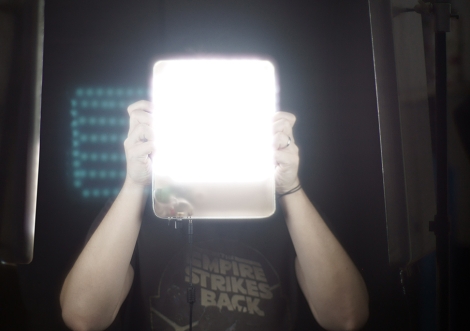
[Markus] had been drooling over some LED panels to use as a soft light source for photography, but being a hobbyist, he didn’t want to spend a ton of money to buy them. He figured that he had enough electronics know-how to build his own panels, while saving a boatload of cash in the process.

He hoped to keep the total cost under £100, so along with new items like LED light strips, he would have to use some stuff he had sitting around, like the metal cooking containers that make up the body of the lights. While originally planned for use in a different project, it turns out that the cooking containers were ideal for his lighting setup, since they are both durable and great heatsink material.

The remainder of the build is pretty straightforward. [Markus] used a pre-made LED dimmer to control the panel’s brightness, along with some tinted plexiglas to diffuse the light while bringing the color temperature into a more usable range.

While he missed his £100 mark, the lights look great – we just might have to build a few of them ourselves.

NES Controller Is A Slick Way To Carry Around Your Portable OS

nes-controller-linux-drive

[Oliver] had an old NES controller laying around, and without any other use for it, he decided to repurpose it as a portable storage device.

He gutted most of the controller, removing the plastic standoffs, leaving the D-pad and remaining buttons intact. He crammed a 32 GB flash drive inside, along with the guts from an SD card reader. Using a Dremel he cut several openings into the controller, one for the flash drive and SD card reader’s USB ports, as well as for the SD card itself. When the physical modifications were finished, he installed a small Linux distro on the flash drive, which can be run by any PC that supports booting from USB.

While some might argue, we think it’s a neat way to reuse an old gaming peripheral that he might have otherwise thrown out. The portable OS is something that would certainly come in handy, though we can’t wait until the Raspberry Pi is finished – it would be awesome to have a complete computer packed in there too.

Lego NXT Creations Are Even Cooler With WiFi On Board

nxt-wifi

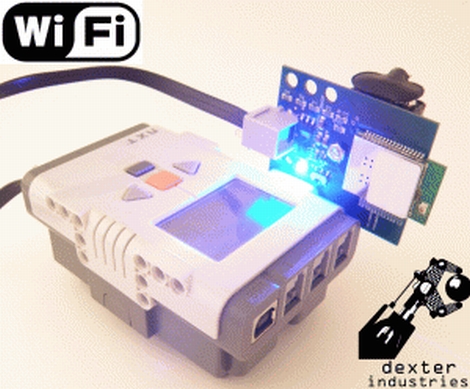
The folks at Dexter Industries have just wrapped up a week of Lego NXT projects, most of which centered on the use of their NXT WiFi sensor. Developed over the last few months, the group has been hard at work refining their design and getting some of the kinks worked out, so now you too can control your NXT creations sans wires.

The demonstrations have covered various topics throughout the week, starting out with a short tutorial on how to use a computer to communicate with the NXT device using the TCP protocol. After taking a look at WiFi power-saving capabilities, they touched on pinging other networked machines as well as querying DNS records from an NXT device. An NXT-based webserver was the next project on the list, as was remote robot control over the Internet. Finally, they wrapped the week up by configuring their Lego robot to send a tweet.

If getting your NXT creations on the move with full-fledged network access is something that sounds interesting, be sure to check out their site for downloads, a WiFi manual, and more.

Video: Working With The 3pi Robot’s Line Sensors

This week, we are serving up part five in our series where we are using the Pololu 3pi robot as a fancy development board for the ATmega328p processor. This week we are taking a quick break from working with the perpherals specific to the processor and will show how to work with the 3pi’s line sensors. A quick look at the schematic for the 3pi might lead you to think that you should be reading the line sensors with the A2D peripheral. Even though they are wired to the A2D pins, they need to be read digitally. In the video, [Jack] will show how to read raw values from the sensors and then how to calibrate the results so that you can get a nice clean 8-bit value representing what the sensors are seeing. Of course, that would happen under normal circumstances. Murphy had his way in this video and it turned out that our studio lighting was interfering a bit with the sensor readings when we were shooting so we didn’t get as good of a calibration as we would have liked when we shot.

Video is after the break.

In case you have missed the previous videos here are some links:

Part 1: Setting up the development environment
Part 2: Basic I/O
Part 3: Pulse Width Modulation
Part 4: Analog to Digital conversion

Continue reading “Video: Working With The 3pi Robot’s Line Sensors”

Weekly Roundup 11/12/11

In case you missed them the first time around, here are our most popular posts from the past week:

In the #1 spot, we had a post about a tri-color laser projector that really is a well-done project. This projector sweeps the lasers around in vector mode using a pair or mirror galvanometers so would be perfect for playing asteroids in vivid full color!

In at #2 is a post about a PVC pipe gun that can shoot AA batteries at 600 batteries per minute!

Next up we have a post about the US military finding that due to Chinese counterfeit electronics, some of its weapon systems are defective. This has become a more serious issue in recent years. It has effected hackers too as shown in this Sparkfun post from last year.

After that, we had a post about a novel and somewhat scary way to post bulletins on a board without using tacks. How do they do that? By carefully using 20,000 Volts! Yikes. We’ll stick to tape next time we run out of tacks thank you very much.

Finally, we have one about a spot welder built out of some super capacitors and carbon rods. This one probably produces equally large sparks where it is welding and at the triggering mechanism!