When Virgin Orbit filed for bankruptcy in April, it was clear the commercial launch provider was in serious trouble. Despite successfully putting four payloads into low Earth orbit, the spin-off of Richard Branson’s Virgin Galactic space tourism company had struggled to achieve a high enough launch cadence to become profitable, and had recently suffered a highly-publicized failure when their first launch from the UK from the newly-completed Spaceport Cornwall ended in a complete loss of the vehicle.
There was some hope that a buyer would swoop in and save them at the last minute, but now that the bankruptcy auction has spread out the company’s assets among several other players in the commercial launch industry, Virgin Orbital is officially no more. With future launches now off the table, the company’s remaining employees are set to be let go as operations wind down over the coming weeks.
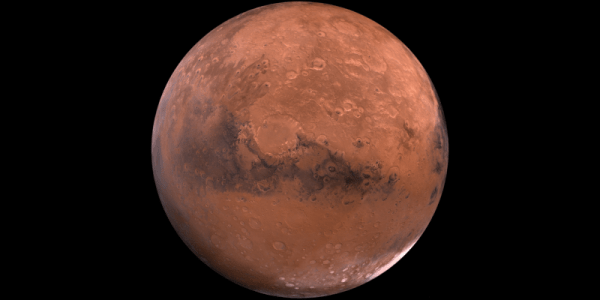
In science fiction movies, communicating with aliens is easy. In real life, though, we think it will be tough. Today, you’ll get your chance to see how tough when a SETI project uses the European Space Agency’s ExoMars Trace Gas Orbiter to send a simulated alien message to the Earth. The transmission is scheduled to happen at 1900 UTC and, of course, the signal will take about 16 minutes to arrive here on planet Earth. You can see a video about the project, A Sign in Space, below.
You don’t need to receive the message yourself. That will be the job of observatories at the SETI Institute, the Green Bank Observatory, and the Italian National Institute for Astrophysics. They’ll make the signal available to everyone, and you can join others on Discord or work solo and submit your interpretation of the message.
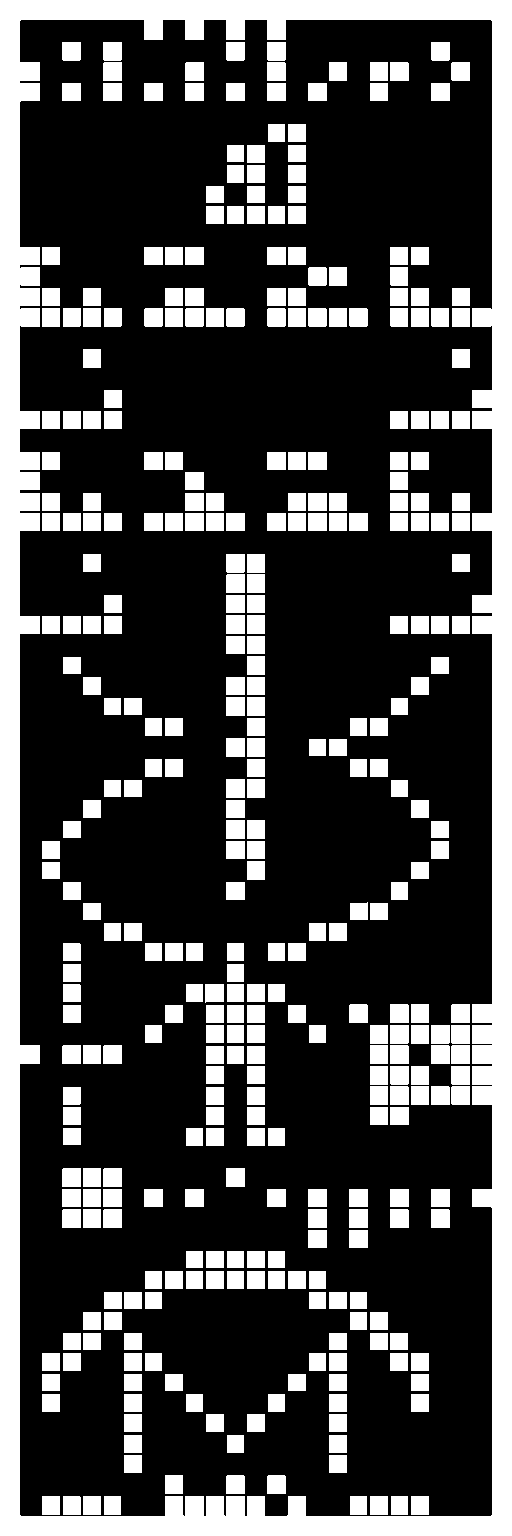
Drake’s message properly arranged
There are a host of issues involved in alien communication. What communication medium will they use? How will they encode their message? Will the message even make sense? Imagine an engineer from 1910 trying to find, decode, and understand an ad on FM radio station 107.9. First, they’d have to find the signal. Then figure out FM modulation. Then they’d probably wonder what the phrase “smartphone” could possibly mean.
When [Frank Drake] created a test message to send to aliens via the Arecibo dish, almost no one could decode it unless they already knew how it worked. But even looking at the message in the accompanying image, you probably can only puzzle out some of it. Don’t forget; this message was created by another human.
If you want a foreshadowing of how hard this is, you can try decoding the bitstream yourself. Of course, that page assumes you already figured out that the stream of bits is, in fact, a stream of bits and that it should be set in an image pattern. You also have the advantage of knowing what the right answer looks like. It could easily become an extraterrestrial Rorschach test where you find patterns and meaning in every permutation of bits.
Speaking of the Drake message, it saddens us to think that Arecibo is gone. The closest we think we’ve come to intercepting alien messages is the Wow signal.
In recent years small drones have gone from being toys and photography tools to a deadly threat on the battlefield. Kamikaze drones have become especially prominent in the news due to their use in the war in Ukraine by both sides. While we haven’t seen coordinated swarms being actively employed on the modern battlefield, it’s likely only a matter of time, making drone swarm defense an active field of development in the industry.
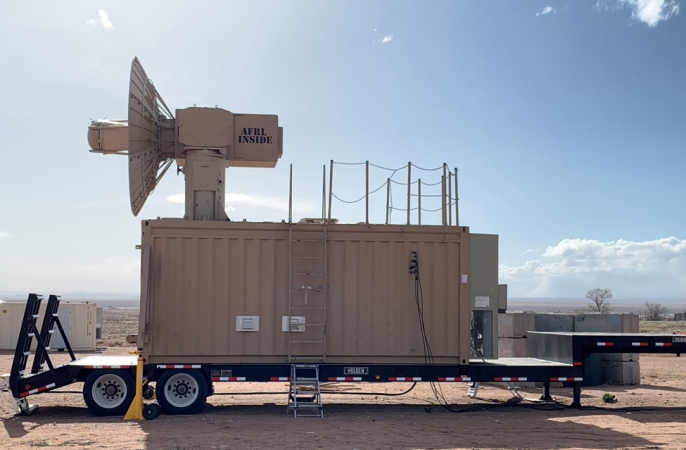
The US Air Force Research Laboratory recently conducted tests and a demonstration of an anti-drone weapon that uses pulses of high-power microwave energy to fry the electronics of a swarm of drones. Named the Tactical High-power Operational Responder, or THOR (presumably they picked the acronym first), it’s housed in a 20ft shipping container with large microwave antenna on top. The form factor is important because a weapon is only useful if it can reach the battlefield, and this can fit in the back of a C130.
THOR likely functions similarly to a shotgun, with a relatively large effective “beam.” This would have added advantages like frying multiple drones with one pulse and not needing pinpoint tracking and aiming tech required for projectile and laser-based weapons. Depending on its range and directivity, THOR might come with the downside of collateral damage to electronics close to its line of fire.
Drone swarms are of course the other side of this arms race, but fortunately they also have non-destructive uses like lights shows and perhaps even 3D printing.
When it comes to the issue of climate change, naysayers often contend that we have an incomplete understanding of the Earth’s systems. While humanity is yet to uncover all the secrets of the world, that doesn’t mean we can’t act on what we know. In many cases, as climate scientists delve deeper, they find yet more supporting evidence of the potential turmoil to come.
In the stark landscapes of Greenland, a team of intrepid researchers from the University of California, Irvine, and NASA’s Jet Propulsion Laboratory have unearthed a hidden facet of ice-ocean interaction. Their discovery could potentially flip our understanding of sea level rise on its head.
The world may not be ready, but the .zip Top Level Domain (TLD) is here. It’s a part of the generic TLD category, which was expanded to allow applications for custom TLDs. Google has led the charge, applying for 101 such new TLDs, with .zip being one of the interesting ones. Public registration for .zip domains has been open for a couple weeks, and some interesting domains have been registered, like update.zip, installer.zip, and officeupdate.zip.
Except, take a look at that last link. Looks like it has slashes in it, so it should take you to google, and ignore the AT symbol. But it doesn’t, it goes to Bing. You may have guessed, it’s Unicode shenanigans again. Those aren’t slashes, they’re U2215, the division slash. And that means that a .zip TLD could be really sneaky, if the apparent domain is one you trust. Continue reading “This Week In Security: .zip Domains, Zip Scanning”→
The ability to change direction without turning is the specialty of omnidirectional wheels, which [maker.moekoe] used to their full potential on a pair of ESP32-controlled robots. Video after the break.
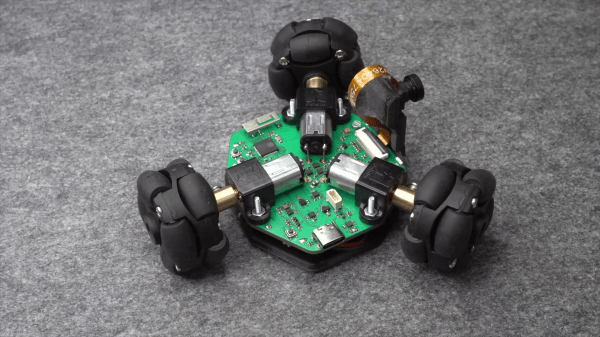
Thanks to the rollers on the wheels, the wheels could be arranged at 120° in relation to each other on the 3-wheeler and 90° 4-wheeler. [maker.moekoe] used ChatGPT and a simple python simulation to find and verify the motor control algorithm required for smooth omnidirectional driving.
A single custom PCB incorporates all the electronics, and doubles as the robot’s chassis, with the geared brushed motors bolted directly to it. An ESP32-S2 runs the show, and can also stream FPV video from the same OV2640 camera used on the popular ESP32-cam modules. The LiPo battery is held by a 3D-printed support plate screws to the bottom of the PCB. The robots can controlled by a simple web-app served by the ESP32, or a using the IMU on custom controller also built around an ESP32-S2 which uses the ESP-NOW wireless protocol.
Even though the robots’ software is still in the early stages, the movement looks extremely smooth and effortless. Plus, their all-in-one PCB chassis makes for an elegant and clean build
We’re sorry, the politically correct term these days is “unidentified anomalous phenomena” (UAP), as it’s less likely to excite those with a predilection for tinfoil hats. But whether you call them flying objects or anomalous phenomena, it’s that unidentified part that has us interested.
Before you get too excited, the meeting is about how NASA can “evaluate and study UAP by using data, technology, and the tools of science”, and the press release explains that they won’t be reviewing or assessing any unidentifiable observations. So if you’re hoping for the US government’s tacit acknowledgment that we’re not alone in the universe, you’ll probably be disappointed. That said, they wouldn’t have to assemble a team to study these reports if they were all so easily dismissed. As always, interstellar visitors are dead last on the list of possible explanations, but some cases have too much hard evidence to be dismissed out of hand. They might not be little green men, but they are something.