Customers Make VoIP Calls On American Airlines Flights


Less than a week after American Airlines introduced in-flight internet, hackers have already figured out how to use the system to make VoIP calls in a few easy steps with Phweet, a Twitter application. While the network blocks most VoIP services, Phweet can connect two people using a Flash app. Aircell, the company responsible for the system, is aware of the oversight, but it remains to be seen whether this little loophole will be fixed in a timely manner. Meanwhile, we encourage those of you who do fly on American Airlines to avoid making those phone calls; your neighbor would probably appreciate it.

[via Digg]
World Of Warcraft On A Treadmill


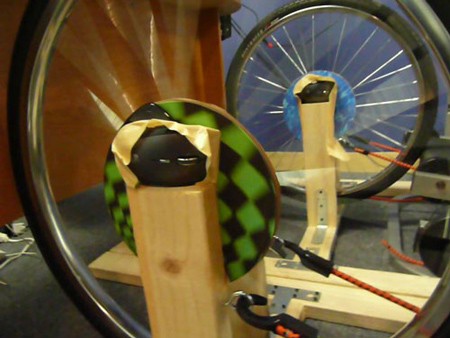
[Aaron Rasmussen] and his friend [Eli] slapped together this setup to see what it would be like to run as much as their World of Warcraft characters. They used a couple old treadmills to spin some tires with makeshift mouse sensors on them. As their speed increased, so did their character. There was a decent amount of math done to figure the average speed of a World of Warcraft character, and ultimately they settled on 12 miles per hour. Not surprisingly, they found that too difficult due to the resistance in the rig as well as being out of shape. They ended up lowering the speed required to make their character go full sprint to 6 miles per hour.

Their final conclusion was that they could never run as much as their digital counterparts. Even if they were in really good shape. [Aaron] does say that it was fun enough to consider doing it regularly as a workout plan. He should wear the costume every time he uses it.

Tongue Drive System Turns Mouth Into Virtual Keyboard


Researchers at Georgia Tech are working on a Tongue Drive System, which transforms the tongue into a tool that can manipulate computers and manage appliances and wheelchairs. This project has huge implications for the disabled, especially for those with few motor skills and limited movement. Many disabled Americans are paralyzed from the neck down, and this system could be a literal lifesaver, providing them with a method of communication and control over their own lives. Scientists have been attracted to the tongue’s potential for a long time. It provides several advantages over using other organs or appendages. It’s very sensitive, tactile, is not connected to the spinal cord, and does not usually end up being harmed in accidents. By placing a tiny magnet underneath the tongue, it’s transformed into a virtual keyboard. Sensors placed in the cheek track the magnet’s movement and processes the commands into directions for electronics, be it a wheelchair or a home appliance. We’re excited to see where this will go.

Improved Jog Wheel


Taking a cue from the jog wheel we posted last week, [42ndOddity] has built an improved version. The design is based around a solid state rotary encoder instead of an optical encoder. The rotary encoder is far easier to attach and position properly. The knob is milled from scrap aluminum-it was a copier foot. To make the motion smooth, it’s sitting in a bearing from the same copier.

SyncMaster, Home Made Modular Midi Controller.


[D.St-Amand] is designing the SyncMaster, a compact modular midi controller, from scratch. The design focuses on a modular build where you can swap out pieces like the one pictured above to achieve different layouts. Not only is it modular, but its very compact. Shown next to some common competitors, it looks very sleek.

Development seems to be moving forward, the pictures have been updated frequently. Lets hope to see a fully functional demo some time soon. Some more detailed information on the build might be nice as well. This may remind you of our story on MachineCollective. While there are similarities in that they’re modular, SyncMaster appears to be a much more polished and portable product. Keep us updated [D.St-Amand].

Das Uber Airsoft Gun Turret


Hot on the heels of the Wii missile launcher, Das Uber Airsoft Gun Turret is here to put our past airsoft turrets to shame. Made by [Miltron_B], this autonomous beast not only has gorgeous LED indicators, it has lasers. Three of them. Three freaking lasers. Take a moment to wipe the drool from your chin.

We’ve seen plenty of turrets before, but this one really excels in design. It features two webcams for more precision detection and tracking and when set to manual mode, it can be controlled with an XBox 360 controller. He’s posted great pictures of the process with a step by step break down. Tons of useful links are included to help you out.

Someone should construct a Portal sentry gun case for this thing and add voice clips.

USB Switched Power Strip


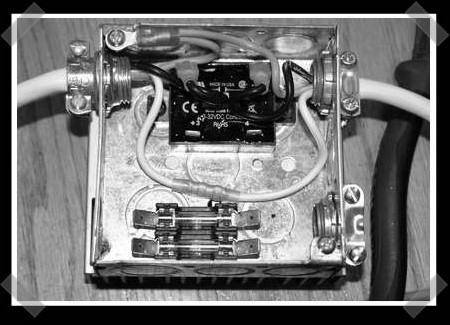
[toymotorhead] pieced together this USB controlled power strip to help with his electrical bill. His goal was to be able to have devices turned off automatically when he shut down his computer as well as powered on when he turned his computer on. Another requirement was that the USB be isolated to protect the motherboard from spikes.

The cost of the parts in total were less than $30, and consisted of a solid state relay, some fuses, and some transient voltage surge suppressing diodes. The unit only switches power off or on depending on whether or not the computer is powered up, it doesn’t control the outlets via software. He goes pretty in depth as to how everything works as well as showing nice diagrams and pictures. This should be a fairly quick and simple project, as long as you take the proper precautions for working with high voltage.