Finally, An Open-Source 8088 BIOS

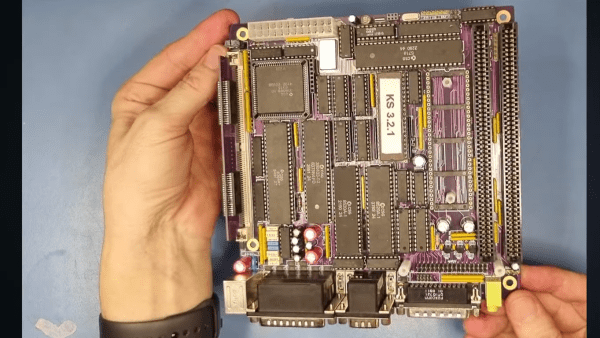
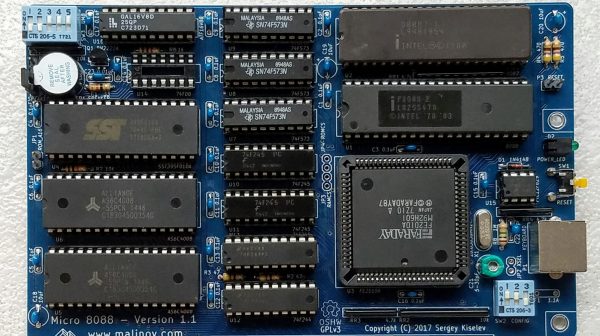
The Intel 8088 is an interesting chip, being a variant of the more well-known 8086. Given the latter went on to lend its designation to one of the world’s favorite architectures, you can tell which of the two was higher status. Regardless, it was the 8088 that lived in the first IBM PC, and now, it even has its own open-source BIOS.

As with any BIOS, or Basic Input Output System, it’s charged with handling core low-level features for computers like the Micro 8088, Xi 8088, and NuXT. It handles chipset identification, keyboard and mouse communication, real-time clock, and display initialization, among other things.

Of course, BIOSes for 8088-based machines already exist. However, in many cases, they are considered to be proprietary code that cannot be freely shared over the internet. For retrocomputing enthusiasts, it’s of great value to have a open-source BIOS that can be shared, modified, and tweaked as needed to suit a wide variety of end uses.

If you want to learn more about the 8088 CPU, we’ve looked in depth at that topic before. Feel free to drop us a line with your own retro Intel hacks if you’ve got them kicking around!
Debugging A 1950s Computer Sounds Like A Pain

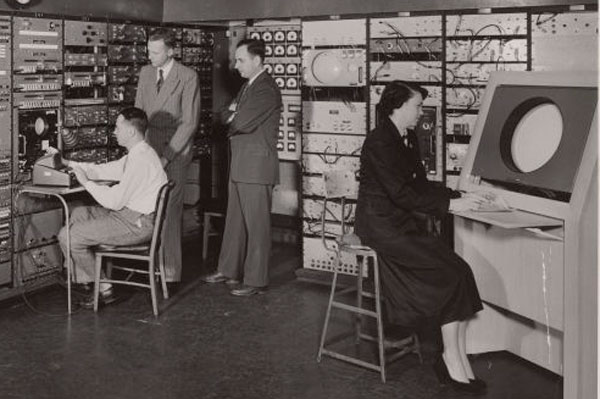
Debugging computers in the 1950s sounds like it wasn’t an easy task. That’s one of the interesting facts from this fascinating talk by [Guy Fedorkow] about the Whirlwind, one of the first digital computers ever built. The development of this remarkable computer started at MIT (Funded by the US Navy) in 1949 as a flight simulator but pivoted to plotting interceptions in the early 1950s. That was because the USSR had just set off their first boosted nuclear bomb, which could be mounted on a missile or bomber. So, the threat of incoming missiles and atomic bombers became real, and the need arose to intercept nuclear bombers.

As a real-time computer, Whirlwind received radar data from radar stations around the US that showed the location of the interceptor and the incoming bogey, then calculated the vector for the two to meet up and, erm, have a frank exchange of views. So, how do you debug one of the first real-time computers? Carefully, it seems.

Continue reading “Debugging A 1950s Computer Sounds Like A Pain”

Commodore Datassette Does Barbershop Quartet

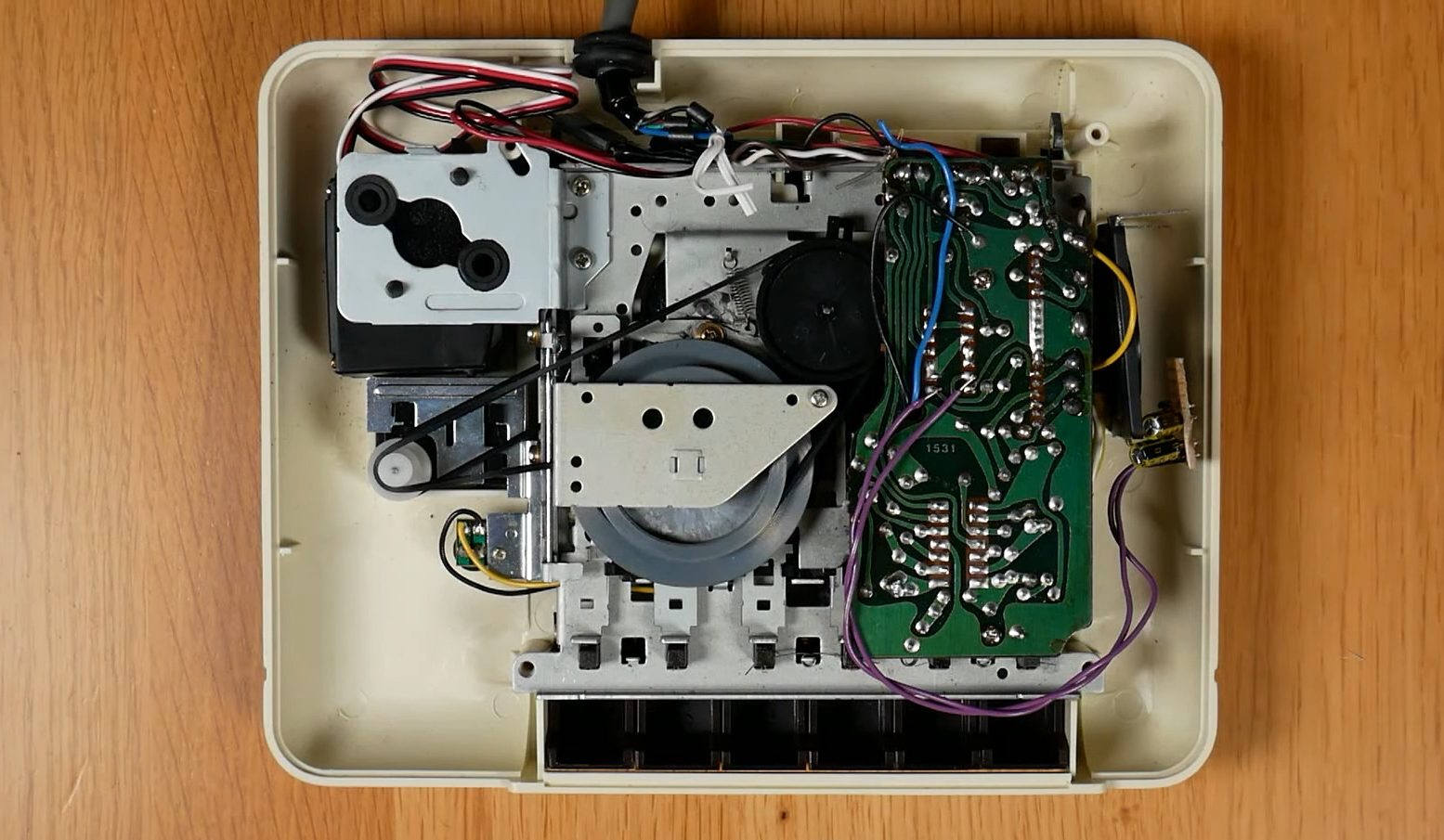
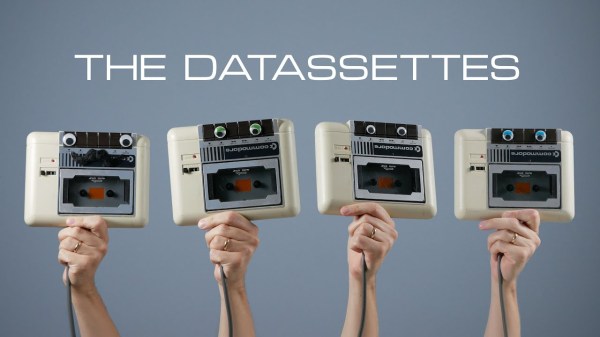
Okay, now this is just plain fun. [Linus Åkesson] modified a Commodore Datassette player to move its “mouth” and, when quadrupled, sing a clever barbershop tune called “Sweet End of Line” that’s a play on “Sweet Adeline“, a top hit from the summer of 1903.

What? Let us explain. Those with Commodore 64s who lacked disk drives often had the Datassette — a magnetic storage tape device, or cassette player used to load and save files. But they couldn’t open the doors themselves with a keypress, and they certainly couldn’t sing barbershop.

First off, [Linus] redirected the current that drives the magnetizing tape head through a speaker coil instead. Then he replaced the motor with a servo that opens the lid from the inside. A simple rubber band pulls the lid back shut. Software-wise, [Linus] is using a timer interrupt to run code that toggles the output signal, the rate of which determines the pitch.

Don’t worry — all of these modifications are reversible, so no Datassettes were truly harmed in the making. Don’t forget to check out the brief build/demo video after the break.

We’ve seen our share of tape players, but we’d never seen one with a crank until recently.

Continue reading “Commodore Datassette Does Barbershop Quartet”

You Can Now Order A Brand-New Amiga PCB

The Commodore 64 has been pulled apart, reverse engineered, replicated, and improved upon to no end over the last four decades or so. The Amiga 500 has had less attention, in part due to its greater level of sophistication. However, you can now order a brand-new Amiga-compatible PCB if you’re looking to put together a machine from surplus parts.

The design is known as Denise, and is apparently the work of an anonymous Swedish designer according to the Tindie listing. It’s not a direct replica of any one Amiga machine. Instead, it’s best described as “a compact A500+ compatible motherboard with two Zorro2 slots and a few additional features.”

Denise is just a PCB, though. No emulated chips or other components are included. To use the PCB, you’ll need a full set of Amiga custom chips and a suitable Motorola 68000-series CPU to suit. It can be used with either OCS or ECS chipsets. At this stage, it’s only verified to work with the 2MB version of the Agnus chip, though the creators believe it should work with a 1MB “Diet Agnus.”  Some modern conveniences are on hand, too. A pair of microcontrollers will allow the use of Amiga or PC keyboards, along with Amiga or PS/2 style mice, including support for scroll wheels.

Given the number of damaged, battered, and corroded Amiga PCBs out there, it’s great that there is a source of fresh, new PCBs for restoration purposes. Video after the break.

Continue reading “You Can Now Order A Brand-New Amiga PCB”

Reverse-Engineering The Mechanical Bendix Central Air Data Computer

Before the era of digital electronic computers, mechanical analog computers were found everywhere. From the relative simplicity of bomb sights to the complexity of fire control computers on 1940s battleships, all the way to 1950s fighter planes, these mechanical wonders enabled feats which were considered otherwise impossible at the time.

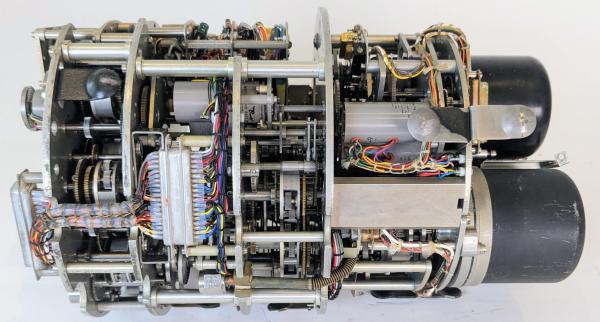
One such system that [Ken Shirriff] looked at a while ago is the Bendix Central Air Data Computer. As the name suggests, it is a computer system that processes air data. To be precise, it’s the mechanism found in airplanes that uses external sensor inputs to calculate parameters like altitude, vertical speed, Mach number and air speed.

Continue reading “Reverse-Engineering The Mechanical Bendix Central Air Data Computer”

A Casio Game Console With A Sticker Printer? Why Didn’t We Get It!

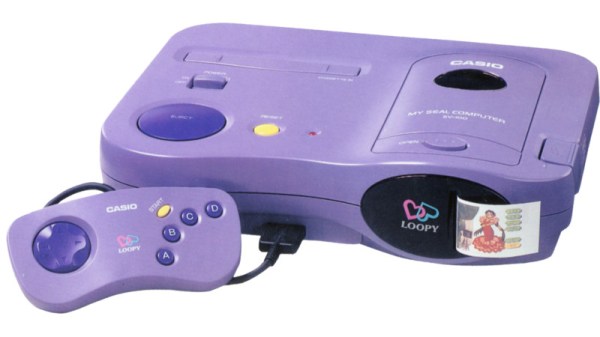
To work in the computer games business in the mid-1990s was to have a grandstand seat at a pivotal moment. 32-bit gaming was the order of the day and 3D acceleration was making its first appearance in high-end PC graphics cards, so perhaps the fastest changes ever seen in gaming happened across a few short years. It’s a shock then after spending that decade on the cutting edge, to find a ’90s console we’d never heard of from a major manufacturer. The Casio Loopy was a Japan-only machine which targeted a female gaming demographic, and featured a built-in sticker printer as its unique selling point.

On the face of it the Loopy was up there with the competition, featuring a similar 32-bit SuperH processor to the Sega Saturn paired with a megabyte of RAM, but staying with cartridges as the rest of the industry moved towards CDs led to its games being space-limited and expensive. At the same time the original PlayStation was winning developers from the cartridge model with a lower-cost barrier to entry, so the Loopy failed to capture a market and was off sale by 1996. We can see that its graphics may have been a little dated for the 32-bit era and that sticker printer would have driven parents crazy with requests for expensive cartridges, but we can’t help wishing it had made it out of Japan like their portable computers did.

Thanks [Stephen Walters] for the tip.

Header: Incog88, CC BY-SA 3.0.

The Clock, Another Way To Modify The Sound Of A Synth Chip

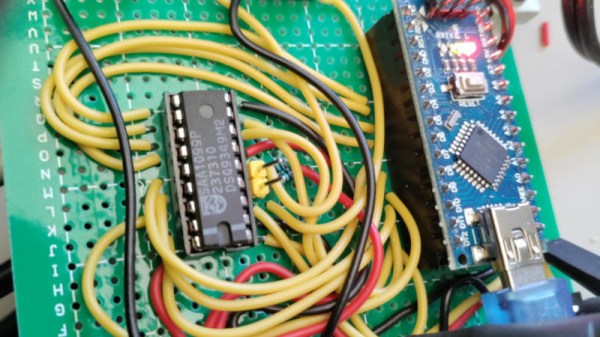
The Philips SAA1099 is perhaps one of the lesser-known among the crop of 1980s-era 8-bit sound generator chips, but with three stereo voices onboard it makes a capable instrument for chiptune experimentation. It’s attracted the attention of [Folkert van Heusden], who’s tried the novel experiment of seeing what happens when a sound chip’s clock is varied.

A quick search of the internet reveals that the chip, which appeared in early Sound Blaster cards, is intended to have an 8 MHz clock. He’s hooked it up to an Arduino as a variable clock source, which surprised us but it seems an ATmega328’s timer is faster than we expected.

There are a couple of WAV files, and as expected the clock frequency has a significant effect on the pitch. The samples just sweep up and down without much attempt at making a sound you’d want to hear, but it does raise an interesting possibility of adding a further pitch bending ability to the capabilities already in the chip. When these circuits were new we couldn’t control a clock on a whim with the 8-bit processors of the day, so of course none of us thought to try this at the time. He’s tried it, so you don’t have to.

The SAA1099 has been mentioned in these pages only once, as a chip used in peripherals for 1980s Czech computers.