The Gray-1, A Computer Composed Entirely Of ROM And RAM

When we learn about the internals of a microprocessor, we are shown a diagram that resembles the 8-bit devices of the 1970s. There will be an ALU, a program counter, a set of registers, and address and data line decoders. Most of us never go significantly further into the nuances of more modern processors because there is no need. All a processor needs to be is a black box, unless it has particularly sparked your interest or you are working in bare-metal assembly language.

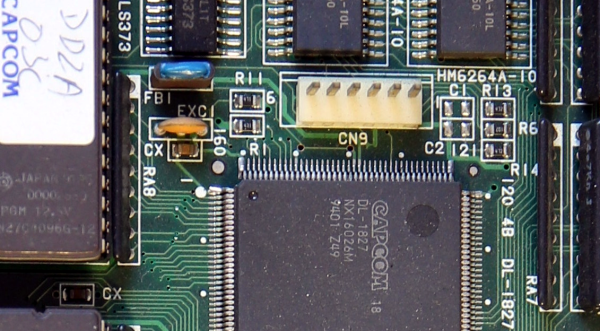
We imagine our simple microprocessor as built from logic gates, and indeed there have been many projects on these pages that create working processors from piles of 74 series chips. But just occasionally a project comes along that reminds us there is more than one way to build a computer, and our subject today is just such a moment. [Olivier Bailleux] has created his “Gray-1”, a processor whose only active components are memory chips, both ROM and RAM.

The clever part comes with the descriptions of how the ROMs are used to recreate the different functions of the processor, through careful programming. Some functions such as registers for example use loops, in which some of the address lines are driven from the data lines to maintain the ROM at a set location. The name of the computer comes from its program counter, which counts in Gray code.

The full processor implements a RISC architecture, and there is a simulator to allow code development without a physical unit. The write-up is both comprehensive and accessible, and makes a fascinating read.

It’s safe to say this is the only processor we’ve seen with this novel approach to architecture. Some more conventional previous features though have been an effort to create a processor entirely from NAND gates, and another made from 74 logic.

Hacking The Aether: How Data Crosses The Air-Gap

It is incredibly interesting how many parts of a computer system are capable of leaking data in ways that is hard to imagine. Part of securing highly sensitive locations involves securing the computers and networks used in those facilities in order to prevent this. These IT security policies and practices have been evolving and tightening through the years, as malicious actors increasingly target vital infrastructure.

Sometimes, when implementing strong security measures on a vital computer system, a technique called air-gapping is used. Air-gapping is a measure or set of measures to ensure a secure computer is physically isolated from unsecured networks, such as the public Internet or an unsecured local area network. Sometimes it’s just ensuring the computer is off the Internet. But it may mean completely isolating for the computer: removing WiFi cards, cameras, microphones, speakers, CD-ROM drives, USB ports, or whatever can be used to exchange data. In this article I will dive into air-gapped computers, air-gap covert channels, and how attackers might be able to exfiltrate information from such isolated systems.

Continue reading “Hacking The Aether: How Data Crosses The Air-Gap”

33C3: Hunz Deconstructs The Amazon Dash Button

The Amazon Dash button is now in its second hardware revision, and in a talk at the 33rd Chaos Communications Congress, [Hunz] not only tears it apart and illuminates the differences with the first version, but he also manages to reverse engineer it enough to get his own code running. This opens up a whole raft of possibilities that go beyond the simple “intercept the IP traffic” style hacks that we’ve seen.

dash_block_diagramJust getting into the Dash is a bit of work, so buy two: one to cut apart and locate the parts that you have to avoid next time. Once you get in, everything is tiny! There are a lot of 0201 SMD parts. Hidden underneath a plastic blob (acetone!) is an Atmel ATSAMG55, a 120 MHz ARM Cortex-M4 with FPU, and a beefy CPU all around. There is also a 2.4 GHz radio with a built-in IP stack that handles all the WiFi, with built-in TLS support. Other parts include a boost voltage converter, a BTLE chipset, an LED, a microphone, and some SPI flash.

The strangest part of the device is the sleep mode. The voltage regulator is turned on by user button press and held on using a GPIO pin on the CPU. Once the microcontroller lets go of the power supply, all power is off until the button is pressed again. It’s hard to use any less power when sleeping. Even so, the microcontroller monitors the battery voltage and presumably phones home when it gets low.
Continue reading “33C3: Hunz Deconstructs The Amazon Dash Button”

Darth Vader, In A Nixie Tube

This may be a controversial statement, but Nixie tubes have become a little passé in our community. Along comes another clock project, and oh look! It’s got Nixie tubes instead of 7-segment displays or an LCD. There was a time when this rediscovered archaic component was cool, but face it folks, it’s been done to death. Or has it?

vadar-nixie-tube-unlitSo given a disaffection with the ubiquity of Nixies you might think that no Nixie project could rekindle that excitement. That might have been true, until the videos below the break came our way. [Tobias Bartusch] has made his own Nixie tube, and instead of numerals it contains a 3D model of [Darth Vader], complete with moving light saber. Suddenly the world of Nixies is interesting again.

The first video below the break shows us the tube in action. We see [Vader] from all angles, and his light saber. Below that is the second video which is a detailed story of the build. Be warned though, this is one that’s rather long.

The model is made by carefully shaping and spot welding Kanthal wire into the sculpture, a process during which (as [Tobias] says) you need to think like neon plasma. It is then encased in a cage-like structure which forms its other electrode. He takes us through the process of creating the glass envelope, in which the wire assembly is placed. The result is a slightly wireframe but very recognisable [Vader], and a unique tube.

Continue reading “Darth Vader, In A Nixie Tube”

An Awesome Interactive LED Table

If you want to create a large display with a matrix of LEDs, it’s a relatively straightforward process. Thanks to addressable LED tape and microcontrollers it becomes more of a software issue than one of hardware. [Vincent Deconinck] had some inexpensive WS2812 strips, so he sliced into an inexpensive IKEA coffee table  and mounted them in a grid beneath an acrylic sheet. Some work with Arduino Nanos and a Raspberry Pi later, and he had a very acceptable LED matrix table.

An attractive hack, you might say, and leave it at that. But he wasn’t satisfied enough to leave it there, and so to make something rather special he decided to add interactivity. With an infra-red emitter and receiver as part of each pixel, he was able to turn an LED table into an LED touchscreen, though to be slightly pedantic it’s not sensing touch as such.

The design of the IR sensors was not entirely straightforward though, because to ensure reliable detection and avoid illumination from the LED they had to be carefully mounted and enclosed in a tube. He also goes into some detail on the multiplexing circuitry he used to drive the whole array from more Arduinos and a GPIO expander.

The write-up for this project is a long one, but it’s well worth the read as the result is very impressive. There are several videos but we’ll show you the final one, the table playing touch screen Tetris.

Continue reading “An Awesome Interactive LED Table”

Cheap DIY FPV Micro-Drone

FPV drones are a fun but often costly hobby for beginners. Opting for a smaller drone will reduce the chance of damaging the drone when one invariably crashes and the smaller props are also a lot safer if there are any innocent bystanders. YouTuber and Instructables user [Constructed] wanted a cheap FPV capable drone that they could comfortably fly in-and-out of doors, so of course they built their own.

Once the drone’s frame was 3D printed, the most complex part about soldering four small-yet-powerful 8.5 mm motors to the Micro Scisky control board is ensuring that you attach them in the correct configuration and triple-checking them. A quick reshuffling of the battery connections and mounting the FPV camera all but completed the hardware side of the build.

Before plugging your flight controller into your PC to program, [Constructed] warns that the battery must be disconnected unless you want to fry your board. Otherwise, flashing the board and programming it simply requires patience and a lot of saving your work. Once that’s done and you’ve paired everything together, the sky — or ceiling — is the limit!

Continue reading “Cheap DIY FPV Micro-Drone”

GSM Sniffing On A Budget With Multi-RTL

If you want to eavesdrop on GSM phone conversations or data, it pays to have deep pockets, because you’re going to need to listen to a wide frequency range. Or, you can just use two cheap RTL-SDR units and some clever syncing software. [Piotr Krysik] presented his work on budget GSM hacking at Camp++ in August 2016, and the video of the presentation just came online now (embedded below). The punchline is a method of listening to both the uplink and downlink channels for a pittance.

[Piotr] knows his GSM phone tech, studying it by day and hacking on a GnuRadio GSM decoder by night. His presentation bears this out, and is a great overview of GSM hacking from 2007 to the present. The impetus for Multi-RTL comes out of this work as well. Although it was possible to hack into a cheap phone or use a single RTL-SDR to receive GSM signals, eavesdropping on both the uplink and downlink channels was still out of reach, because it required more bandwidth than the cheap RTL-SDR had. More like the bandwidth of two cheap RTL-SDR modules.

Getting two RTL-SDR modules to operate in phase is as easy as desoldering a crystal from one and slaving it to the other. Aligning the two absolutely in time required a very sweet hack. It turns out that the absolute timing is retained after a frequency switch, so both RTL-SDRs switch to the same channel, lock together on a single signal, and then switch back off, one to the uplink frequency and the other to the downlink. Multi-RTL is a GnuRadio source that takes care of this for you. Bam! Hundreds or thousands of dollar’s worth of gear replaced by commodity hardware you can buy anywhere for less than a fancy dinner. That’s a great hack, and a great presentation.
Continue reading “GSM Sniffing On A Budget With Multi-RTL”