The Internet Of Cats

With the miniaturization of technology, we’re now able to do some pretty crazy things with computers the size of credit cards. [Dennis] has been working on a rather unique project — he calls it the Cat Exploit — we call it the Internet of Cats.

By making pet-wearable tech (is that a new term?), it’s possible to create a mini war-driving server that stray cats (or other small animals) could wear. As they roam the streets, their feline-augmentation searches and taps into open or badly secured WiFi networks, repeating and spreading the signal to other Server Entities (other network-enabled cats), opening up the networks for all to use. Continue reading “The Internet Of Cats”

Hacker Island: Preserving Cuba’s Classic Cars

The spirit of hacking takes many forms. We cobble things together to make our lives easier, to prove that a drawing-board theory will work, or just to have fun and explore. For the people of Cuba, hacking is a necessity. This is especially true when it comes to getting around. Transportation has been a big problem for decades, especially in the major cities. But the resourcefulness of Cuba’s citizens has fueled a revolution of creativity that has sparked imaginations and kept people moving.

It is believed that Cuba has the world’s largest collection of classic American cars. There are approximately 60,000 of them on the road nationwide in various states of repair. Some are kept in pristine condition by card-carrying automobile club members who baby them and keep them as close to stock as possible. But most of these cars see daily use as cheap public taxis. They are not for-hire cabs that can be easily hailed from the sidewalk, though. They are designed to maximize utility and carry as many passengers as possible along fixed routes. Taking one of these taxis is expensive, but the alternative is waiting hours in the hot sun for an overcrowded bus.

Continue reading “Hacker Island: Preserving Cuba’s Classic Cars”

Microchip Unveils Online MPLAB IDE And $10 Board

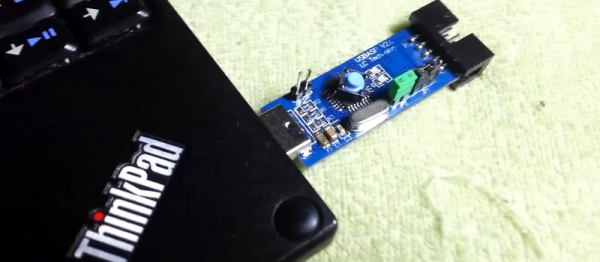
Today, Microchip released a few interesting tools for embedded development. The first is a free online IDE called MPLAB Xpress, the second is a $10 dev board with a built-in programmer. This pair is aimed at getting people up and running quickly with PIC development. They gave us an account before release, and sent over a sample board. Let’s take a look!

Continue reading “Microchip Unveils Online MPLAB IDE And $10 Board”

Eco Friendly Space-Fuel

If you’d like to risk blowing your fingers off for a good cause this week, look no further than [M. Bindhammer]’s search for an eco-friendly rocket fuel. [M. Bindhammer] predicts the increasing use of solid rocket boosters in the future. We’re into that. For now, rocket launches are so few and far between that the pollution doesn’t add up, but when we’re shipping consumer electronics to the moon and back twice a day, we might have a problem.

The most common solid rocket fuel emits chlorine gas into the atmosphere when burned. [Bindhammer] is exploring safe ways to manufacture a eutectically balanced and stabilized fuel compromised of sugar or sugar-alcohol, and potassium nitrate. If you watch home chemistry videos for fun on the weekend like us, [Bindhammer] goes through all his thinking, and even spells out the process for duplicating his fuel safely in a lab.

He’s done a lot of work. The resulting fuel is stable, can be liquid or solid. It has a high ignition temperature, but as you can see in the video after the break. Once ignited. It goes off like rocket fuel.

Continue reading “Eco Friendly Space-Fuel”

Suddenly, 4G Feels Slow

Researchers at University College London successfully transferred data over an optical transmission system at a rate of 1.125 Tb/s. That’s over ten times as fast as typical commercial optical systems, and thousands of times faster than the standard broadband connection. The study appeared in Scientific Reports and takes advantage of encoding techniques usually seen in wireless systems.

The prototype system uses fifteen channels on different wavelengths. Each channel used 256QAM encoding (the same as you see on cable modems, among other things). A single receiver recovers all of the channels together. The technology isn’t commercially available yet. It is worth noting that the experiment used a transmitter and receiver very close to each other. Future tests will examine how the system performs when there are hundreds or thousands of feet of optical fiber between them.

Continue reading “Suddenly, 4G Feels Slow”

Glitching Square Wave Clock Is Designed To Confuse

[Voja Antonic] has built a clock that tells the time in binary with square waves, and trolls the uninitiated in electronics.

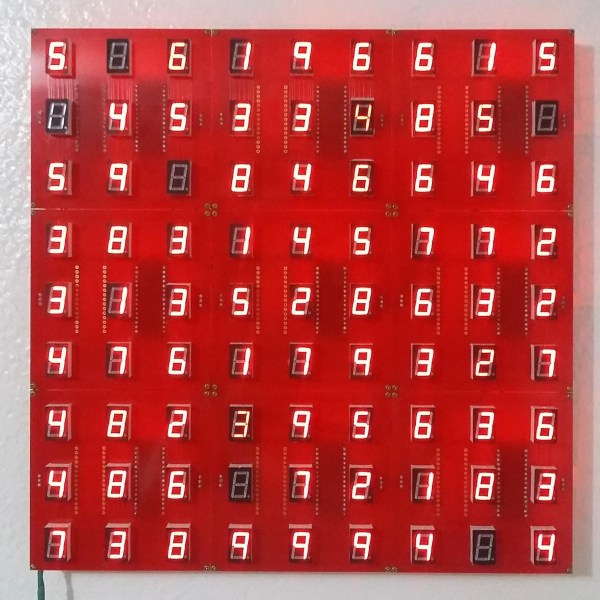
The clock itself is very attractive. If you look closely you can see the circuitry backlit behind the dot LED matrix display. The whole thing is housed in a nicely folded steel case. RGB LEDs are used to good effect to highlight some additionally obfuscating circuit schematics. The workmanship is very top notch, and we would gladly host such an object on our desks.

The clock’s standard time telling mode is three sets of square waves showing the binary values for the hours, minutes, and seconds. Every now and then the clock will glitch out. The waves will distort. The colors will change. And every now and then, tantalizingly, the alpha-numeric time will show up for just a split second, before returning to those weird squiggles again.

We’ve seen a whole slew of binary clocks before. This one, for instance. But the waveform display makes us feel just that little bit more at home — it’s just like we’re sitting in front of our oscilloscope.

New Efficiency Standards For Wall Warts In The US

The common household wall wart is now under stricter regulation from the US Government. We can all testify to the waste heat produced by many cheap wall warts. Simply pick one at random in your house, and hold it; it will almost certainly be warm. This regulation hopes to save $300 million in wasted electricity, and reap the benefits, ecologically, of burning that much less fuel.

original
The old standard.

We don’t know what this means practically for the consumer. Will your AliExpress wall warts be turned away at the shore now? Will this increase the cost of the devices? Will it make them less safe? More safe? It’s always hard to see where new regulation will go. Also, could it help us get revenge on that knock-off laptop adapter we bought that go hot it melted a section of carpet?

However, it does look like most warts will go from a mandated 50-ish percent efficiency to 85% and up. This is a pretty big change, and some hold-out manufacturers are going to have to switch gears to newer circuit designs if they want to keep up. We’re also interested to hear the thoughts of those of you outside of the US. Is the US finally catching up, or is this something new?