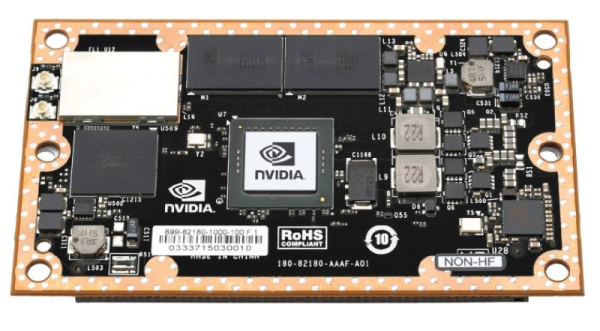
Nvidia Brings Computer Vision And Deep Learning To The Embedded World

Today, Nvidia announced their latest platform for advanced technology in autonomous machines. They’re calling it the Jetson TX1, and it puts modern GPU hardware in a small and power efficient module. Why would anyone want GPUs in an embedded format? It’s not about frames per second; instead, Nvidia is focusing on high performance computing tasks – specifically computer vision and classification – in a platform that uses under 10 Watts.

For the last several years, tiny credit card sized ARM computers have flooded the market. While these Raspberry Pis, BeagleBones, and router-based dev boards are great for running Linux, they’re not exactly very powerful.  x86 boards also exist, but again, these are lowly Atoms and other Intel embedded processors. These aren’t the boards you want for computationally heavy tasks. There simply aren’t many options out there for high performance computing on low-power hardware.
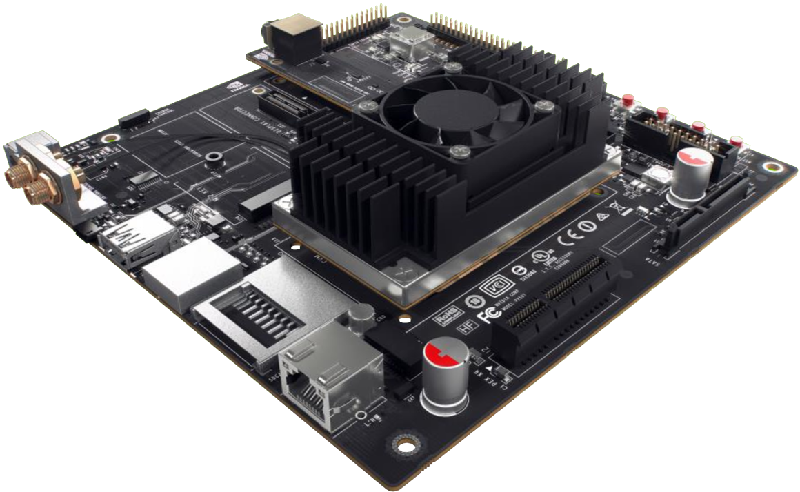
Nvidia
The Jetson TX1 and Developer Kit. Image Credit: Nvidia

Tiny ARM computers the size of a credit card have served us all well for general computing tasks, and this leads to the obvious question – what is the purpose of putting so much horsepower on such a small board. The answer, at least according to Nvidia, is drones, autonomous vehicles, and image classification.

Image classification is one of the most computationally intense tasks out there, but for autonomous robots, there’s no other way to tell the difference between a cyclist and a mailbox. To do this on an embedded platform, you either need to bring a powerful general purpose CPU that sucks down 60 or so Watts, or build a smaller, more efficient GPU-based solution that sips a meager 10 Watts.

Continue reading “Nvidia Brings Computer Vision And Deep Learning To The Embedded World”

Your Unhashable Fingerprints Secure Nothing

Passwords are crap. Nobody picks good ones, when they do they re-use them across sites, and if you use even a trustworthy password manager, they’ll get hacked too. But you know what’s worse than a password? A fingerprint. Fingerprints have enough problems with them that they should never be used anywhere a password would be.

Passwords are supposed to be secret, like the name of your childhood pet. In contrast, you carry your fingers around with you out in the open nearly everywhere you go. Passwords also need to be revocable. In the case that your password does get revealed, it’s great to be able to simply pick another one. You don’t want to have to revoke your fingers. Finally, and this is the kicker, you want your password to be hashable, in order to protect the password database itself from theft.

In the rest of the article, I’ll make each of these three cases, and hopefully convince you that using fingerprints in place of a password is even more broken than using a password in the first place. (You listening Apple and Google? No, I didn’t think you were.)

Continue reading “Your Unhashable Fingerprints Secure Nothing”

The Most Powerful DIY Railgun

The US Navy is working on a few railgun projects that will eventually replace the largest guns on the fleet’s cruisers and destroyers. These rail guns will fire a projectile away from the ship at around Mach 7 on a ballistic trajectory to a target one hundred miles away. It’s an even more impressive piece of artillery than a gun with a nuclear warhead, and someday, it will be real.

most-powerful-non-military-railgunUntil then, we’ll have to settle with [Zebralemur]’s DIY mobile railgun. He built this railgun capable of firing aluminum projectiles through pumpkins, cellphones, and into car doors and blocks of ballistics gelatin.
All rail guns need a place to store energy, and in all cases this is a gigantic bank of capacitors. For this project, [Zebralemur] is using fifty-six, 400 Volt, 6000 microfarad caps. The MSRP for these caps would be about $50,000 total, but somehow – probably a surplus store – [Zebralemur] picked them up for $2,400.

These caps are just the power supply for the rail gun, and aren’t part of the structure of this already large, 250 pound gun. Luckily, with the seats down in [Zebralemur]’s car, they fit in the back of his hatchback.

These caps are charged by a bunch of 9V batteries stuck end to end. When the caps are charged, all the power is dumped into two copper bars in the gun, accelerating the aluminum projectile to speeds fast enough to kill. It’s an incredible build, but something that should not be attempted by anyone. Although this does seem to be the year that all danger seekers are busting out their electromagnetic projection flingers.

Continue reading “The Most Powerful DIY Railgun”

Who Is Responsible When Machines Kill?

This morning I want you to join me in thinking a few paces into the future. This mechanism let’s us discuss some hard questions about automation technology. I’m not talking about thermostats, porch lights, and coffee makers. The things that we really need to think about are the machines that can cause harm. Like self-driving cars. Recently we looked at the ethics behind decisions made by those cars, but this is really just the tip of the iceberg.

A large chunk of technology is driven by military research (the Internet, the space race, bipedal robotics, even autonomous vehicles through the DARPA Grand Challenge). It’s easy to imagine that some of the first sticky ethical questions will come from military autonomy and unfortunate accidents.

Continue reading “Who Is Responsible When Machines Kill?”

Finally. A Working JetPack

Well, it’s either an extremely well edited video, or [JetPack Aviation] has actually come up with a working JetPack.

According to their site, this JetPack has been in development for the past 25 years, and the current revision is capable of speeds of up to 100mph, and lasts for over 10 minutes. Just last week they flew it around the Statue of Liberty for a promo — yet this is the first time we’re hearing of it…

There’s a documentary coming out next year about the development of it, so it seems like a lot of effort to go to if it’s simply a hoax…

Watch their maiden JetPack flight after the break, and let us know what you think!

Continue reading “Finally. A Working JetPack”

Friction Welding… Wood?

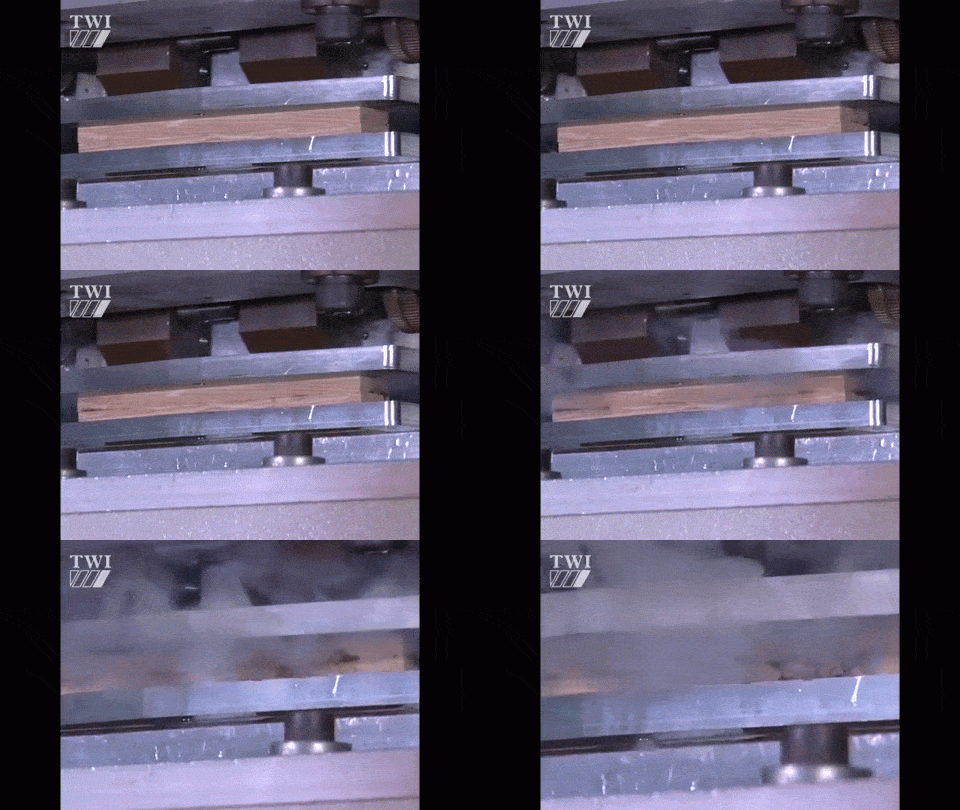
You’d think writing for Hackaday means we probably don’t get surprised very often by projects… but then we see something we never thought was possible — in this case, the linear friction welding of wood to join it.

Friction welding (also known as stir welding), is the process of taking two pieces of material (typically metal, or plastic), and vibrating one of them super fast while pushing against a stationary piece of the same material — the resulting friction causes a massive heat buildup that can then literally weld the two pieces of material together.

It’s an easy way to bond plastic parts together using a dremel and some 3D printing filament, and while doing it with metal is significantly harder, it is possible to do at home as well.

But according to the video after the break — it’s actually possible to do this with wood.

Continue reading “Friction Welding… Wood?”

Measuring Tire Pressure By Cutting A Hole In An Inner Tube

RFID tags are really very primitive pieces of technology. Yes, they harvest energy from an RFID reader and are able to communicate a few bits of data, but for a long time these tags have been unable to provide useful data beyond a simple ID number. [CaptMcAllister] found a new RFID sensor platform from TI and managed to make a wireless pressure sensor that fits in the inner tube of his bike.

The sensor [Capt] is using comes from TI’s RF430 series that include a few neat sensors that don’t require batteries, but are still able to communicate sensor data to a cell phone or other RFID reader. With a pressure sensor, this tiny microcontroller can receive power from an RFID reader and send it back to a phone app, all without wires.

[CaptMcAllister] cut open an inner tube for his bike, epoxied his PCB to a patch, and sealed everything back up again. After a quick test for leaks, [Capt] found the data coming from the sensor was extraordinarily accurate, and should hold up well enough to be used in his bike.