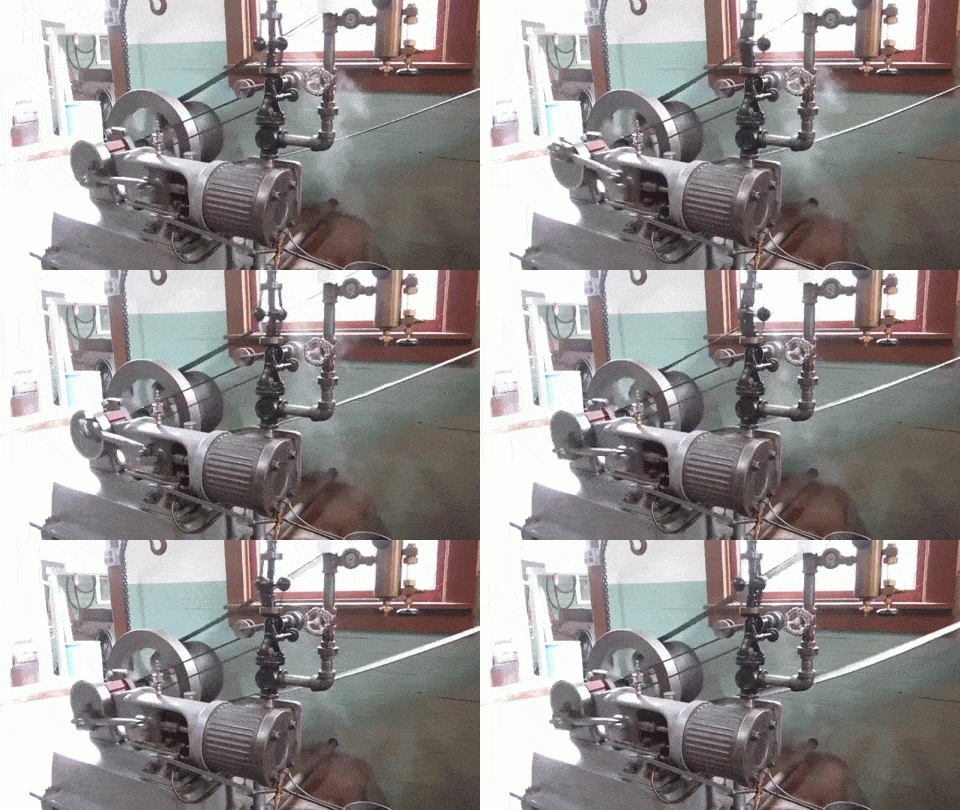
It’s sometimes hard to believe how stuff was made over a hundred years ago when electricity wasn’t widely available. One of the most common ways of powering tools was via belt drive — powered by a water mill, or a steam engine, or even horses. [David Richards] has spent a good chunk of time making his own period accurate steam powered machine shop — and it’s fantastic.
It represents approximately what a 1920’s machine shop would look like in America. Not a single tool is newer than 1925. The whole shop is powered by a line shaft using steam power. A massive boiler provides steam for a Pennsylvania built 5 by 5 steam engine, dating back to approximately 1895. Using belts and clutches, it powers a few lathes, drill presses, a mill, and even a shaper — an identical machine to one in the Edison Museum!
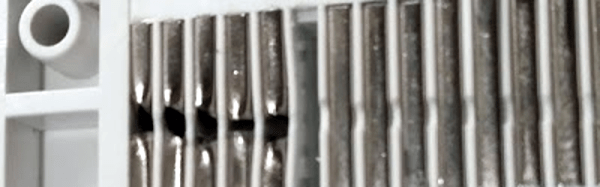
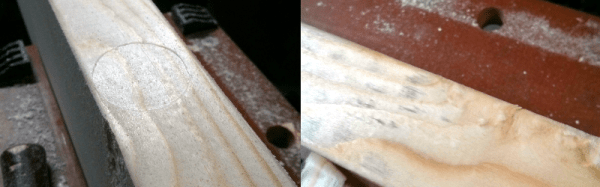
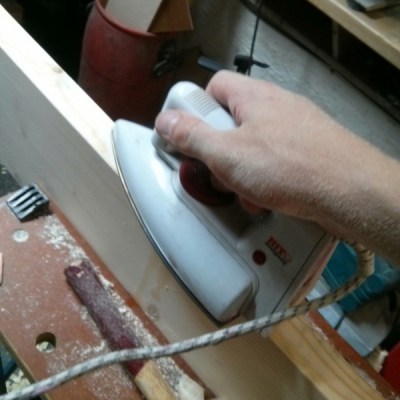 The Technique itself is dead simple and takes only a few minutes to perform. Simply apply a small amount of water, let it seep into the wood, and then bring a hot iron down onto the soaked wood to evaporate off the soaked water–instantly inflating the wood back into its original form!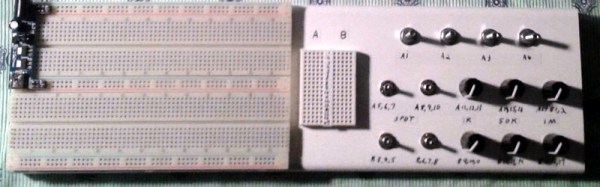
 Of course, it is easy enough to just connect breadboard wires to component, but [Chuck] went further than that. Using boxes of different types (including a cigar box), he mounted the components properly and also wired them to a breadboard for easy connection.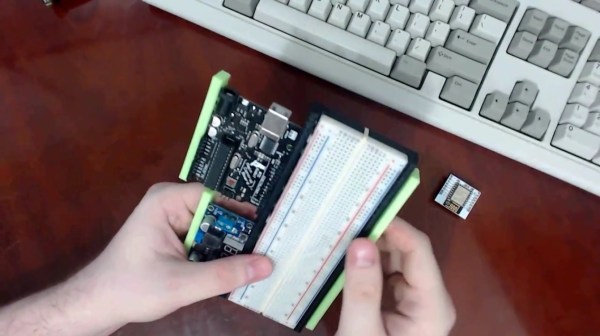
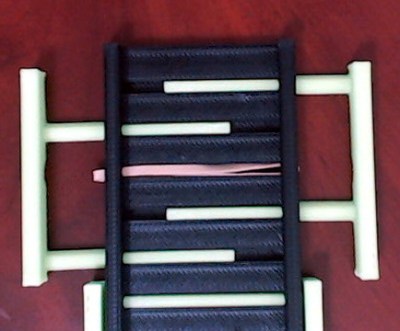 While [Pat]’s inspiration came from the aforementioned Stickvise, the new 3d-printed vice is just what you’ll need before you’re ready to do the soldering. The vice is spring-loaded using rubber bands. The base is sized to fit a standard breadboard in the center with clamping arms on either side to hold dev boards such as an Arduino. This innovative yet simple de”vice” grips boards well enough that you won’t be chasing them around your desk, knocking wires out of place, anymore.