AI-Powered Bumper Sticker Provides Context-Sensitive Urban Camouflage

While we absolutely support the right of everyone to express their opinions, it seems to us that it’s rarely wise to turn your vehicle into a mobile billboard for your positions. Aside from potentially messing up the finish on your car, what’s popular and acceptable at home might attract unwanted attention while traveling abroad, leading to confrontations that might make your trip a little more eventful than it needs to be.

So why not let technology help you speak your mind in a locally sensitive manner? That’s the idea behind [Pegor]’s “smahtSticker”, an AI-powered bumper sticker that provides the ultimate in context-sensitive urban camouflage. The business end of smahtSticker — we’re going to go out on a limb here and predict that [Pegor] hails from the Boston area — is an 8.8″ (22-cm) wide HDMI display capable of 1920×480 resolution. That goes on the back of your car and is driven by a Raspberry Pi Zero with a GPS module. The Pi grabs a geolocation every second, and if you’ve moved more than 25 feet (7.6 m) — political divisions are at least that granular in the US right now, trust us — it grabs your current ZIP code using GeoPy. That initiates a query to the OpenAI API to determine the current political attitudes in your location, which is used to select the right slogan to display. You’ll fit in no matter where you wander — wicked smaht!

Now, of course, this is all in good fun, and with tongue planted firmly in cheek. The display isn’t weatherized at all, so that would need to be addressed if one felt like fielding this. Also, ZIP codes may be good for a lot of things, but it’s not the best proxy for political alignment, so you might want to touch that part up.

Bringing Modern Technology To A Sled

Street sledding, a popular pastime in Norway, is an activity that is slowly dwindling in popularity, at least as far as [Justin] aka [Garage Avenger] has noticed. It used to be a fun way of getting around frozen lakes and roads during winter, and while some still have their sleds [Justin] wanted to see if there was a way to revitalize one of these sleds for the modern era. He’s equipped this one with powerful electric turbines than can quickly push the sled and a few passengers around the ice.

Since this particular sled is sized for child-sized passengers, fuel-burning jet engines have been omitted and replaced with electric motors that can spin their turbine blades at an impressive 80,000 rpm. The antique sled first needed to be refurbished, including removing the rust from the runners and reconditioning the wood. With a sturdy base ready to go, the sled gets a set of 3D printed cowlings for the turbines, a thumb throttle on the upgraded handlebars, and a big battery with an Arduino to bring it all together.

With everything assembled and a sheet of ice to try it out on, the powerful sled easily gets its passengers up to the 20-30 kph range depending on passenger weight and size. There’s a brake built on an old ice skate for emergency stops, and the sled was a huge hit for everyone at the skating pond. There are plenty of other ways to spruce up old sleds, too, like this one which adds a suspension for rocketing down unplowed roads.

Continue reading “Bringing Modern Technology To A Sled”

How Airplanes Mostly Stopped Flying Into Terrain And Other Safety Improvements

We have all heard the statistics on how safe air travel is, with more people dying and getting injured on their way to and from the airport than while traveling by airplane. Things weren’t always this way, of course. Throughout the early days of commercial air travel and well into the 1980s there were many crashes that served as harsh lessons on basic air safety. The most tragic ones are probably those with a human cause, whether it was due to improper maintenance or pilot error, as we generally assume that we have a human element in the chain of events explicitly to prevent tragedies like these.

Among the worst pilot errors we find the phenomenon of controlled flight into terrain (CFIT), which usually sees the pilot losing track of his bearings due to a variety of reasons before a usually high-speed and fatal crash. When it comes to keeping airplanes off the ground until they’re at their destination, here ground proximity warning systems (GPWS) and successors have added a layer of safety, along with stall warnings and other automatic warning signals provided by the avionics.

With the recent passing of C. Donald Bateman – who has been credited with designing the GPWS – it seems like a good time to appreciate the technology that makes flying into the relatively safe experience that it is today.

Continue reading “How Airplanes Mostly Stopped Flying Into Terrain And Other Safety Improvements”

Sailing (Directly) Into The Wind

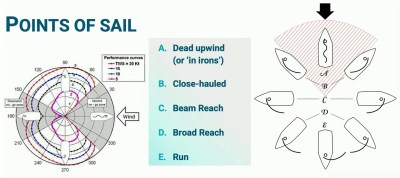
Humans have been sailing various seas and oceans for thousands of years, and using boats for potentially even longer than that. But as a species we wouldn’t have made it very far if it was only possible to sail in the same direction the wind is blowing. There are a number of methods for sailing upwind, but generally only up to a certain angle. [rctestflight] wondered if there was some way of sailing straight upwind instead and built this rotary sail craft to test the idea.

Normally a boat sailing upwind will sail approximately 45° into it, then “tack” 90° across the wind until they’re at another 45° angle from the wind, this time facing the opposite direction. This back-and-forth nature is not the most efficient path, so this vessel uses a few propellers to bypass the traditional sail. The first iteration, built on a sleek catamaran hull, uses a large propeller to catch the wind’s energy, then transfers it mechanically through a set of shafts to an underwater prop.

It took a few tries to get the size and pitch of both propellers narrowed down to where the boat would move forward into the wind, but move it does. A second major iteration of the build uses a single shaft with no gears, with the trade-off that neither propeller is facing an ideal direction, but this has the added benefit of the boat naturally pointing itself upwind.

While none of the designs are speed demons, the concept is sound enough. It’s just that, in most cases, performing multiple tacks to get upwind is acceptable compared to the extreme efficiency losses and drag from propeller-driven sailing crafts like these. A more effective way of propelling a boat upwind, at least using modern technology, might be to trade sails for solar panels.

Continue reading “Sailing (Directly) Into The Wind”

Transforming EDF Backpack For A Speed Boost

Fighting against a tough headwind on your daily cycle can be a drag, but [Emiel] of The Practical Engineer, has a loud and bold solution. In the Dutch video after the break, he builds a transforming backpack with two electric ducted fans (EDFs), and takes to the bike paths.

An EDF moves a small volume of air at high velocity, which doesn’t make them great for low speed applications. But they’re nice and compact, and safer than large propellers. [Emiel] didn’t skimp on the rest of the hardware, with the motors attached to metal 3D printed arms, mounted on a machined aluminum steel plate.

The arms were printed courtesy of a sponsor, and created via generative design in Fusion 360 to make them both light and strong. A pair of large servos swing the arms up, while smaller servos rotate the motors into the horizontal position. The arm servos are controlled by an Arduino, and activated by a simple toggle switch attached to the backpack’s shoulder strap. A wireless remote similar to that of an electric skateboard is used to control the EDFs.

Fitted in a [Emiel]’s old backpack, the result looks somewhat innocuous (if you don’t look too closely) until it unfolds its hidden power—twin jets ready to blast away any pesky headwinds with the push of a button. It’s a fun solution that is sure to attract attention, and a great excuse to create heavy duty mechanics.

Continue reading “Transforming EDF Backpack For A Speed Boost”

This Time It’s Toyota: Takata Airbag Recalls Continue

The automotive industry is subject to frequent product recalls, as manufacturers correct defects in their vehicles that reveal themselves only after some use. While such events may be embarrassing for a marque, it’s not necessarily a bad thing — after all, we would rather put our trust in a carmaker prepared to own up and fix things rather than sweep their woes under the carpet.

There’s one recall that’s been going on for years which isn’t the vehicle manufacturer’s fault though, and now it seems Toyota are the latest to be hit, with some vehicles as old as two decades being part of it. Long time Hackaday readers will probably recognize where this is going as we’ve covered it before; at its centre are faulty airbag charges from Takata, and the result has been one of the largest safety related recalls in automotive history.

An automotive airbag is a fabric structure inflated at high speed by a small explosive charge when triggered by the sharp deceleration of an incident. It is intended to cushion any impact the occupant might make upon the car’s interior. The problem with the faulty Takata units is that moisture ingress could alter the properties of the charge, and this along with corrosion could increase its power and produce a hail of metal fragments on detonation.

Our colleague [Lewin Day] has penned a series of informative and insightful investigations of the technology behind the Takata scandal, going back quite a few years. With such relatively ancient vehicles now being recalled we can’t help wondering whether it would be easier for Toyota to run a buyback scheme and take the cars off the road rather than fix them in this case, but we’re curious as non automotive safety engineers why the automotive airbag has evolved in this manner. Why is one of very few consumer explosive devices not better regulated, why is it sold with an unlimited lifetime, and why are they not standardized for routine replacement on a regular schedule just like any other vehicle consumable?

2003-2004 Toyota Corolla: IFCAR, Public domain.

The Gyro Monorail: How To Make Trains Better With A Gyroscope

The gyroscopic system for gyro monorail trains that Brennan developed. (Credit: Primal Space)

Everyone who has ever handled a spinning gyroscope found themselves likely mesmerized by the way it absolutely maintains its orientation even when disturbed. Much of modern technology would be impossible without them, whether space telescopes or avionics. Yet during the early 20th century a much more radical idea was proposed for gyroscopes, one that would essentially have turned entire trains into gyroscopes. This was the concept of the Gyro Monorail, with Louis Brennan being among those who built a full-sized, working prototype in 1910, with its history and fate covered in detail by [Primal Space], along with an accompanying video.

At first glance it may seem rather daft to have an entire train balancing on a single rail track, using nothing but gyroscopic forces to keep the entire contraption level and balanced even when you feel the thing should just tip over. Yet the gyroscopic system that Brennan created and patented in 1903 turned out to function really well, and reliably kept the train on its single track. Key to this was the use of two gyroscopic wheels, each spinning in an opposite direction, with a pneumatic system linked to a gear system between the two wheels that used the gyroscope’s precession in corners to quickly establish a new balance.

Despite this success, investors were unconvinced, and regular trains were already firmly established, and the system would also require that each car had its own gyro system. Even so, the idea of the gyro monorail never truly died, as evidenced by the recently created German MonoCab-OWL project. This targets converting single-rail sections into dual-rail, bi-directional service with no infrastructure investment required.

Thanks to [Stephen Walters] for the tip.

Continue reading “The Gyro Monorail: How To Make Trains Better With A Gyroscope”