Hackaday Links Column Banner

Hackaday Links: September 29, 2024

There was movement in the “AM Radio in Every Vehicle Act” last week, with the bill advancing out of the US House of Representatives Energy and Commerce Committee and heading to a full floor vote. For those not playing along at home, auto manufacturers have been making moves toward deleting AM radios from cars because they’re too sensitive to all the RF interference generated by modern vehicles. The trouble with that is that the government has spent a lot of effort on making AM broadcasters the centerpiece of a robust and survivable emergency communications system that reaches 90% of the US population.

The bill would require cars and trucks manufactured or sold in the US to be equipped to receive AM broadcasts without further fees or subscriptions, and seems to enjoy bipartisan support in both the House and the Senate. Critics of the bill will likely point out that while the AM broadcast system is a fantastic resource for emergency communications, if nobody is listening to it when an event happens, what’s the point? That’s fair, but short-sighted; emergency communications isn’t just about warning people that something is going to happen, but coordinating the response after the fact. We imagine Hurricane Helene’s path of devastation from Florida to Pennsylvania this week and the subsequent emergency response might bring that fact into focus a bit.

Continue reading “Hackaday Links: September 29, 2024”

What’s The Deal With AI Art?

A couple weeks ago, we had a kerfuffle here on Hackaday: A writer put out a piece with AI-generated headline art. It was, honestly, pretty good, but it was also subject to all of the usual horrors that get generated along the way. If you have played around with any of the image generators you know the AI-art uncanny style, where it looks good enough at first glance, but then you notice limbs in the wrong place if you look hard enough. We replaced it shortly after an editor noticed.

The story is that the writer couldn’t find any nice visuals to go with the blog post, with was about encoding data in QR codes and printing them out for storage. This is a problem we have frequently here, actually. When people write up a code hack, for instance, there’s usually just no good image to go along with it. Our writers have to get creative. In this case, he tossed it off to Stable Diffusion.

Some commenters were afraid that this meant that we were outsourcing work from our fantastic, and very human, art director Joe Kim, whose trademark style you’ve seen on many of our longer-form original articles. Of course we’re not! He’s a genius, and when we tell him we need some art about topics ranging from refining cobalt to Wimshurst machines to generate static electricity, he comes through. I think that all of us probably have wanted to make a poster out of one or more of his headline art pieces. Joe is a treasure.

But for our daily blog posts, which cover your works, we usually just use a picture of the project. We can’t ask Joe to make ten pieces of art per day, and we never have. At least as far as Hackaday is concerned, AI-generated art is just as good as finding some cleared-for-use clip art out there, right?

Except it’s not. There is a lot of uncertainty about the data that the algorithms are trained on, whether the copyright of the original artists was respected or needed to be, ethically or legally. Some people even worry that the whole thing is going to bring about the end of Art. (They worried about this at the introduction of the camera as well.) But then there’s also the extra limbs, and AI-generated art’s cliche styles, which we fear will get old and boring after we’re all saturated with them.

So we’re not using AI-generated art as a policy for now, but that’s not to say that we don’t see both the benefits and the risks. We’re not Luddites, after all, but we are also in favor of artists getting paid for their work, and of respect for the commons when people copyleft license their images. We’re very interested to see how this all plays out in the future, but for now, we’re sitting on the sidelines. Sorry if that means more headlines with colorful code!

Building AI Models To Diagnose HVAC Issues

HVAC – heating, ventilation, and air conditioning – can account for a huge amount of energy usage of a building, whether it’s residential or industrial. Often it’s the majority energy consumer, especially in places with extreme climates or for things like data centers where cooling is a large design consideration. When problems arise with these complex systems, they can go undiagnosed for a time and additionally be difficult to fix, leading to even more energy losses until repairs are complete. With the growing availability of platforms that can run capable artificial intelligences, [kutluhan_aktar] is working towards a system that can automatically diagnose potential issues and help humans get a handle on repairs faster.

The prototype system is designed for hydronic (water-based) systems and uses two separate artificial intelligences, one to analyze thermal imagery of the system and look for problems like leaks, hot spots, or blockages, and the other to listen for anomalous sounds especially relating to the behavior of cooling fans. For the first, a CNC-like machine was built to move a thermal camera around a custom-built model HVAC system and report its images back to a central system where they can be analyzed for anomalies. The second system which analyses audio runs its artificial intelligence on a XIAO ESP32C6 and listens to the cooling fans running in the model.

One problem that had to be tackled before any of this could be completed was actually building an open-source dataset to train the AI on. That’s part of the reason for the HVAC model in this project; being able to create problems to train the computer to detect before rolling it out to a larger system. The project’s code and training models can be found on its GitHub page. It seems to be a fairly robust solution to this problem, though, and we’ll be looking forward to future versions running on larger systems. Not everyone has a hydronic HVAC system, though. As heat pumps become more and more popular and capable, you’ll need systems to control those as well.

AI Image Generator Twists In Response To MIDI Dials, In Real-time

MIDI isn’t just about music, as [Johannes Stelzer] shows by using dials to adjust AI-generated imagery in real-time. The results are wild, with an interactivity to them that we don’t normally see in such things.

[Johannes] uses Stable Diffusion‘s SDXL Turbo to create a baseline image of “photo of a red brick house, blue sky”. The hardware dials act as manual controls for applying different embeddings to this baseline, such as “coral”, “moss”, “fire”, “ice”, “sand”, “rusty steel” and “cookie”.

By adjusting the dials, those embeddings are applied to the base image in varying strengths. The results are generated on the fly and are pretty neat to see, especially since there is no appreciable amount of processing time required.

The MIDI controller is integrated with the help of lunar_tools, a software toolkit on GitHub to facilitate creating interactive exhibits. As for the image end of things, we’ve previously covered how AI image generators work.

Peering Into The Black Box Of Large Language Models

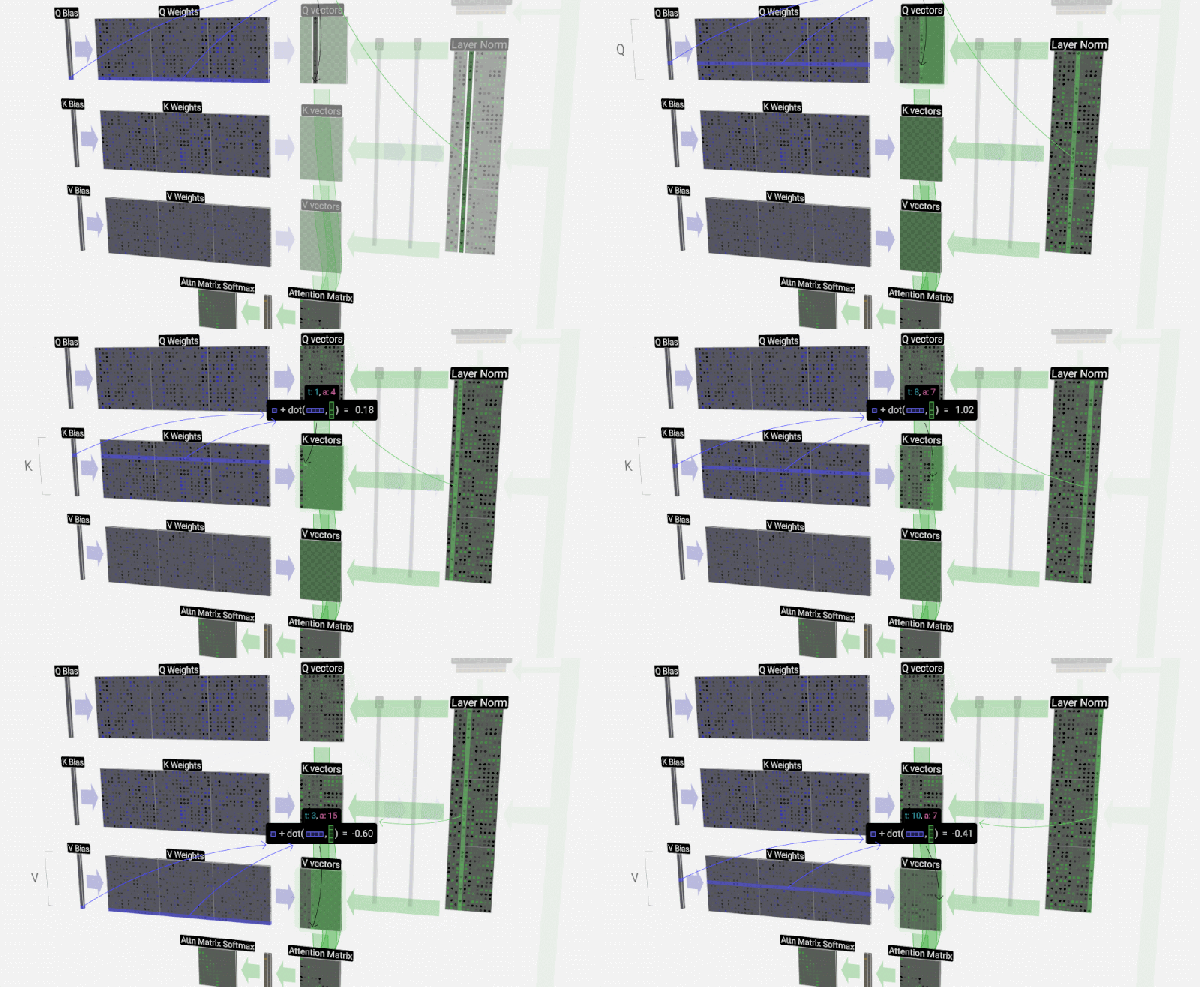
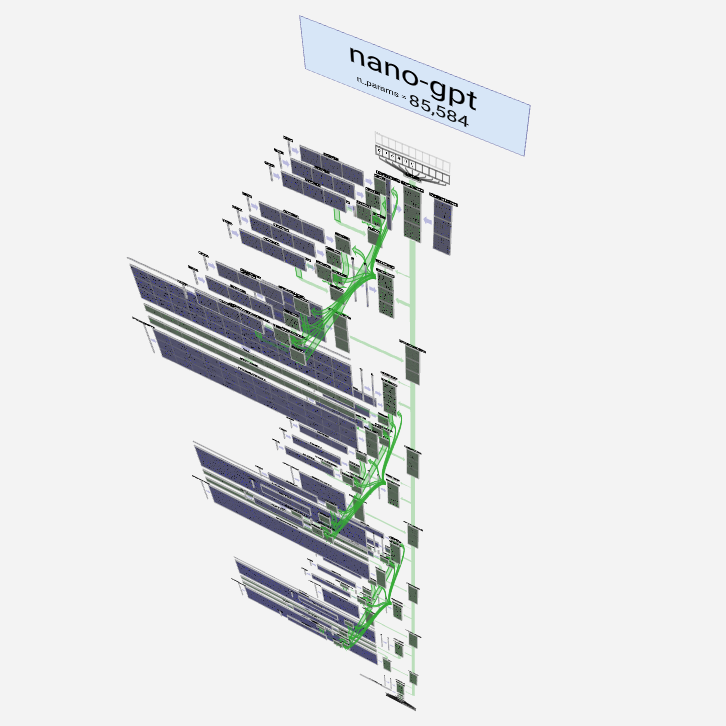
Large Language Models (LLMs) can produce extremely human-like communication, but their inner workings are something of a mystery. Not a mystery in the sense that we don’t know how an LLM works, but a mystery in the sense that the exact process of turning a particular input into a particular output is something of a black box.

This “black box” trait is common to neural networks in general, and LLMs are very deep neural networks. It is not really possible to explain precisely why a specific input produces a particular output, and not something else.

Why? Because neural networks are neither databases, nor lookup tables. In a neural network, discrete activation of neurons cannot be meaningfully mapped to specific concepts or words. The connections are complex, numerous, and multidimensional to the point that trying to tease out their relationships in any straightforward way simply does not make sense.

Continue reading “Peering Into The Black Box Of Large Language Models”

Torment Poor Milton With Your Best Pixel Art

One of the great things about new tech tools is just having fun with them, like embracing your inner trickster god to mess with ‘Milton’, an AI trapped in an empty room.

Milton is trapped in a room is a pixel-art game with a simple premise: use a basic paint interface to add objects to the room, then watch and listen to Milton respond to them. That’s it? That’s it. The code is available on the GitHub repository, but there’s also a link to play it live without any kind of signup or anything. Give it a try if you have a few spare minutes.

Under the hood, the basic loop is to let the user add something to the room, send the picture of the room (with its new contents) off for image recognition, then get Milton’s reaction to it. Milton is equal parts annoyed and jumpy, and his speech and reactions reflect this.

The game is a bit of a concept demo for Open Souls whose “thing” is providing AIs with far more personality and relatable behaviors than one typically expects from large language models. Maybe this is just what’s needed for AI opponents in things like the putting game of Connect Fore! to level up their trash talking.

Hackaday Links Column Banner

Hackaday Links: June 16, 2024

Attention, slackers — if you do remote work for a financial institution, using a mouse jiggler might not be the best career move. That’s what a dozen people learned this week as they became former employees of Wells Fargo after allegedly being caught “simulating keyboard activity” while working remotely. Having now spent more than twice as many years working either hybrid or fully remote, we get it; sometimes, you’ve just got to step away from the keyboard for a bit. But we’ve never once felt the need to create the “impression of active work” during those absences. Perhaps that’s because we’ve never worked in a regulated environment like financial services.

For our part, we’re curious as to how the bank detected the use of a jiggler. The linked article mentions that regulators recently tightened rules that require employers to treat an employee’s home as a “non-branch location” subject to periodic inspection. More than enough reason to quit, in our opinion, but perhaps they sent someone snooping? More likely, the activity simulators were discovered by technical means. The article contains a helpful tip to avoid powering a jiggler from the computer’s USB, which implies detecting the device over the port. Our guess is that Wells tracks mouse and keyboard activity and compares it against a machine-learning model to look for signs of slacking.

Continue reading “Hackaday Links: June 16, 2024”