What On Earth Is A Pickle Fork And Why Is It Adding To Boeing’s 737 Woes?

It’s fair to say that 2019 has not been a good year for the aircraft manufacturer Boeing, as its new 737 MAX aircraft has been revealed to contain a software fault that could cause the aircraft to enter a dive and crash. Now stories are circulating of another issue with the 737, some of the so-called “Pickle forks” in the earlier 737NG aircraft have been found to develop cracks.

It’s a concerning story and there are myriad theories surrounding its origin but it should also have a reassuring angle: the painstaking system of maintenance checks that underpins the aviation industry has worked as intended. This problem has been identified before any catastrophic failures have occurred. It’s not the story Boeing needs at the moment, but they and the regulators will no doubt be working hard to produce a new design and ensure that it is fitted to aircraft.

The Role of the Pickle Fork

For those of us who do not work in aviation though it presents a question: what on earth is a pickle fork? The coverage of the story tells us it’s something to do with attaching the wing to the fuselage, but without a handy 737 to open up and take a look at we’re none the wiser.

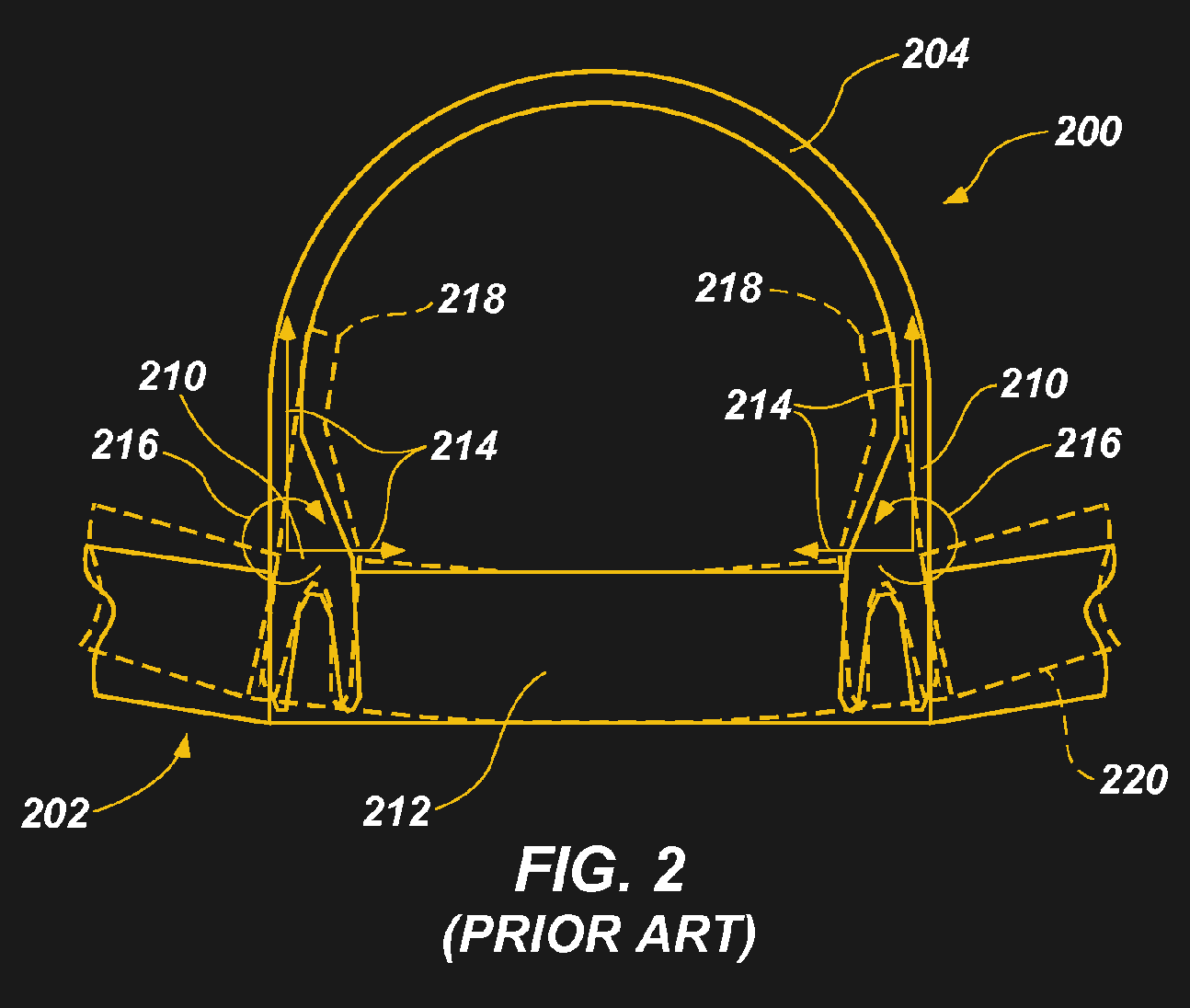
Fortunately there’s a comprehensive description of one along with a review of wing attachment technologies from Boeing themselves, and it can be found in one of their patents. US9399508B2 is concerned with an active suspension system for wing-fuselage mounts and is a fascinating read in itself, but the part we are concerned with is a description of existing wing fixtures on page 12 of the patent PDF.

A cross-section of the aircraft wing fixing, in which we've highlighted the role of the pickle forks. (Boeing)
A cross-section of the aircraft wing fixing, in which we’ve highlighted the role of the pickle forks. (Boeing)

The pickle fork is an assembly so named because of its resemblance to the kitchen utensil, which attaches firmly to each side of the fuselage and has two prongs that extend below it where they are attached to the wing spar.

For the curious engineer with no aviation experience the question is further answered by the patent’s figure 2, which provides a handy cross-section. The other wing attachment they discuss involves the use of pins, leading to the point of the patented invention. Conventional wing fixings transmit the forces from the wing to the fuselage as a rigid unit, requiring the fuselage to be substantial enough to handle those forces and presenting a problem for designers of larger aircraft. The active suspension system is designed to mitigate this, and we’d be fascinated to hear from any readers in the comments who might be able to tell us more.

We think it’s empowering that a science-minded general public can look more deeply at a component singled out in a news report by digging into the explanation in the Boeing patent. We don’t envy the Boeing engineers in their task as they work to produce a replacement, and we hope to hear of their solution as it appears.

[via Hacker News]

[Header image: AMX Boeing 737 XA-PAM by Jean-Philippe Boulet CC-BY 3.0]

A Virtual Tour Of The B-17

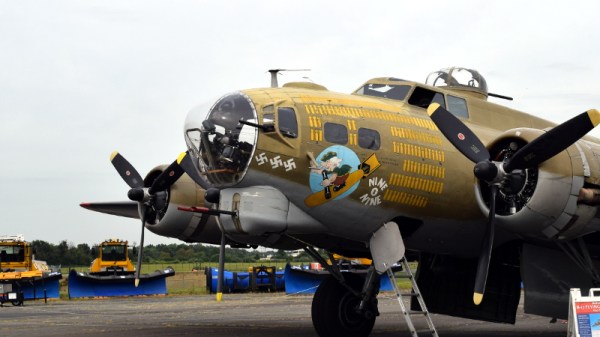
The Boeing B-17 “Flying Fortress” is arguably the most recognizable aircraft of the Second World War. Made infamous by the daring daylight strategic bombing runs they carried out over Germany, more than 12,000 of these four-engined bombers were produced between 1939 and 1945. Thanks to the plane’s renowned survivability in battle, approximately 60% of them made it through the war and returned home to the United States, only to be rounded up in so-called “boneyards” where they were ultimately cut up and sold as scrap. Today there are fewer than 50 intact Boeing B-17s left in the world, and of those, only 11 remain airworthy.

One of them is Nine-O-Nine, a B-17G built in April 7, 1945. This particular aircraft was built too late to see any combat, although in the 1950s she was fitted with various instruments and exposed to three separate nuclear blasts for research purposes. It’s actually not the real Nine-O-Nine either, the original was scrapped after it completed eighteen bombing runs over Berlin. Without a combat record of its own, this bomber was painted to look like the real Nine-O-Nine in honor of its incredible service record of never losing a crewman.

Since 1986, Nine-O-Nine has been owned by the Collings Foundation, who operate her as a living history exhibit. The bomber flies around the United States with an entourage of similarly iconic WWII aircraft as part of the Wings of Freedom Tour, stopping by various airports and giving the public a chance to climb aboard and see the pinnacle of mid-1940s strategic bombing technology. History buffs with suitably deep pockets can even book a seat on one of the scheduled 30-minute flights that take place at every stop on the Tour.

I was lucky enough to have the The Wings of Freedom Tour pass through my area recently, and couldn’t pass up the opportunity to experience this incredible aircraft first hand. The fact that I’m equal parts a coward and miser kept me from taking a ride aboard the 74 year old Nine-O-Nine, at least for now, but I made sure to take plenty of pictures from inside this lovingly restored B-17G while it was safely on the ground.

Continue reading “A Virtual Tour Of The B-17”

Monster Bush Plane Is A One-Off Engineering Masterpiece

All of us dream of reaching a point in life where we have the knowledge, skills, energy and resources to pull off builds that match our wildest dreams. [Mike Patey] is living that dream and with a passion for engineering and aviation that is absolutely infectious, he built Draco, the world’s most badass bush plane.

Draco started life as a PZL-104MA Wilga 2000, which already had impressive short take off and landing (STOL) capabilities for a 4 seater. Its original 300 hp Lycoming piston engine failed catastrophically in 2017, very nearly dumping [Mike] in Lake Utah. He decided it was a good excuse to start building his dream plane, and replaced the motor with a Pratt & Whitney PT6 turboprop engine, putting out a massive 680 hp.

Almost the entire plane was upgraded, and the engineering that went into it is awe-inspiring, especially considering that [Mike] did most of it himself. This includes a redesigned fuel system, enlarged wing and control surfaces, new avionics, oxygen system, upgraded landing gear and an array of lights. The wing tip landing lights are actually from a Boeing 737. [Mike] estimates that the upgrades cost somewhere in the region of a million US dollars. All the highlights of the build is documented in series of videos on [Mike]’s YouTube channel. What we would give for a personal workshop like that…

Try not to let your jaw hit the floor when watching the video after the break.

Continue reading “Monster Bush Plane Is A One-Off Engineering Masterpiece”

Who Really Has The Largest Aircraft?

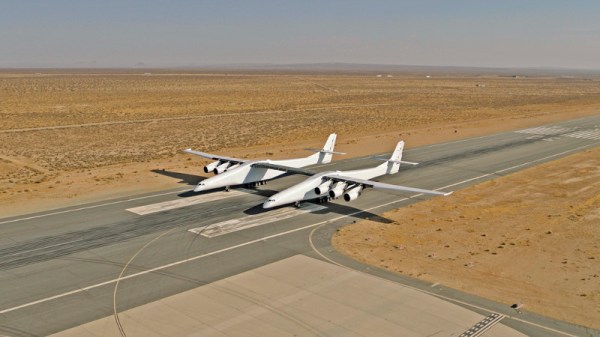
We were all glued to our screens for a moment a few weeks ago, watching the Scaled Composites Stratolaunch dual-fuselage space launch platform aircraft make its first flight. The six-engined aircraft represents an impressive technical feat by any standard, and with a wingspan of 385 ft (117 m) and payload weight of 550,000 lb (250 t), is touted as the largest ever flown.

Our own Brian Benchoff took a look at the possibility of hauling more mundane cargo as an alternative (and possibly more popular) use of its lifting capabilities. And in doing so mentioned that “by most measure that matter” this is the largest aircraft ever built. There are several contenders for the title of largest aircraft that depend upon different statistics, so which one really is the largest? Sometimes it’s not as clear as you’d think, but finding out leads us into a fascinating review of some unusual aeronautical engineering.

Continue reading “Who Really Has The Largest Aircraft?”

3D Printing A Lifting Body Aircraft

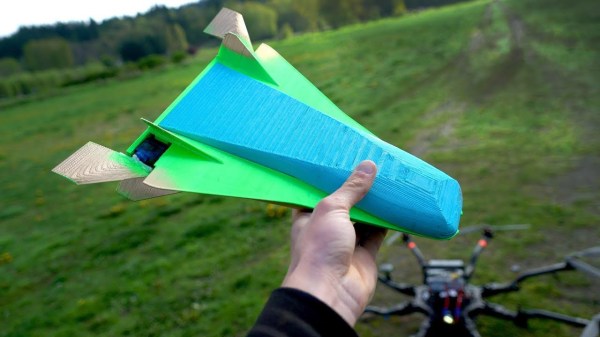
When you think of unconventional aircraft, flying wings have had plenty of time in the sun over the last few decades. With striking designs like the B-2 Spirit and F-117A Nighthawk on the flight line, it’s no surprise. The lifting body never really caught on, however, and it languishes in ignominy to this day. Despite their obscurity, [rctestflight] decided to 3D print a few lifting bodies for himself and take them out for a field test (YouTube video, embedded below).

Most aircraft have a body designed with low drag, and wings designed to provide lift. Lifting body aircraft focus the body design on providing that lift and often have no real wing to the design, needing only control surfaces to compliment the body. For this project, several different designs were constructed, with the craft being drop-launched from a multirotor at significant altitude. Initial tests were hamstrung by stability problems, both due to center of gravity issues and uncertain aerodynamic phenomena. The early designs were particularly prone to suddenly entering an unrecoverable flat spin. Later modifications included the addition of further stabilizers, which helped performance somewhat.

3D printing is a great way to experiment with aerodynamic phenomena, as it’s easy to create all manner of complicated geometries to tinker with. [rctestflight] has done solid work developing a basic craft, and we’d love to see the work continue with powered tests and more development. If flying wings are more your jam, though, you can 3D print those too. Video after the break.

Continue reading “3D Printing A Lifting Body Aircraft”

Airbus To Halt Production Of The A380; Goodbye To An Engineering Triumph

Eleven years ago, the Airbus A380 entered commercial service with Singapore Airlines. In the time since then it has become the queen of the skies. It’s a double-decker airliner, capable of flying 550 passengers eight thousand nautical miles. Some configurations of the A380 included private suites. Some had a shower. This is the epitome of luxury, a dream of flying with long-stemmed glasses, a movie, and a pleasant dream in mid-air.

Now, after the cancellation of A380 orders by Emirates, Airbus has announced it will end production of this massive, massive plane. No, it’s not the last flight of the Concorde, but it is the beginning of the end of an era. The biggest and most impressive planes just aren’t economical; it’s possible to fly three 787s across the globe for a single flight of an A380. The skies won’t fall silent, but soon the A380 will be no more.

Continue reading “Airbus To Halt Production Of The A380; Goodbye To An Engineering Triumph”

Rebuilding An Extremely Rare Twin Mustang Fighter

Towards the end of the Second World War, as the United States considered their options for a possible invasion of Japan, there was demand for a new fighter that could escort long range bombers on missions which could see them travel more than 3,200 kilometers (2,000 miles) without refueling. In response, North American Aviation created the F-82, which essentially took two of their immensely successful P-51 fighters and combined them on the same wing. The resulting plane, of which only 272 were built, ultimately set the world record for longest nonstop flight of a propeller-driven fighter at 8,129 km (5,051 mi) and ended up being the last piston engine fighter ordered by the United States Air Force.

Today, only five of these “Twin Mustangs” are known to exist. One of those, a prototype XP-82 variant, is currently in the final stages of an epic decade-long rebuilding process directed by warbird restoration expert [Tom Reilly]. At the end of this painstaking restoration, which makes use of not only original hardware but many newly produced components built with modern technology such as CNC milling and 3D printing, the vintage fighter will become the only flyable F-82 in the world.

CNC milled replacement brake caliper

The project provides a fascinating look at what it takes to not only return a 70+ year old ultra-rare aircraft to fully functional status, but do it in a responsible and historically accurate way. With only four other intact F-82’s in the world, replacement parts are obviously an exceptional rarity. The original parts used to rebuild this particular aircraft were sourced from literally all over the planet, piece by piece, in a process that started before [Tom] even purchased the plane itself.

In a way, the search for parts was aided by the unusual nature of the F-82, which has the outward appearance of being two standard P-51 fighters, but in fact utilizes a vast number of modified components. [Tom] would keep an eye out for parts being sold on the open market which their owners mysteriously discovered wouldn’t fit on a standard P-51. In some cases these “defective” P-51 parts ended up being intended for the Twin Mustang project, and would get added to the collection of parts that would eventually go into the XP-82 restoration.

For the parts that [Tom] couldn’t find, modern manufacturing techniques were sometimes called in. The twin layout of the aircraft meant the team occasionally had one component but was missing its counterpart. In these cases, the original component could be carefully measured and then recreated with either a CNC mill or 3D printed to be used as a die for pressing the parts out of metal. In this way the team was able to reap the benefits of modern production methods while still maintaining historical accuracy; important on an aircraft where even the colors of the wires used in the original electrical system have been researched and faithfully recreated.

We’ve seen plenty of restorations here at Hackaday, but they tend to be of the vintage computer and occasionally Power Wheels variety. It’s interesting to see that the same sort of techniques we apply to our small scale projects are used by the pros to preserve pieces of history for future generations.

[Thanks to Daniel for the tip.]