Listen To Your Fermentation To Monitor Its Progress

If you are a wine, beer, or cider maker, you’ll know the ritual of checking for fermentation. As the yeast does its work of turning sugar into alcohol, carbon dioxide bubbles froth on the surface of your developing brew, and if your fermentation container has an airlock, large bubbles pass through the water within it on a regular basis. Your ears become attuned to the regular “Plop… plop… plop” sound they make, and from their interval you can tell what stage you have reached.

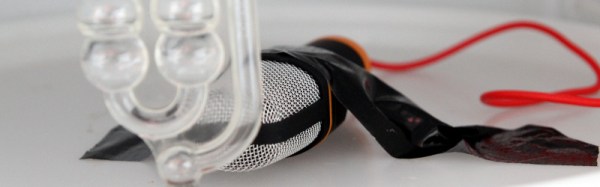
[Chris] automated this listening for fermentation bubbles, placing a microphone next to his airlock and detecting amplitude spikes through two techniques: one using an FFT algorithm and the other a bandpass filter. Both techniques yielded similar graphs for fermentation activity over time.

He has a few ideas for improvement, but notes that his system is vulnerable to external noises. There is also an admission that using light to detect bubbles might be a more practical solution as we have shown you more than once with other projects, but as with so many projects on these pages, it is the joy of the tech as much as the practicality that matters.
Bessel Filter Design

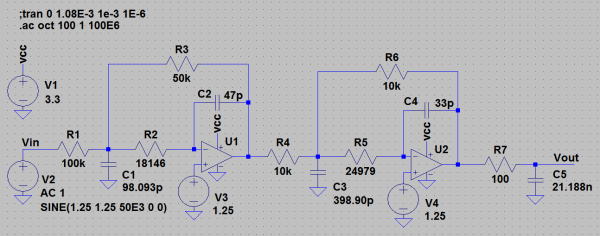
Once you fall deep enough into the rabbit hole of any project, specific information starts getting harder and harder to find. At some point, trusting experts becomes necessary, even if that information is hard to find, obtuse, or incomplete. [turingbirds] was having this problem with Bessel filters, namely that all of the information about them was scattered around the web and in textbooks. For anyone else who is having trouble with these particular filters, or simply wants to learn more about them, [turingbirds] has put together a guide with all of the information he has about them.

For those who don’t design audio circuits full-time, a Bessel filter is a linear, passive bandpass filter that preserves waveshapes of signals that are within the range of the filter’s pass bands, rather than distorting them in some way. [turingbirds]’s guide goes into the foundations of where the filter coefficients come from, instead of blindly using lookup tables like he had been doing.

For anyone else who uses these filters often, this design guide looks to be a helpful tool. Of course, if you’re new to the world of electronic filters there’s no reason to be afraid of them. You can even get started with everyone’s favorite: an Arduino.

Detect Lightning Strikes With Audio Equipment

One of the driving principles of a lot of the projects we see is simplicity. Whether that’s a specific design goal or a result of having limited parts to work with, it often results in projects that are innovative solutions to problems. As far as simplicity goes, however, the latest project from [153armstrong] takes the cake. The build is able to detect lightning using a single piece of equipment that is almost guaranteed to be within a few feet of anyone reading this article.

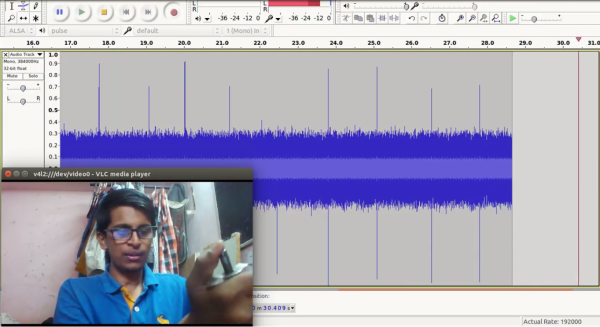
The part in question is a simple, unmodified headphone jack. Since lightning is so powerful and produces radio waves in many detectable ranges, it doesn’t take much to detecting a strike within a few kilometers. Besides the headphone jack, a computer with an audio recording program is also required to gather data. (Audio is often used as a stand-in for storing other types of data; in this case, RF information.) [153armstrong] uses a gas torch igniter as a stand-in for a lightning strike, but the RF generated is similar enough to test this proof-of-concept. The video of their tests is after the break.

Audacity is a great tool for processing audio, or for that matter any other data that you happen to be gathering using a sound card. It’s open source and fairly powerful. As far as lightning goes, however, it’s possible to dive far down the rabbit hole. Detecting lightning is one thing, but locating it requires a larger number of weather stations.

Continue reading “Detect Lightning Strikes With Audio Equipment”

Friday Hack Chat: Audio Systems

Join us this Friday for a Hack Chat on Audio Systems. It’s going down June 2 at noon PDT (handy time zone converter thing).

Every Friday, we gather round the campfire with the best in the business to tease out whatever secrets are stored in their mind. This is the Hack Chat, and this week, we’re going to be talking about audio systems with [Dafydd Roche]. Bring your low-distortion volume knobs and porcelain speaker cable risers, this is going to be a good one.

[Dafydd] got his start in electronics in an application for a music degree. He mentioned he’d built a few guitar pedals, which landed him a call from the electronics department at York University. They told him he was a terrible musician, but that he might excel at electronics.

Many years later he’s still going strong with audio applications with Expat Audio, manufacturers of fine preamps. [Dafydd] is also the Audio Strategic Marketing Manager at Dialog, and spends his days arguing with engineers and doing his best to solve customer problems. [Dafydd] has been on The Amp Hour, and has published articles on audio systems.

For this Hack Chat, we’re going to be running the gamut of audio, electronics, and small business. The questions on audio mythbusting are sure to entertain, and we’ll also be discussing audio signal chains and small business production. Bring your questions and put them on the sheet to guide the discussion.

Here’s How To Take Part:

join-hack-chatOur Hack Chats are live community events on the Hackaday.io Hack Chat group messaging.

Log into Hackaday.io, visit that page, and look for the ‘Join this Project’ Button. Once you’re part of the project, the button will change to ‘Team Messaging’, which takes you directly to the Hack Chat.

You don’t have to wait until Friday; join whenever you want and you can see what the community is talking about

Bring Home A Classic Synth With The DIY Fairlight CMI

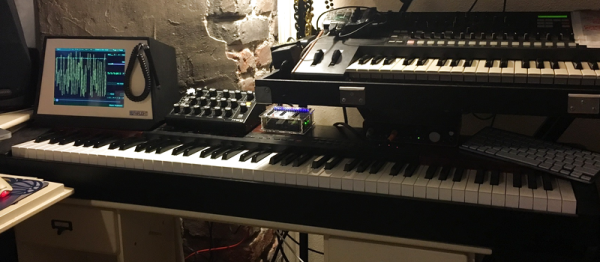
[Davearneson] built a modern version of a classic synthesizer with his DIY Fairlight CMI. If there were a hall of fame for electronic instruments, the Fairlight CMI would be on it. An early sampling synth with a built-in sequencer, the Fairlight was a game changer. Everyone from A-ha to Hans Zimmer has used one. The striking thing about the Fairlight was the user interface. It used a light pen to select entries from text menus and to interact with the audio waveform.

The original Fairlight units sold for £18,000 and up, and this was in 1979. Surviving units are well outside the price range of the average musician. There is an alternative though – [Peter Vogel] has released an iOS app which emulates the Fairlight.

[Davearneson] had an old iPad 2 lying around. Too slow to run many of the latest apps, but just fast enough to run the Fairlight app. An iPad doesn’t exactly look like a classic instrument though. So he broke out the tools and created a case that looked the part.

The front of the case is made of framing mat board. The rest of the shell is wood. [Davearneson] used Plasti-Dip spray to replicate the texture of 1970’s plastics. The audio interface is a Griffon unit, which provides audio and MIDI connections. [Davearneson] extended the connections from the Griffon to the rear of the case, making for a clean interface.

The iPad doesn’t exactly support a light pen, so a rubber tipped stylus on a coil cord takes it place. The result is a device that looks and works like a Fairlight – but doesn’t need a steady diet of 8″ floppy discs to operate.

Interested in classic digital synthesizers that are a bit more budget friendly? Check out Al Williams’ article on the SID chip, or this 3D printed synth based upon the 4046 PLL chip.

Run From The Sound Of Footsteps In Blind Game Of Tag

The human auditory system is a complex and wonderful thing. One of its most useful features is the ability to estimate the range and direction of sound sources – think of the way people instinctively turn when hearing a sudden loud noise. A team of students have leveraged this innate ability to produce a game of tag based around nothing but sound.

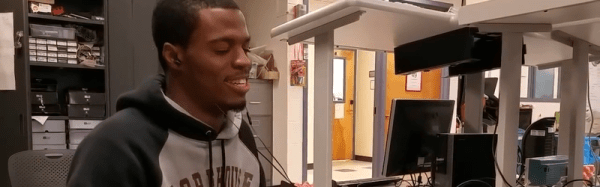
The game runs on two FPGAs, which handle the processing and communication required. The chaser is given a screen upon which they can see their own location and that of their prey. The target has no vision at all, and must rely on the sounds in their stereo headphones to detect the location of the chaser and evade them as long as possible.

The project documentation goes into great detail about the specifics of the implementation. The game relies on the use of the Head Related Transfer Function – a function related to how the ear picks up sounds relative to their position. This allows the FPGA to simulate the chaser’s footsteps, and feed the audio to the target who perceives the chaser’s position purely by sound.

It’s a great example of a gameplay mechanic that we’d love to see developed further. The concept of trying to find one’s way around by hearing alone is one which we think holds a lot of promise.

With plenty of processing power under the hood, FPGAs are a great choice for complex audio projects. A great project to try might be decoding MP3s.


Patents On MP3 Format Due To Expire

MP3 took off in the late 90s as the digital music format. It then proceeded to slaughter the CD, and launch the file sharing revolution as well. It’s a proud format that has roots stretching all the way back to the early 1980s, when the possibility of sending music over ISDN lines was first considered. Now the patents on it are beginning to expire and its licencing program has been terminated.

The MP3 standard was the property of Fraunhofer IIS, and the original licencing model was intended such that encoders would be expensive, and decoders relatively inexpensive. This would allow people to buy software to listen to MP3s cheaply, but the creation of MP3s would be expensive, and thus handled by studios and music labels. This all changed when a high-quality MP3 encoder was leaked to the public, and suddenly it became possible to readily convert your CDs at home into the MP3 format.

One hangover of this ownership of the MP3 standard was that when you installed certain FOSS software, such as Audacity or a Linux distro, you would find that you had to go and do some legwork to find an MP3 codec. That was because it wasn’t worth the legal trouble for the FOSS authors to arrange a workaround, and trading in proprietary software is the antithesis to everything they stand for.

However, now that more of the relevant patents are expiring, you can now expect MP3 support to be baked into more software. It may be more than a little late, with more advanced audio formats beginning to take over, but it’s great to know that Fedora, for one, is starting to include MP3 support with their releases.

If you’d like to read more about the history of the MP3, check out this great article from NPR. Fraunhofer have their own great history site, too. If all this talk of advanced audio formats has gotten you excited, check out this MP3 decoder written for the ESP8266.

[Thanks to Tim Trzepacz for the tip!]