Vintage Phone Has A Dirty Android Secret

android_based_vintage_phone

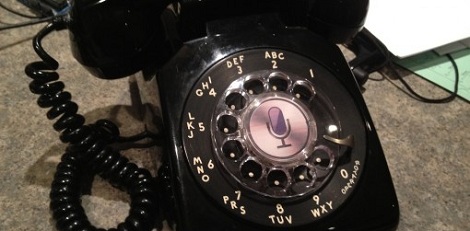
Instructables user [apple_fan] likes vintage telephones from the early 1900s, but while they are nice to look at, they’re clearly not too useful nowadays. He decided to change that, and retrofitted an old operator-dialed telephone with some modern amenities.

He gutted the phone, stripping out the large electromagnets and capacitor that were once used to facilitate placing and receiving calls. He added an Archos 28 tablet to the box, wiring it an IOIO board, allowing him to interface it with his Android phone. The old microphone and speaker were swapped out for updated components, and a new ringer actuator was built to replace the bulky old unit. The tablet and ringer, along with the rest of the components were then carefully hidden away inside the box as not to alter the aesthetics.

To place and receive calls, he installed CMU Sphinx on the Archos tablet, allowing him to interact with the phone using voice recognition, as if he was talking to a live operator.

It’s a pretty neat project, and while we might have opted for a small micro combined with a Bluetooth headset, [apple_fan] makes it clear why he made the hardware decisions he did. We’re always up for letting people show us a different way to get a job done, so we’re down with that.

Check out a short video demo of the phone in action after the jump.

Continue reading “Vintage Phone Has A Dirty Android Secret”

Cellphone Controlled Retro-radio Stores And Plays Your Digital Library

[Autuin] was worried about having desirable electronics stolen while on the road with his band. He didn’t want to take a laptop along on tour, but he didn’t want to be without his music either. To solve this problem, he built a music player inside of a cheap-looking radio. His write-up covers two different portable MP3 solutions, but it’s the second rendition that catches our attention.

After hollowing out the old radio he filled the void with an Asus WL-HDD 2.5. That hardware is meant to be an easy way to add network storage; it houses a laptop hard drive and has WiFi and Ethernet connectivity. But it also has one USB port, and can be hacked to add a second. [Autuin] did just that, using the two USB connections to add a Bluetooth dongle and a USB sound card. Music is synced with the hard drive via some cat-5 cable that’s hidden in the battery compartment of the vintage box. The NAS runs Linux, and the audio playback software is controlled though a Mobile Java application running on a somewhat broken cellphone. That’s an idea that might find its way into our next project.

Bluetooth Wristwatch Based On An Arduino

We hate to admit it, but we missed out on the TI Chronos watch deal last week. While we’re still a little bit burned over the fact that these watches sold out so fast, [Ahmet] sent in his Open Source Bluetooth Watch and we’re thinking this could eventually be a decent replacement.

The watch is built around an Arduino Pro Mini, a scavenged Nokia LCD, and a BlueSMiRF Gold. The Bluetooth connects to a Nokia N900 with a little Bluetooth client app [Ahmet] wrote. He also wrote a small GUI for the watch’s LCD display. Afterwards, he was able to display missed calls, new email, and is now working on support for changing songs on his N900’s media player.

Admittedly, a little work needs to be done on the enclosure. Still, the potential for this watch is much greater than the iPod as a watch project we saw last year. Right now, we’re thinking about what could be added to [Ahmet]’s watch. An accelerometer would probably be on the top of our list, but if you have any ideas feel free to leave them in the comments.

Check out the walk through of the watch’s functions after the break.

Continue reading “Bluetooth Wristwatch Based On An Arduino”

Hacking A2DP Support Into An Old Car Stereo

a2dp_tape_deck_retrofit

[Roofus] had an older car, and unfortunately his stereo’s cassette player just wasn’t doing it for him. He always wanted to simply get into his car, pull out his cell phone, and have his music ready to play without any fuss. After messing around with all sorts of different tape adapters, he got fed up and decided to rig up an A2DP (Stereo Bluetooth Audio) adapter on his own.

He pulled the head unit out and started looking around to see how he could wire an adapter in. He figured the best course of action would be to remove the tape deck, and fool the stereo into thinking that a tape had been inserted. After spending some time tracing wires and studying how his old tape adapters worked, [Roofus] had an A2DP connection wired in and was ready to rock out.

Greeted with nothing but silence, he turned to his favorite hacking site (Hackaday, naturally) for assistance. Some friendly forum-goers helped him identify a ground loop issue, and he set off to his nearest RadioShack for a pair of isolation transformers that would fix his problem.

Once he knocked out the ground loop issues, his adapter worked like a charm. He put everything back together, and aside from a tiny switch he installed to toggle between audio sources, you would never know it was there.

God’s Own Keyboard, Now With Bluetooth

For decades a thunderous roar rose from the bowels of IBM keyboards like the animus of angry and forgotten gods. These keyboards have fallen silent of late, due only to incompatibility with newer hardware. Now, Model Ms have been given a reprieve from landfills or recycling centers because of the work of [wulax] of geekhack and his Model M Bluetooth controller board.

Continue reading “God’s Own Keyboard, Now With Bluetooth”

Bluetooth Morse Code Keyboard For The Disabled

The team a Zunkworks wanted to build a device for people who can’t normally use a keyboard and mouse. The Bluetooth Morse code keyboard is what they came up with. This build gives the user full control over the keyboard and mouse using a single button or a sip & puff interface.

Continue reading “Bluetooth Morse Code Keyboard For The Disabled”

Bringing An IWallet Back To Life

iwallet_bluetooth_hack

The iWallet is a slick little device if you’ve got a big wad of cash burning a hole in your pocket. The $600 price tag was a little much for [cmw] to swallow, so he bought a water damaged iWallet on eBay with hopes of repairing it. Once took a close look, he knew that repairing it was a lost cause, so he decided to hack it instead.

He pulled out most of the wallet’s electronics save for the motor that opens the device, and replaced the damaged parts with his own. He installed an Arduino pro as well as a Bluetooth module, powering the pair with a small rechargeable LiPo battery. The iWallet’s fingerprint reader was then replaced with a series of LEDs that show the device’s Bluetooth connectivity status.

[cmw] can now connect his wallet to his phone, issuing unlock commands via Bluetooth. If you don’t want to fork out the cash, his version is nearly as good as the real thing.

Continue reading to see a quick video of [cmw’s] iWallet hack in action.

Continue reading “Bringing An IWallet Back To Life”