DIY Wireless Sprinkler System? Don’t Mind If I Do.

What to do once you have a sprinkler system installed on your property: buy a sprinkler control system or make your own? The latter, obviously.

[danaman] was determined to hack together a cheap, IoT-enabled system but it wasn’t easy — taking the better part of a year to get working. Instead of starting right from scratch, he used the open-source Sustainable Irrigation Platform(SIP) control software — a Python sprinkler scheduler with some features [danman] was looking for(eg: it won’t activate if there’s rain in the forecast). Since he wasn’t running it with a Raspberry Pi as recommended, [danman] wrote a Python plugin that runs on his home server as a daemon which listens to TCP port 20000 for connections and then updates the relevant relays. Ok, software done; on to the relay controller box!

Continue reading “DIY Wireless Sprinkler System? Don’t Mind If I Do.”

Hackaday Prize Entry: Elderly Autonomous Fall Detection

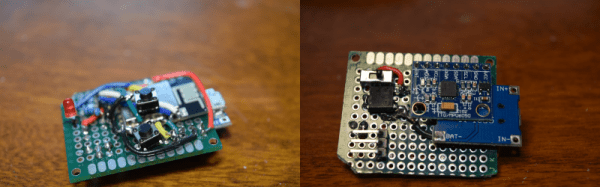
For his Hackaday Prize entry, [having11] is building a simple and cheap fall detection notification button that can be worn by senior citizens, young kids, or others affected by medical conditions. [having11] did some fact-finding, and it appears that falls are one of the leading causes of injury for seniors, according to data available from the Centres for Disease Control and Prevention (CDC).

This device will sense a fall and send a text message or email to a recipient caregiver, loved one, or friend. The notification can also be manually triggered using a pushbutton. There’s a 5-second delay before it actually sends the alert, allowing a false trigger to be canceled. On receiving the alert, the recipient can decide how to proceed and if the situation requires a call to emergency services.

The device uses an ESP8266, a MPU6050 MEMS gyro-accelerometer combo, and MyDevices Cayenne IoT service. The Cayenne IoT service is free for Makers and non-commercial use at the moment. The only other components needed are a few discretes and a small LiPo battery, keeping the cost of the device under $10. The whole assembly is housed in a 3D-printed enclosure. The next steps would probably be to make it more compact and design a housing that can be worn as an arm or chest band or on a waist belt. An important requirement of such monitoring devices is being able to notify when/before it is unable to fulfill its primary requirements. Towards that end, maybe adding a low battery and low WiFi signal strength indicators would be nice.

If you have more suggestions on making this better, chime in with your comments below.

Continue reading “Hackaday Prize Entry: Elderly Autonomous Fall Detection”

Dumb STB Gets Smart

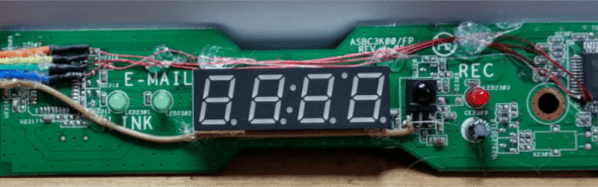
[Vincent Deconinck] gave a fresh lease of life to an old set top box by adding a few Euro’s worth of hardware and some software smarts. The device in question is an old VOOcorder – a Cisco set-top box provided by VOO, his cable service provider in Belgium.

The VOOcorder doesn’t have any WiFi hardware or browser / app based interfaces. It’s a simple device controlled either via an IR remote or front panel buttons. [Vincent] added an ESP8266 and hooked it up to the IR receiver on the set-top box. He also set it up as an SPI slave to the front panel VFD display controller and connected it to the debug serial interface of the VOOcorder as well. The software, on the other hand, required a lot more work consisting of code running on the ESP itself, several HTML pages and JavaScript code for the browser front end, and a few scripts running in the background.

The result was bidirectional interactivity from within a browser, allowing him to send commands and receive status information as well as providing a user-friendly search interface. Further, his browser interface was integrated with information from the service providers website letting him do scheduling and recording of programs. The stuff that interested us is how he sniffed out the IR signals, figured out the SPI protocol used by the front panel controller, and implemented SPI-slave mode for the ESP8266. [Vincent] was surprised that such a cheap device could handle three distinct web servers while parsing two message streams without a hitch.

It’s a great hack showing us how to use super cheap electronics to upgrade and modernize old hardware. Check out the two videos after the break – showing a demo of the hack in action, and a walk through of the hardware modifications.

Continue reading “Dumb STB Gets Smart”

New Part Day: Pluggable ESP Modules

Almost exactly four years ago, we came across a really neat module for sale on SeeedStudios. It was a $5 WiFi chip, able to connect your microcontroller project to the Internet with just a handful of wires and a few AT commands. This was the ESP8266, and it has since spawned an entire ecosystem of connected devices.

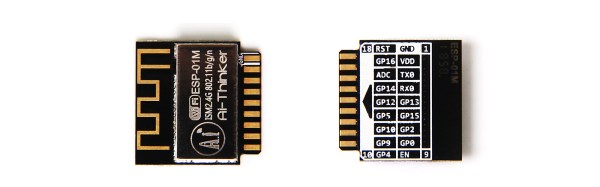
Now, there’s a new version of the ESP8266 that simply showed up on the Seeed website. Officially, it’s called the, ‘ESP8285 01M Wi-Fi SoC Module’, but you might as well start calling it ‘the Pluggable ESP module’. It’s the smallest ESP8266 module yet at 18mm square, and this one is designed to be plugged into a card-edge connector. It’s eighteen pins of wonder and 1MB of Flash, all ready to be stuffed into the next Internet of Things Thing.

The documentation for this module is sparse, and there isn’t even a mention of it on the AI Thinker website. That said, we can make some reasonable assumptions about what’s going on in this chip and what it can do. This module appears to be based on the ESP8285 SoC. Basically, it’s an ESP8266 with built-in 1MB SPI Flash. There are a handful of GPIOs available, and you should be able to build anything with this module that you could with other ESP8266 modules.

The highlight here is, of course, the card-edge connector. This is a module designed to be dropped into an existing product. You can program the module before hand, and assembly is a snap. The problem, though, is sourcing the relevant connector. It doesn’t look like Seeed has bothered to put a link to the right connector in the product description, although sourcing it shouldn’t be that much of a problem. The only question is if the card edge connectors on this module are hard gold (for multiple mating cycles) or just ENIG. Either way, if you’re plugging these modules into connectors dozens of times, you’re probably doing something wrong.

ESP8266 Adds Slick Touchscreen Controls To A Stretch Limo

The popularity of the ESP8266 WiFi module has a lot to do with its ability to inexpensively connect to the Internet. However, [hwhardsoft]’s stretch limousine environmental control system explores another use for these modules: a simple way to tie together disparate systems with a common user interface.

On a basic level, the problem is one we’ve all faced: multiple devices with multiple control interfaces create an awkward user experience. Have you ever worked in an office with 6 brands of air conditioner requiring 6 different remotes? Because of its low-cost, support for Wi-Fi, serial, and GPIO, ESP8266 boards are a reasonable candidate to create a unified control system for multiple devices. This is even more true for the ESP32, as it adds Bluetooth support.

[hwhardsoft]’s use case is fairly straightforward. The limousine (a Lincoln stretch) has multiple LED lighting controllers, climate control, and a laser projector. This was not exactly a smooth user experience, so [hwhardsoft] tied all the controls to two slick touchscreen interfaces (presumably one for the driver and one for the passengers).
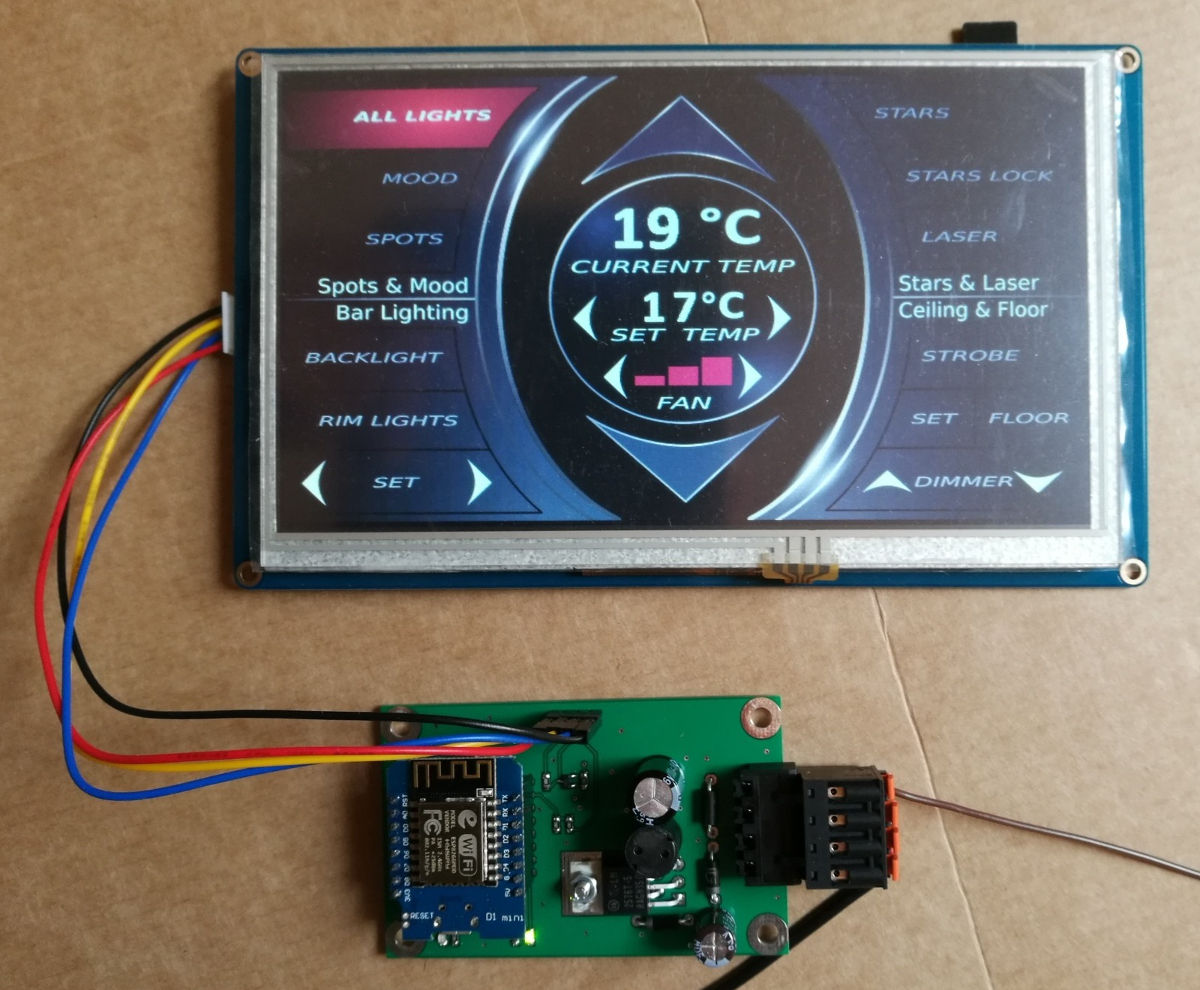
Each touchscreen sends commands over Wi-Fi using UDP to a control board that switches relays to control the different devices, as we’ve seen previously.

While relays are arguably not the ideal solution here, these control boards already existed and were functional, so it would have been wasteful to throw them out. An easy improvement suitable for future projects would be to use NPN transistors to simulate button presses on the remote controls. This works quite well and lowers cost, power, and parts count, while being faster, more reliable, and quiet.

If you wanted to build something similar in your home or office, but want to use an Android smartphone instead of a touchscreen, the Kivy Python module allows you to do just that. It’s quite easy to set up a simple interface with buttons, dropdown lists, and text inputs that send data to an ESP8266 over UDP.

Determining Kibble Level Via Time-of-Flight

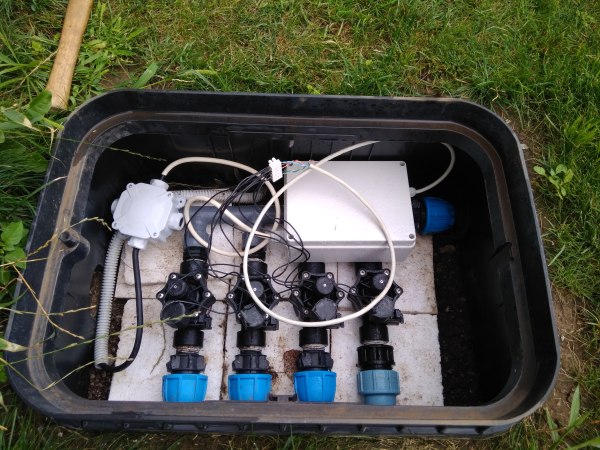
[WTH] is building an IoT kitty food dispenser. There are a few of these projects floating around that measure out portions very sensibly — some use screws to dispense a set amount of food at a time, some measure the weight of the remaining stockpile. This build is definitely not that. This kitty food monitor uses a time of flight sensor to determine the remaining level of food in a hopper. [WTH]’s feeder lets the cat eat all the grub it wants, then alerts the hooman when kibble levels drop below a certain level.

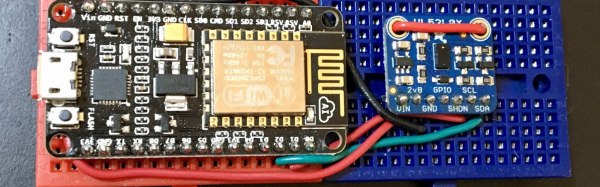
The project starts with one of those pet food dispensers that consist of a hopper that gravity feeds into the food bowl. As the animal eats that food, more dispenses into the bowl. Attached to the lid is an ESP8266 connected to an Adafruit time of flight sensor. This reports the kibble level in centimeters, which is good enough for [WTH]’s purposes. Sensor data is logged to a Google Drive spreadsheet, published as a graph through M2X (AT&T’s IOT service), and texted to [WTH]’s smart watch via IFTTT.

Look for a plethora of Tweeting, Instagramming, and otherwise automated feeding of the cat overlords right here on Hackaday. Check out automatic cat feeder dispenses noms, wants cheezburger, and a cat feeder made with laminator parts.

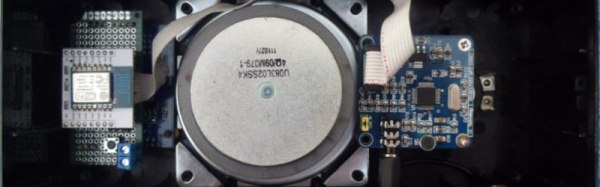
ESP8266 Based Internet Radio Receiver Is Packed With Features

Have a beautiful antique radio that’s beyond repair? This ESP8266 based Internet radio by [Edzelf] would be an excellent starting point to get it running again, as an alternative to a Raspberry-Pi based design. The basic premise is straightforward: an ESP8266 handles the connection to an Internet radio station of your choice, and a VS1053 codec module decodes the stream to produce an audio signal (which will require some form of amplification afterwards).

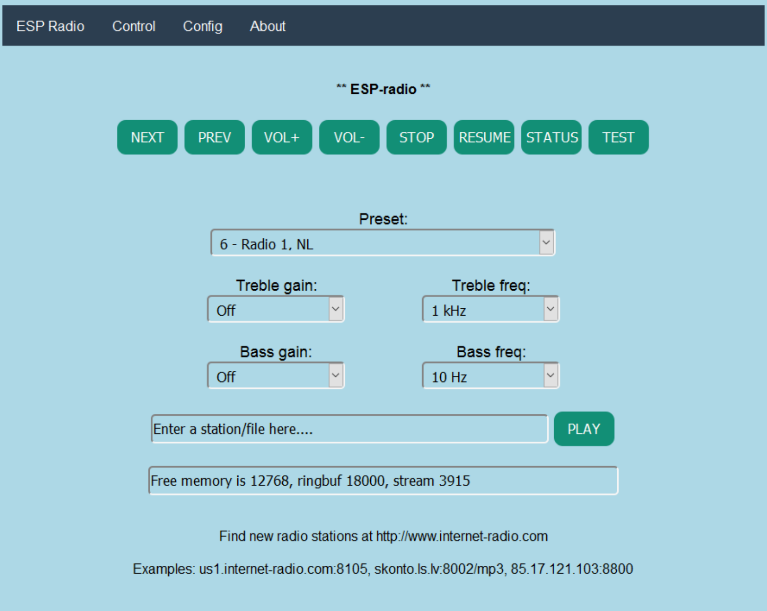
Besides the excellent documentation (PDF warning), where this firmware really shines is the sheer number of features that have been added. It includes a web interface that allows you to select an arbitrary station as well as cycle through presets, adjust volume, bass, and treble.


If you prefer physical controls, it supports buttons and dials. If you’re in the mood for something more Internet of Things, it can be controlled by the MQTT protocol as well. It even supports a color TFT screen by default, although this reduces the number of pins that can be used for button input.

The firmware also supports playing arbitrary .mp3 files hosted on a server. Given the low parts count and the wealth of options for controlling the device, we could see this device making its way into doorbells, practical jokes, and small museum exhibits.

To see it in action, check out the video below:

[Thanks JeeCee]

Continue reading “ESP8266 Based Internet Radio Receiver Is Packed With Features”