Reverse Engineering A Two-Wire Intercom

There was a time when an intercom was simply a pair of boxes with speakers joined by a couple of wires, with an audio amplifier somewhere in the mix. But intercoms have like everything else joined the digital age, so those two wires now carry a load of other functionality as digital signalling. [Aaron Christophel] installs these devices for a living, and has posted a fascinating reverse engineering video that we’ve also placed below the break.

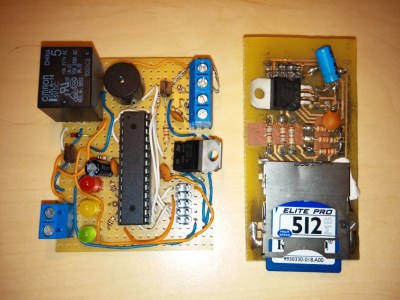
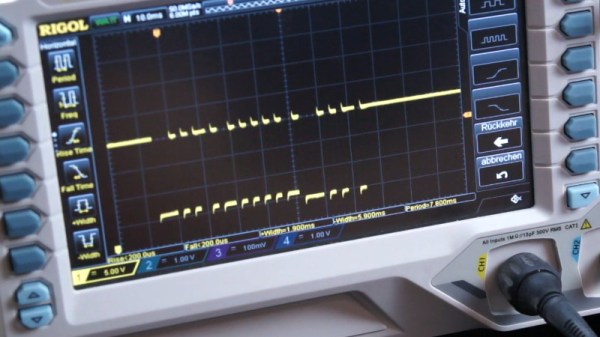
Power for the system is present as a constant 24V DC, and the audio is still an old-fashioned analogue signal that we’ll all be familiar with. On that 24V DC though are imposed a series of pulse trains to trigger the different alarms and other functions, and he describes extracting these with an oscilloscope before showing us the circuitry he’s used to send and receive pulses with an Arduino. The bulk of the video is then devoted to the software on the Arduino, which you can also find in a GitHub repository.

The result is an interesting primer for anyone who fancies a bit of serial detective work, even if they don’t have a intercom to hand.
Continue reading “Reverse Engineering A Two-Wire Intercom”

Video Doorbell Focuses On Quality, Aesthetic

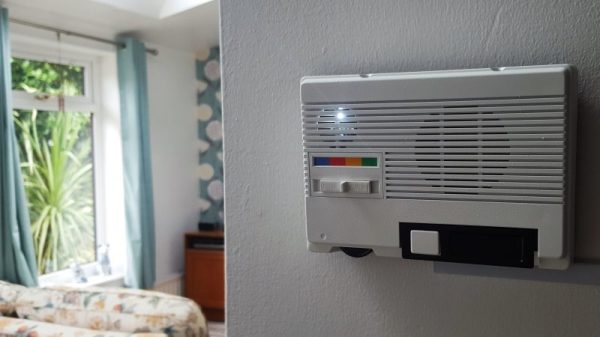
One of the most popular futurist tropes of the 20th century was the video intercom. Once this technology was ready, it would clearly become a mainstay of modern living overnight. Our lived reality is however somewhat different. For [MisterM], that simply wouldn’t do, so he set about producing a retro-themed video doorbell that is sure to be the envy of the neighbourhood.

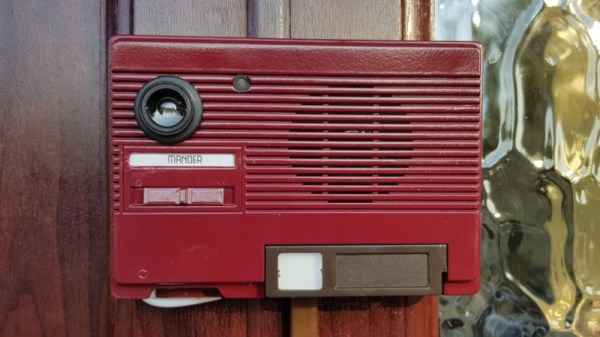
Not one to settle for second best, [MisterM] wanted to focus on quality in video and sound. A Microsoft LifeCam 3000HD handles video and audio capture, with a Raspberry Pi 3B+ providing plenty of grunt to run the show. The Pimoroni pHAT BEAT add-on provides audio output. It’s all integrated into a 1980s vintage intercom, which is painted a deep shade of maroon for an extra classy look. Further parts are integrated into a classic Sony tape deck, with LEDs shining out from under the cassette door for added visual appeal.

The doorbell works by making calls to Google Duo, which allows the user to answer the door from anywhere in the house, or indeed – anywhere with an Internet connection! [MisterM] reports this has already proved useful for communicating with couriers delivering packages to the house. There’s also a standard wireless doorbell and chime integrated into the unit which alerts those within the house in the usual way.

It’s a project that is both highly functional and looks particularly swish. Integrating new brains into old-school enclosures is a great way to give your project a cool look. These aircraft surplus clocks are a great example. Video after the break.

Continue reading “Video Doorbell Focuses On Quality, Aesthetic”

Fail Of The Week: ESP Walkie, Not-So-Talkie

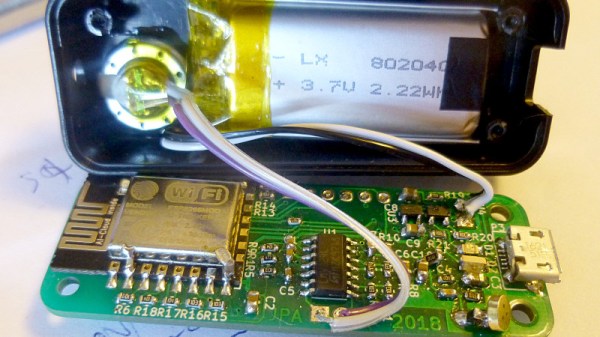
The ESP8266 has become such a staple of projects in our community since it burst onto the scene a few years ago. The combination of a super-fast processor and wireless networking all on the same chip and sold in retail quantities for relative pennies has been irresistible. So when [Petteri Aimonen] needed to make a wireless intercom system for cycling trips it seemed an obvious choice. Push its internal ADC to sample at a high enogh rate for audio, and stream the result over an ad-hoc wi-fi network.

The result was far from satisfactory, as while early results with a signal generator seemed good, in practice it was unusable. Significant amounts of noise were entering the pathway such that the resulting audio was unintelligible. It seems that running a wireless network causes abrupt and very short spikes of power supply current that play havoc with audio ADCs.

He’s submitted it to us as a Fail Of The Week and he’s right, it is a fail. But in a way that’s an unfair description, because we can see there is the germ of a seriously good idea in there. Perhaps with an external ADC, or maybe with some as-yet-to-be-determined filtering scheme, an ESP8266 walkie-talkie is one of those ideas that should be taken to its conclusion. We hope he perseveres.

Old Intercom Gets Googled With Raspberry Pi And AIY Hat

Old Radio Shack intercom; brand new Google Voice interface for a Raspberry Pi. One of these things is not like the other, but they ended up together in this retro-look Google Voice interface, and the results are pretty slick.

The recipient of the Google hive-mind transplant was one of three wireless FM intercoms [MisterM] scored for a measly £4. Looking much as they did when they were the must-have office tool or home accessory for your modern mid-80s lifestyle, the intercom case was the perfect host for the Pi and the Google AIY hat. Only the case was used — not even the original speaker made it into the finished product. The case got a good scrubbing, a fresh coat of paint to perk up the gone-green plastic, and an accent strip of Google’s logo colors over the now-deprecated station selector switch. [MisterM] provided a white LED behind the speaker grille for subtle feedback. A tap of the original talk bar gets Google’s attention for answers to quick questions, and integration into the family’s existing home automation platform turns the lights on and off. See it in action after the break.

[MisterM] was lucky enough to score an AIY hat for free, and as far as we know they’re still hard to come by. If you’re itching to try out the board, fear not — turns out you can roll your own.

Continue reading “Old Intercom Gets Googled With Raspberry Pi And AIY Hat”

Lo-Fi Greeting Card Sampler

We’re all familiar with record-your-own-message greeting cards. Generally they’re little more than a cute gimmick for a friend’s birthday, but [dögenigt] saw that these cards had more potential.

After sourcing a couple of cheap modules from eBay, the first order of business was to replace the watch batteries with a DC power supply. Following the art of circuit bending, he then set about probing contacts on the board. Looking to control the pitch of the recorded message, [dögenigt] found two pads that when touched, changed the speed of playback. Wiring these two points to the ears of a potentiometer allowed the pitch to be varied continously. Not yet satisfied, [dögenigt] wanted to enable looped playback, and found a pin that went low when the message was finished playing. Wiring this back to the play button allowed the recording to loop continuously.

[dögenigt] now has a neat little sampler on his hands for less than $10 in parts. To top it off, he housed it all in a sweet 70s intercom enclosure, using the Call button to activate recording, and even made it light sensitive with an LDR.

We’ve seen a few interesting circuit bends over the years – check out this digitally bent Roland TR-626 or this classic hacked Furby.

Check out the video under the break.

Continue reading “Lo-Fi Greeting Card Sampler”

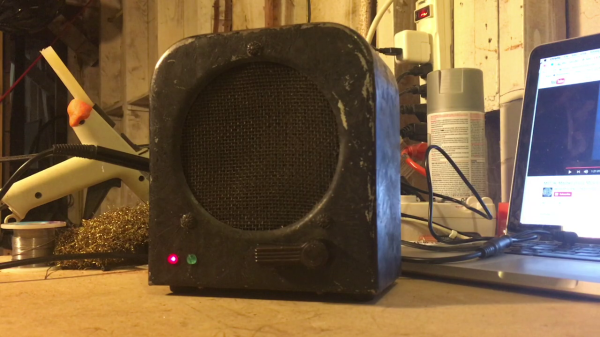
Retrofitting A Vintage Intercom To Run Amazon Alexa

The Amazon Echo is a pretty cool piece of tech: it lets you ask questions, queue up music, find out the weather, and more, without having to do anything but talk. But, the device itself is a bit pricey, and looks a little boring. What if you could have all the features of the Echo, but in a cool retro case and at a cheaper price?

Well, you can, and that’s exactly what [nick.r.brewer] did, using a ’50s intercom and a Raspberry Pi. He picked the vintage intercom up at an antique store for $20, and the Raspberry Pi Zero is less than $10. So, for about $30 (and some parts most of us have lying around) he was able to build a cool looking device with all of the capabilities of the Amazon Echo.

The hardware portion of the build was pretty straightforward, with the Raspberry Pi, a sound card, WiFi dongle, USB hub, and microphone all fitting nicely inside the case of the intercom. The software side of things is a little more tricky, but with a device like this it runs well with Amazon’s Alexa SDK. Of course, if you want to add more hardware features, that’s possible too.

Continue reading “Retrofitting A Vintage Intercom To Run Amazon Alexa”

Hacked Apartment Intercom Barks At You Or Buzzes You In

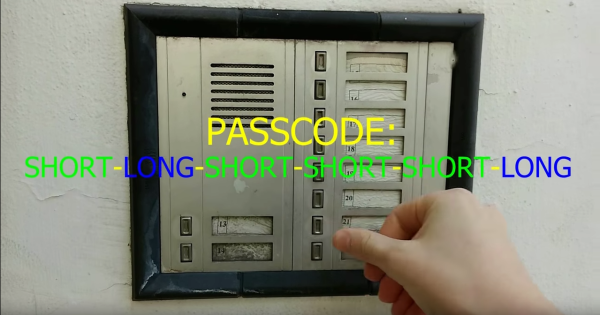
Forgot your apartment keys? If you’ve got a ritzy building with a doorman, no problem. If your digs are a little more modest, you might only have an intercom panel that calls up to your apartment so someone can buzz you in. But if nobody is home, you’re out of luck. That’s why [Paweł] spent an hour whipping up an intercom connected automation system pack full of goodies.

entryphoneThe design is pretty simple – an ATMega328P to snoop on the analog phone ringer in the apartment when the intercom call button is pushed, and a relay wired in parallel with the door switch to buzz him in. For added security, the microcontroller detects the pattern of button presses and prevents unwanted guests from accessing the lobby. Things got really fun when [Paweł] added a PCM audio module to play random audio clips through the intercom. As you can see in the video below, an incorrect code might result in a barking dog or a verbal put-down. But [Paweł] earns extra points for including the Super Mario Bros sound clip and for the mashup of the “Imperial March” with “The Girl from Ipanema”.



True, we’ve seen a slightly more polished but less [Mario] version of this project before, but the presentation of this particular hack has us grinning from ear to ear.

Continue reading “Hacked Apartment Intercom Barks At You Or Buzzes You In”