The OS/2 Operating System Didn’t Die… It Went Underground

One problem with building things using state-of-the-art techniques is that sometimes those that look like they will be “the next big thing” turn out to be dead ends. Next thing you know, that hot new part or piece of software is hard to get or unmaintained. This is especially true if you are building something with a long life span. A case in point is the New York City subway system. Back in the 1990s the transit authority decided to adopt IBM’s new OS/2 operating system. Why not? It was robust and we used to always say “no one ever got fired for buying IBM.”

There was one problem. OS/2 was completely eclipsed by other operating systems, notably Windows and — mostly — has sunk from the public view. [Andrew Egan’s] post covers just how the conversion to a card-based system pushed OS/2 underground all over the Big Apple, and it is an interesting read.

Continue reading “The OS/2 Operating System Didn’t Die… It Went Underground”

A Faithful Replica Of An Early Computer Trainer

Turn the clock back six decades or so and imagine you’re in the nascent computer business. You know your product has immense value, but only to a limited customer base with the means to afford such devices and the ability to understand them and put them to use. You know that the market will eventually saturate unless you can create a self-sustaining computer culture. But how does one accomplish such a thing in 1961?

Enter the Minivac 601. The brainchild of no less a computer luminary than Claude Shannon, the father of information theory, the Minivac 601 was ostensibly a toy in the vein of the “100-in-1” electronics kits that would appear later. It used electromechanical circuits to teach basic logic, and now [Mike Gardi] has created a replica of the original Minivac 601.

Both the original and the replica use relays as logic switches, which can be wired in various configurations through jumpers. [Mike]’s version is as faithful to the original as possible with modern parts, and gets an extra authenticity boost through the use of 3D-printed panels and a laser-cut wood frame to recreate the look of the original. Sadly, the unique motorized rotary switch, used for both input and output on the original, has yet to be fully implemented on the replica. But everything else is spot on, and the vintage look is great. Extra points to [Mike] for laboriously recreating the original programming terminals with solder lugs and brass eyelets.

We love seeing this retro replica, and appreciate the chance to reflect on the genius of its inventor. Our profile of Claude Shannon is a great place to start learning about his other contributions to computer science. We’ve also got a deeper dive into information theory for the curious.

Thanks to [Granz] for the tip.

Retrocomputing For The Masses Hack Chat

Join us on Wednesday 29 May 2019 at noon Pacific for the Retrocomputing for the Masses Hack Chat!

Of the early crop of personal computers that made their way to market before IBM and Apple came to dominate it, few machines achieved the iconic status that the Sinclair ZX80 did.

Perhaps it was its unusual and appealing design style, or maybe it had more to do with its affordability. Regardless, [Sir Clive]’s little machine sold north of 100,000 units and earned a place in both computing history and the hearts of early adopters.

Spencer Owen is one who still holds a torch for the ZX80, so much so that in 2013, he hatched a seemingly wacky idea to make his own. A breadboard prototype of the Z80 machine slowly came to life over Christmas 2013, one thing led to another, and the “RC2014” was born.

The RC2014 proved popular enough to sell on Tindie, and Spencer is now following his dream as a retrocomputing mogul and working on RC2014 full time. He’ll be joining us to discuss the RC2014, how it came to be, and how selling computing nostalgia can be more than just a dream.

join-hack-chatOur Hack Chats are live community events in the Hackaday.io Hack Chat group messaging. This week we’ll be sitting down on Wednesday May 29 at 12:00 PM Pacific time. If time zones have got you down, we have a handy time zone converter.

Click that speech bubble to the right, and you’ll be taken directly to the Hack Chat group on Hackaday.io. You don’t have to wait until Wednesday; join whenever you want and you can see what the community is talking about.


Get Coding With This Atari 2600 Development Suite

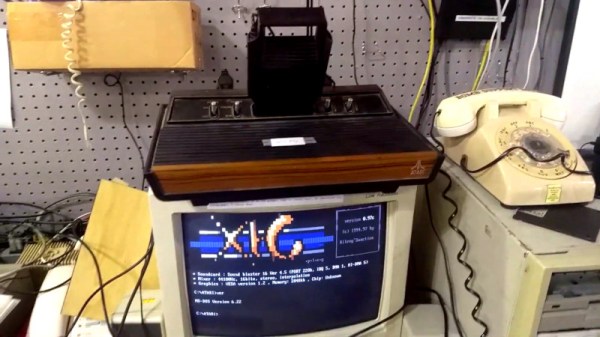
Sometimes the urge strikes to get busy coding for an old retro system, but unfortunately the bar to entry can be high. There’s a need to find a workable compiler, let alone trying to figure out how to load code onto original vintage hardware. It doesn’t have to be so hard, though. The team at [HeatSync Labs] built an Atari 2600 development station so hackerspace members can simply rock up and get to work.

With this rig, development is a multi-step process. A paper manual is on hand to provide detail of how to code for the Atari. An IBM PC is then on hand to allow the budding developer to code in assembly. This text file is then compiled into an Atari ROM, which is then passed through a special utility to convert it to an audio file. This is to allow it to be used with a Starpath Supercharger, which allows games to be loaded onto the Atari via cassette tape, or in this case, raw digital audio. By playing the audio file on the PC, connected to the Supercharger cartridge, it’s possible to run arbitrary code on the Atari 2600.

Programming in 6502 assembly isn’t the easiest mountain to climb for an absolute novice, but experienced coders will likely appreciate the no-fuss development environment. It makes for an easy gateway into the world of retro console programming, and there’s nothing like the fun of seeing your code running on original hardware.

We love a good story of retro development – like this tale of fixing a 37-year-old bug in an Apple II game. Video after the break.

Continue reading “Get Coding With This Atari 2600 Development Suite”

SVG Rendering Comes To 8-bit Atari Computers

Bringing modern protocols and techniques to vintage computers is a favorite pastime for hackers, and over the years we’ve seen some absolutely incredible hardware and software projects designed specifically to do what most people would consider impossible. They’re very rarely practical projects, of course. But that’s never really the point.

The product of 45 minutes of work.

Today we present another excellent entry into this niche avenue of hacking: Renderific, a tool to render SVGs on 8-bit Atari computers by [Kevin Savetz]. The MIT licensed program is written in Turbo-BASIC XL and allows computers such the 1200XL and 800XL to not only render the image on screen but output it to an attached plotter. There are a few niggling issues with some files, and apparently the plotter draws the image upside-down for some reason, but on the whole we can now add “SVG Rendering” to the list of things you can do with a nearly 40-year-old computer.

Of course, those who are familiar with these 1980’s machines might wonder how their limited CPUs can possibly cope with such a task. Well, that’s where the impracticality comes in. According to [Kevin], you can be in for quite a wait depending on the complexity of the image. In his tests, some SVGs took up to 45 minutes to fully render on the screen, so you might want to have a snack handy.

If you’re interested in lending a hand with the project, it sounds as though [Kevin] could use some assistance in figuring out why the Atari 1020 plotter doesn’t like the output of his program. There’s also a few SVG functions and forms of Bézier curves that need some work if you’ve got your Turbo-BASIC XL programming books handy.

Will you ever have a need to view SVG files on an Atari 1200XL? No, probably not. You might not have a desire to play Spotify on the Macintosh SE/30 either, but that hasn’t stopped hackers from figuring out how you can do it. As long as these old machines are still up and running, we’re confident that the community will continue to teach them new tricks.

The 8-Bit Guy Builds A 16-Bit Computer

One of the better retro historians out there on YouTube is the 8-Bit Guy, and after years of wanting to do something like this, it’s finally happening. The 8-Bit Guy is building his dream computer, heavily inspired by the Commodore 64.

Before we go into what this computer will do and what capabilities it will have, it’s important to note the 8-Bit Guy is actually doing a bit of market and user research before dedicating a year or more to this project. He’s asked other famous retrocomputing YouTubers for their input on what their ‘dream’ retrocomputer should do, and they’ve come up with a basic list of requirements. The Dream Computer will be like working on a 1957 Chevy, in that all the registers are immediately available for peeking and poking. The computer will be completely comprehensible, in so far that one person can completely understand everything, from the individual logic gates inside the CPU to the architecture of the kernel. It’ll run BASIC.

In the age of the Raspberry Pi, one might ask, ‘why not go with a Raspberry Pi?’. To the 8-Bit Guy, the Pi is just a Linux computer. Other retrocomputing projects of a similar scope to this dream computer also fail: The Mega65, a project to resurrect the Commodore 65, will be too expensive. The BASIC Engine fails because it only does composite out, and it runs on an ESP anyway, so you’re shielded from the real hardware. The same problem exists with the Maximite in that the hardware is one layer of abstraction away from the interface. The C256 Foenix is probably the closest to meeting the design goals, but it’s far too expensive, and even without the MIDI ports, SID chips, and other interesting hardware, it would still be above the desired price point.

The ‘requirement’ for this dream computer is to use only modern parts, have VGA or HDMI video out, a real CPU, preferably a 6502, use no FPGA or microcontrollers, and can run Commodore Basic. Also, this computer would cost about $50, with $100 as the absolute, maximum limit (implying a BOM cost of around $15-$25). This is absolutely, completely, astonishingly impossible. I would be deceiving you if I did not mention the impossibility of this project happening with the stated goals. This project will not meet the goal of selling for less than one hundred dollars.

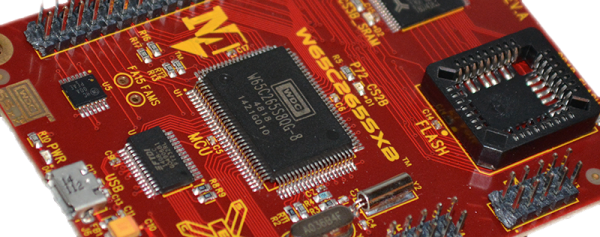
That said, there’s no harm in trying, so The 8-Bit Guy is currently working with a few dev boards, specifically one designed around the 65816 CPU. The 65816 is an interesting chip, in that it is a 6502 until you flip a bit in a register. It has a larger address space than the 6502, and everything from the World of Commodore should be (relatively) easily ported to the 65816. Why was this CPU never used in Commodore hardware? Because a Western Design Center sales guy told a Commodore engineer that Apple was using it in their next computer (the Apple IIgs). The option of Commodore ever using the ‘816 died then and there.

If you’d like to help out on this computer, there is a Facebook group for organizing the build. This Facebook group is a closed group, meaning you need a Facebook account to login. Unfortunate, but we’re looking forward to a year of updates around this dream computer. Building a computer that meets the specs is impossible, but we’re more than eager to see the community try.

Continue reading “The 8-Bit Guy Builds A 16-Bit Computer”

Hackaday Links Column Banner

Hackaday Links: February 17, 2019

There is a population of retrocomputing enthusiasts out there, whose basements, garages, and attics have been taken over by machines of years past. Most of the time, these people concentrate on one make; you’re an Apple guy, or you’re a Commodore guy, or you’re a Ford guy, or you’re a Chevy guy. The weirdos drive around with an MSX in the trunk of an RX7. This is the auction for nobody. NASA’s JPL Lab is getting rid of several tons of computer equipment, all from various manufacturers, and not very ‘vintage’ at all. Check out the list. There are CRT monitors from 2003, which means they’re great monitors that weigh as much as a person. There’s a lot of Sun equipment. If you’ve ever felt like cleaning up a whole bunch of trash for JPL, this is your chance. Grab me one of those sweet CRTs, though.

Last week, we published something on the ‘impossible’ tech behind SpaceX’s new engine. It was reasonably popular — actually significantly popular — and got picked up on Hacker News and one of the Elon-worshiping subreddits. Open that link in one tab. Now, open this link in another. Read along as a computer voice reads Hackaday words, all while soaking up YouTube ad revenue. What is our recourse? Does this constitute copyright infringement? I dunno; we don’t monetize videos on YouTube. Thanks to [MSeifert] for finding this.

Wanna see something funny? Check out the people in the comments below who are angry at a random YouTuber stealing Hackaday content, while they have an ad blocker on.

Teenage Engineering’s OP-1 is back in production. What is it and why does it matter? The OP-1 is a new class of synthesizer and sampler that kinda, sorta looks like an 80s Casio keyboard, but packed to the gills with audio capability. At one point, you could pick one of these up for $800. Now, prices are at about $1300, simply because production stopped for a while (for retooling, we’re guessing) and the rumor mill started spinning. The OP-1 is now back in production with a price tag of $1300. Wait. What? Yes, it’s another case study in marketing: the best way to find where the supply and demand curves cross is to stop production for a while, wait for the used resellers to do their thing, and then start production again with a new price tag that people are willing to pay. This is Galaxy Brain-level business management, people.

What made nerds angry this week? Before we get to that, we’re gonna have to back track a bit. In 2016, Motherboard published a piece that said PC Gaming Is Still Way Too Hard, because you have to build a PC. Those of us in the know realize that building a PC is as simple as buying parts and snapping them together like an expensive Lego set. It’s no big deal. A tech blog, named Motherboard, said building a PC was too hard. It isn’t even a crack at the author of the piece at this point: this is editorial decay.

And here we are today. This week, the Internet reacted to a video from The Verge on how to build a PC. The original video has been taken down, but the reaction videos are still up: here’s a good one, and here’s another. Now, there’s a lot wrong with the Verge video. They suggest using a Swiss army knife for the assembly, hopefully one with a Philips head screwdriver. Philips head screwdrivers still exist, by the way. Dual channel RAM was completely ignored, and way too much thermal compound was applied to the CPU. The cable management was a complete joke. Basically, a dozen people at The Verge don’t know how to build a PC. Are the criticisms of incompetence fair? Is this like saying [Doug DeMuro]’s car reviews are invalid because he can’t build a transmission or engine, from scratch, starting from a block of steel? Ehhh… we’re pretty sure [Doug] can change his own oil, at least. And he knows to use a screwdriver, instead of a Swiss army knife with a Philips head. In any event, here’s how you build a PC.

Hackaday writers to be replaced with AI. Thank you [Tegwyn] for the headline. OpenAI, a Musk and Theil-backed startup, is pitching a machine learning application that is aimed at replacing journalists. There’s a lot to unpack here, but first off: this already exists. There are companies that sell articles to outlets, and these articles are produced by ‘AI’. These articles are mostly in the sports pages. Sports recaps are a great application for ML and natural language processing; the raw data (the sports scores) are already classified, and you’re not looking for Pulitzer material in the sports pages anyway. China has AI news anchors, but Japan has Miku and artificial pop stars. Is this the beginning of the end of journalism as a profession, with all the work being taken over by machine learning algorithms? By vocation, I’m obligated to say no, but I have a different take on it. Humans can write better than AI, and the good ones are nearly as fast. Whether or not the readers care if a story is accurate or well-written is another story entirely. It will be market forces that determine if AI journalists take over, and if you haven’t been paying attention, no one cares if a news story is accurate or well written, only if it caters to their preexisting biases and tickles their confirmation bias.

Of course, you, dear reader, are too smart to be duped by such a simplistic view of media engagement. You’re better than that. You’re better than most people, in fact. You’re smart enough to see that most media is just placating your own ego and capitalizing on confirmation bias. That’s why you, dear reader, are the best audience. Please like, share, and subscribe for more of the best journalism on the planet.