Step Into The Box

thebox

Take three industrial robots, two 4’ x 8’ canvases, and several powerful video projectors. Depending on who is doing the robot programming you may end up with a lot of broken glass and splinters, or you may end up with The Box.  The latest video released by the creators project, The Box features industrial robots and projection mapping. We recently featured Disarm from the same channel.

The Box is one of those cases of taking multiple existing technologies and putting them together with breathtaking results. We can’t help but think of the possibilities of systems such as CastAR while watching the video. The robots move two large canvases while projectors display a series of 3D images on them. A third robot moves the camera.

In the behind the scenes video, the creators revealed that the robots are programmed using a Maya plugin. The plugin allowed them to synchronize the robot’s movements along with the animation. The entire video is a complex choreographed dance – even the position of the actor was pre-programmed into Maya.
Continue reading “Step Into The Box”

Turn A Decommissioned Robot Into A CNC Machine

adeptRobot

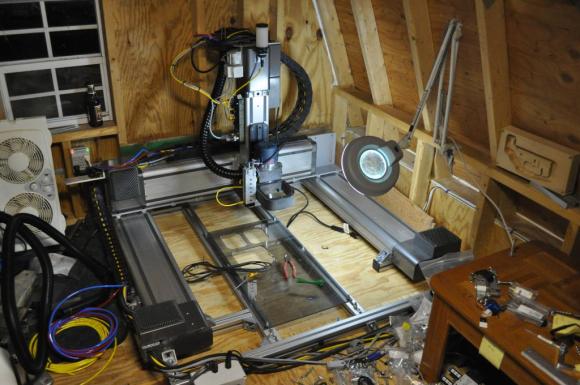
Some of us may have been accused of living in Mom’s basement – [Benjamin] kicks it up a notch by keeping an industrial robot in his parent’s attic shed loft.
[Benjamin] was tasked with stripping down some retired equipment at work. It turns out the “retired equipment” was three Cartesian robots from Adept Robotics. These are large industrial XYZ platforms capable of high speed movements (3000 IPM rapids!).

Getting from a decommissioned machine to a working CNC is never a simple path. In this case [Ben] was able to make the transition relatively easily. Each axis of the robot has a 400 Watt Yaskawa servo with a 65k encoder and brake. The original Adept servo amps and control system was still working, so he kept it. The controllers were new enough that they communicate over a daisy chained IEEE1394 (Firewire) link. That is relatively modern compared to some of the conversions we’ve seen in the past.  The final piece of the puzzle was G-code creation Translating common G-code to a format his machine could recognize. Ben chose MeshCAM for the task.

One problem [Ben] ran into was stuttering on the X-axis. The original machines only had a single sided drive system on the X-axis. Single side is fine for an assembly machine that doesn’t see any tool load. However for a CNC machine that will see spindle loads, a single side drive creates a twisting force which threatens to rack the entire frame. He used one of the drive systems from his spare robot to convert his main machine to a double-sided drive, eliminating the issue.

Continue reading “Turn A Decommissioned Robot Into A CNC Machine”

RepRap Simpson Puts A New Spin On Delta RepRaps

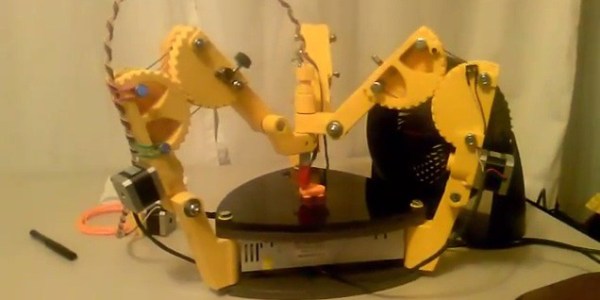
Just when you think you’ve seen it all in the 3D printer world, something new pops up! [Nicholas Seward] posted a video of RepRap Simpson, his latest project.  Simpson is a delta robot – but unlike any delta we’ve seen before. Previous offerings vertical rails on which the arms travel. As you can see, this design mounts three articulated arms directly to the base of the printer, using steel cables as part of the joint mechanism.

Judging by [Nicholas’] posts on the RepRap forums, Simpson’s grounded delta design has already gone through a few revisions. The basic geometry though, has remained the same. [Nicholas] calls this edition a “Proportional Gear Drive Joint Simpson”. The name may not roll off the tongue, but the movements are incredibly smooth, organic, and fast.

As with any delta design inverse kinematics play a huge role in the software. [Nicholas] is trying to simplify this with an optical calibration system. For the adventurous, the equations are posted on the forums, and a python Gcode preprocessor is posted on Thingiverse.

Even Simpson’s base received special attention.  It’s built from a water jet cut piece of basalt.  We like the use of opposed helical gears on the large joints, as well as the guitar machine heads used to tension the cable drive. One thing we are not sure of is the longevity of system – will cable stretch play an issue? Will the printed parts suffer wear from the cables? Only time will tell.

Continue reading “RepRap Simpson Puts A New Spin On Delta RepRaps”

Fully Automated Watering Robot Takes A Big Leap Forward Toward Greenhouse Automation

aquarius_robot

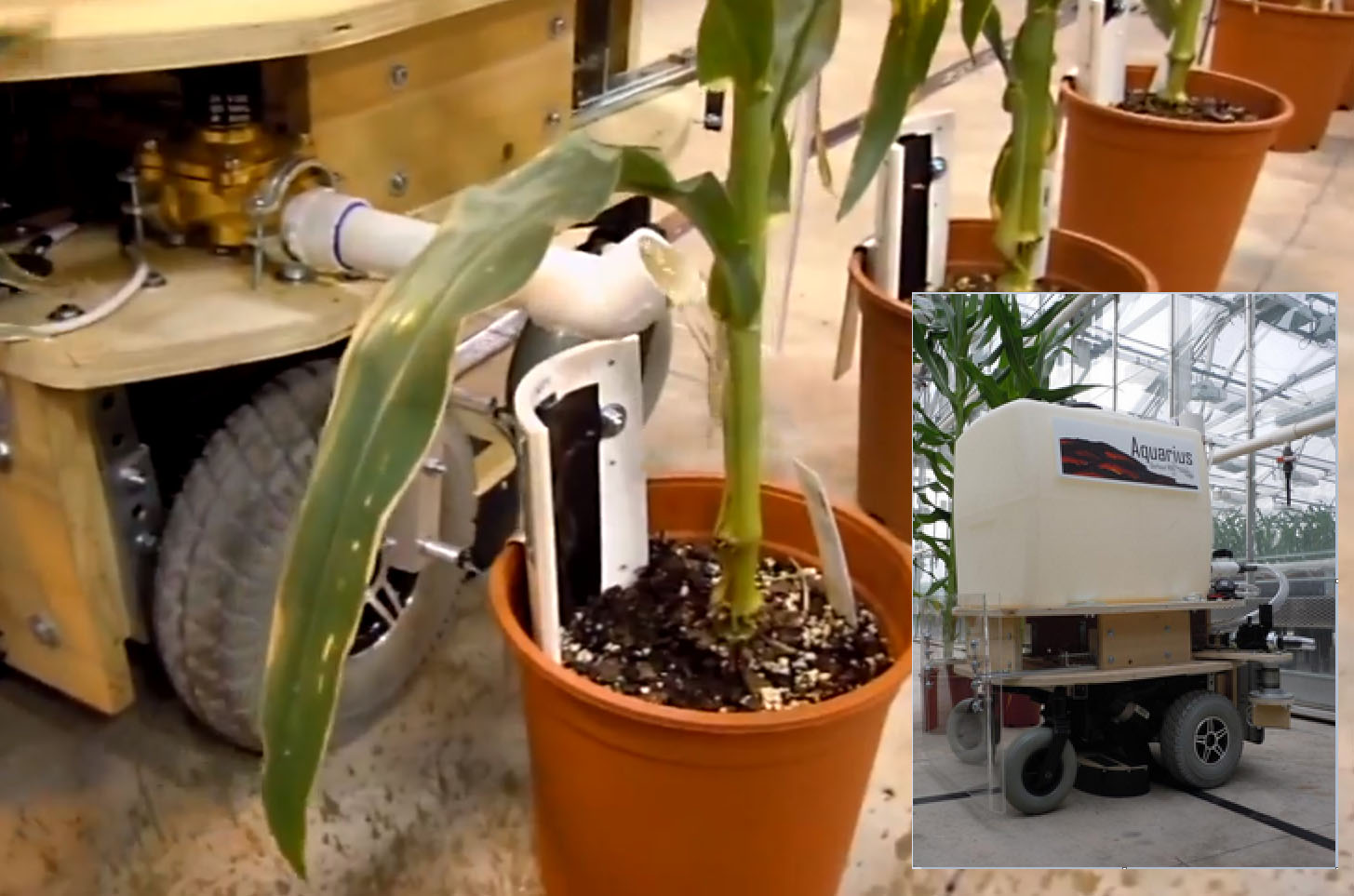
Greenhouse owners might find [David Dorhout]’s latest invention a groundbreaking green revolution! [David]’s Aquarius robot automates the laborious process of precision watering 90,000 square feet of potted plants. Imagine a recliner sized Roomba with a 30 gallon water tank autonomously roaming around your greenhouse performing 24×7 watering chores with absolute perfection. The Aquarius robot can do it all with three easy setups; add lines up and down the aisles on the floor for the robot to follow, set its dial to the size of your pots and maybe add a few soil moisture sensors if you want the perfect amount of water dispensed in each pot. The options include adding soil moisture sensors only between different sized plants letting Aquarius repeat the dispensing level required by the first plant’s moisture sensor for a given series.

After also digging through a pair of forum posts we learned that the bot is controlled by two Parallax propeller chips and has enough autonomous coding to open and close doors, find charging stations, fill its 30 gal water tank when low, and remember exactly where it left off between pit stops. We think dialing in the pot size could easily be eliminated using RFID pot identification tags similar in fashion to the Science Fair Sorting Project. Adjusting for plant and pot size as well as location might easily be automated using a vision system such as the featured Pixy a few weeks back. Finally, here are some featured hardware hacks for soil moisture sensing that could be incorporated into Aquarius to help remotely monitor and attend to just the plants that need attention: [Andy’s] Garden sensors, [Clover’s] Moisture control for a DIY greenhouse, [Ken_S’s] GardenMon(itoring project)

[David Dorhout] has 14 years experience in the agriculture and biotech industry. He has a unique talent applying his mad scientist technology to save the future of mankind as seen with his earlier Prospero robot farmer. You can learn more about Aquarius’s features on Dorhout R&D website or watch the video embedded below.

Continue reading “Fully Automated Watering Robot Takes A Big Leap Forward Toward Greenhouse Automation”

Finally, A Practical Use For The Leap

Robots used in laparoscopic surgery are fairly commonplace, but controlling them is far from simple. The usual setup is something akin to a Waldo-style manipulator, allowing a surgeon to cut, cauterise, and stitch from across a room. There is another way to go about this thanks to some new hardware, as [Sriranjan] shows us with his Leap-controlled surgery bot.

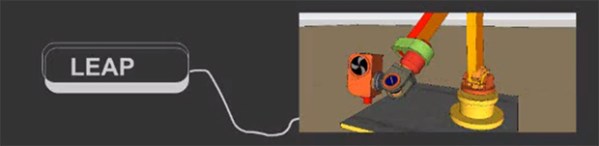
[Sriranjan] isn’t using a real laparoscopic surgery robot for his experiments. Instead, he’s using the Le-Sur simulator that puts two virtual robot arms in front of a surgeon in training. Each of these robotic arms have seven degrees of freedom, and by using two Leap controllers (one each in a VM), [Sriranjan] was able to control both of them using his hands.

We’ve seen a lot of creative applications for the Leap sensor, like controlling quadcopters, controlling hexapod robots, and controlling more quadcopters, but this is the first time we’ve seen the Leap do something no other controller can – emulating the delicate touch of a surgeon’s hand

Continue reading “Finally, A Practical Use For The Leap”

[Update] Vladimir’s Robot Guitar

vladGuitar2013

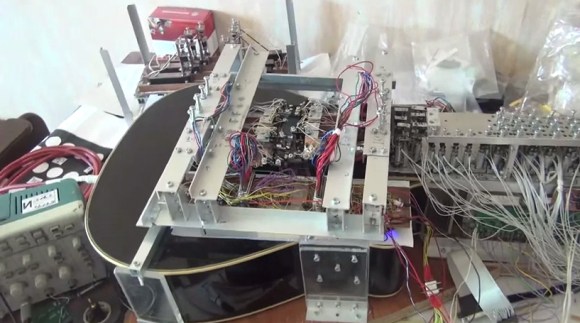
[Vladimir Demin] is somewhat of a legend for us; in his spare time he’s been mastering the automation of musical instruments. This time he’s back with upgrades to his build and four new videos. [Vladimir’s] top priority was to rework the strumming mechanism that earlier ran on solenoids. He’s improved the sound quality and reduced the clicks by swapped to stepper motors and overhauling the software.

Compared to his earlier setup, this one sounds more soulful and less automated, but [Vladimir] admits that it’s still not good enough and that he’s working on a new, brilliant implementation. Until then, take a few minutes and check out the rest of the videos below, then join us in scratching our heads in amazement: everything is built with simple hand tools.

[Vladimir] has come a long way, and it started with this Bayan (button accordion). Last year’s guitar build is also worth a look, as well as an in-depth interview.

Continue reading “[Update] Vladimir’s Robot Guitar”

Zappo The Robot Mixes Tone Generator, Sensors, Alarm Clock And More

zappo-clock-bot

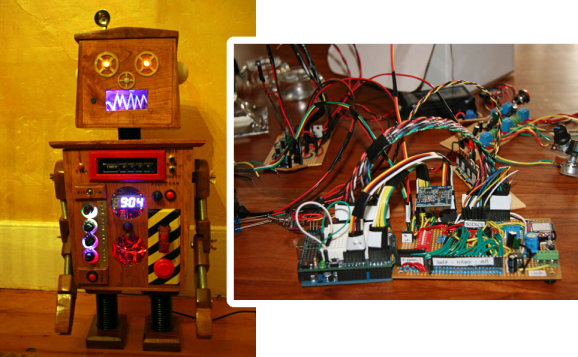
Now [Kevin] claims he built this robot for his 3-year-old son but we know he just used that as an excuse to spend way too much time in his workshop. The robot is a roundup of all the interesting things you can do with hobby electronics. It’s a great example of what you can teach yourself in one year, as [Kevin] only started tinkering with electronics about fourteen months ago.

The robot centers around an Arduino which manages to control a plethora of auxiliary boards. The alarm clock part of the build has a readout in the center of the robot’s chest. There are a bunch of sounds which can be played as the alarm, including a lot of iconic movie sound bytes. Add to that some playful features — like a tone generator which is altered by the column of potentiometers on the left, motion activated eyes, and sound activated ears — and you’ve got a dream-come-true of a toy for your kid.

As a side note, we wrote this several days ago, but ended up bumping it a couple of times in the publishing schedule. We reached out to [Kevin] to let him know a feature was on the way. When he learned that we bumped it in order to feature [Jamie Matzel’s] giant robot he had to laugh. The two met at a mini Maker Faire about a year ago and that interaction is what gave [Kevin] the confidence to start the project.

Continue reading “Zappo The Robot Mixes Tone Generator, Sensors, Alarm Clock And More”