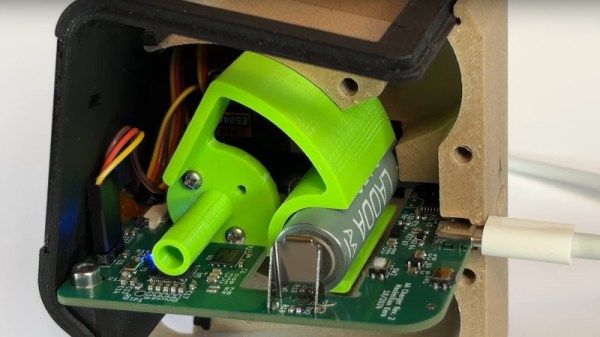
When we saw [Max.K]’s automatic NiMh battery charger float past in the Hackaday tips line, it brought to mind a charger that might be automatic in the sense that any modern microcontroller based circuit would be; one which handles all the voltages and currents automatically. The reality is far cooler than that, a single-cell charger in which the automatic part comes in taking empty cells one by one from a hopper on its top surface and depositing them charged in a bin at the bottom.
Inside the case is a PCB with an RP2040 that controls the whole shop as well as the charger circuitry. A motorized cam with a battery shaped insert picks up a cell from the bin and moves it into the charger contacts, before dumping it into the bin when charged. What impresses us it how slick this device is, it feels like a product rather than a project, and really delivers on the promise of 3D printing. We’d want one on our bench, and after watching the video below the break, we think you will too.
Continue reading “The Automatic Battery Charger You Never Knew You Needed”


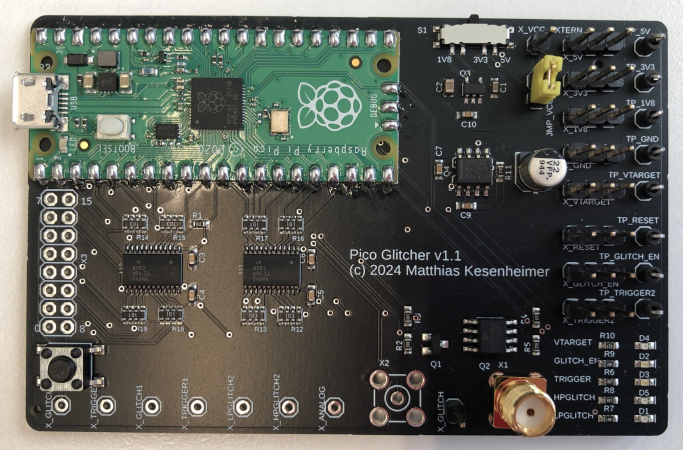
 particular attack. If a programmed reset doesn’t get the job done, the target power is provided via a TPS2041 load switch to enable cold starts. The final part of the interface is an analog input provided by an SMA connector.