Quantum Cryptography In-band Attack

Quantum cryptography is an emerging field, but low install base hasn’t kept researchers from exploring attacks against it. It’s an attractive technology because an attacker sniffing the key exchange changes the quantum state of the photons involved. All eavesdroppers can be detected because of this fundamental principal of quantum mechanics.

We’ve seen theoretical side-channel attacks on the hardware being used, but had yet to see an in-band attack until now. [Vadim Makarov] from the University of Science and Technology in Trondheim has done exactly that (Internet Archive). Quantum key distribution systems are designed to cope with noise and [Makarov] has taken advantage of this. The attack works by firing a bright flash of light at all the detectors in the system. This raises the amount of light necessary for a reading to register. The attacker then sends the photon they want detected, which has enough energy to be read by the intended detector, but not enough for the others. Since it doesn’t clear the threshold, the detectors don’t throw any exceptions. The attacker could sniff the entire key and replay it undetected.

This is a very interesting attack since it’s legitimate eavesdropping of the key. It will probably be mitigated using better monitoring of power fluctuations at the detectors.

[via I)ruid]
Use A PSP As An Extended Display

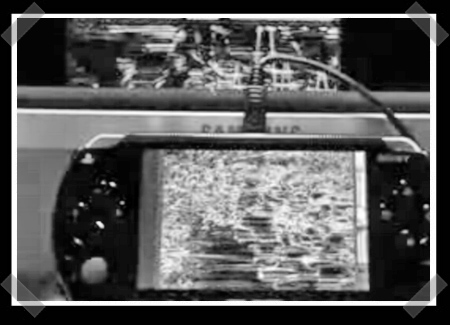
Follow along with this project and you could use your PSP as a display for your computer. The software, available for download on the site, gives you a 960×544 display. The data is compressed, sent to the PSP, then decompressed for display. Though that sounds clunky, the video after the break shows it working pretty smoothly with some Winamp visualization. Only 32 bit Windows XP or older is supported currently.

Continue reading “Use A PSP As An Extended Display”

Parts: MicroSD Memory Card Holders

SD cards add cheap persistent memory to your project, but the holder takes a lot of board space. A smaller option is the microSD flash format. MicroSD cards are compatible with regular SD cards, and most come with a free adapter. We looked at four holders for our mini web server. Which should you choose? Read about our experience below. Continue reading “Parts: MicroSD Memory Card Holders”

“Killer Zombie Drone” Is Awesome And Recycled

Usually, when someone mentions military drones, we think of something much smaller and less intimidating than this monster. This is an Airforce Phantom II, retrofitted to be a computer controlled killing machine. Able to carry 18,000 pounds of stuff that goes boom, a single computer can control up to 6 of these in formation.

Sounds scary doesn’t it?  Actually, though these are capable of being offensive, they are mainly used for target practice. These are decommissioned units that have been fixed up and modified to be radio controlled.

[via BotJunkie]

AVR ATtiny25 USB Hit Counter

[Bob] has a USB page hit counter that uses an ATtiny25 to run a MAX7219 which drives eight 7-segment displays. It is easy to implement USB on an AVR using just firmware, eliminating the need for any USB to RS232 conversion. The host software is written in Delphi and sits in the Windows tray. The code examples seem simple enough to expand upon into your own display programs.

Sanguino ATmega644P Board

The RepRap project, which is a printer that can make components using rapid prototyping technology, and it is designed so that it can eventually self replicate. Has released a new breakout board for the Sanguino that provides access to all the pins as screw terminals. The Sanguino is an Arduino compatible board based on the ATmega644P chip. You can populate the full board with all the components and have a fully functional single board. You could populate only the screw terminals and plug your Sanguino, and use it as a breakout board as well. The board design is released on Google Code.

ArduPilot Pro Autonomous Drone

We wrote about [Chris Anderson] before when he released the Arduino based autopilot. He has since crashed his first Predator UAV, due to an underpowered motor and poor control of the v-tail only steering. He has since released a pro version of the autopilot controller, and is modifying this UAV Predator drone kit to work with it. One ATMega168 processor handles flying and the other handles GPS navigation, but because they work together, it results in a fully autonomous drone. He also has a BlimpDuino version we have covered before.