Packshotnik: 360 Degree Image Creation

[youtube=http://www.youtube.com/watch?v=sk7_XRgxCas]

Packshotnik is a circuit designed to help with creating 360 degree images. It consists of a main board and motorized rotating platform. The board can send IR signals to a camera to snap pictures at intervals in the rotation. The source code, schematic, and pcb files are all available from the project page. While he is using this primarily for rotating 360 degree images, you could also just plop your camera onto the platform and end up with panoramic sets.

SNES Controller + USB + Accelerometer

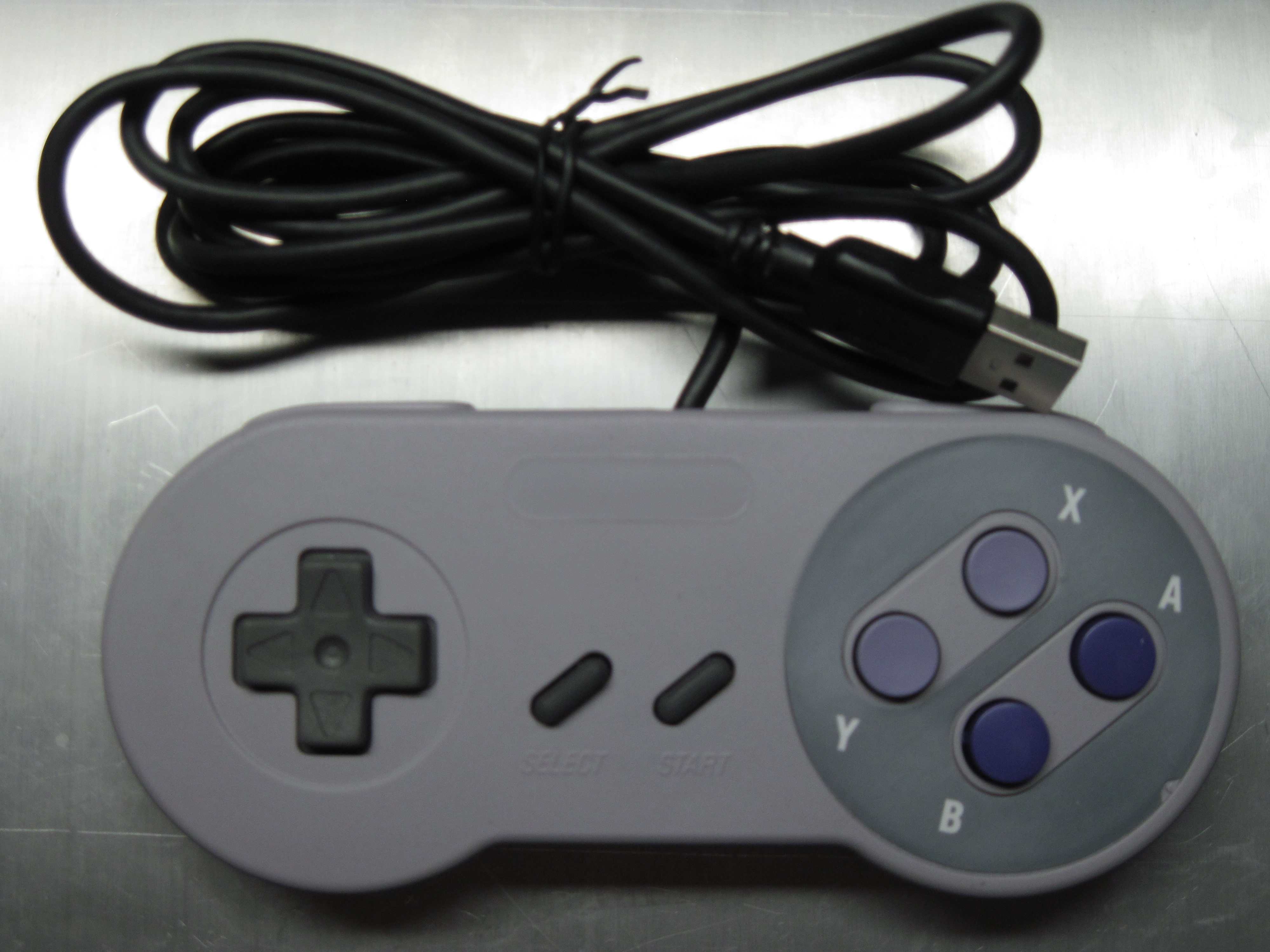
As we posted about [Atarity]’s XBMC hiding in an SNES controller, we were finishing work on a tutorial for [Adafruit]. The tutorial combines a Teensy USB development board with a 3D accelerometer inside of an SNES controller. The Teensy is programmed to poll the SNES controller buttons and read the accelerometer values. The buttons are set to keystrokes and mouse buttons, and the accelerometer values are processed into mouse movement. Programmed to play Portal, we created a video showing how to use the device. You can see it after the break.

It was not quite as easy or quick as the typical PC gamer left hand: WASD, right hand: mouse stance. However, we can think of a number of other games that could be improved with the use of a device that, with a bit of hacking, could time keystrokes as the user needed. With a bit more hacking, the device could be made to brute-force passwords. What else would you do with this?

Continue reading “SNES Controller + USB + Accelerometer”

Strobe Array For Dance Parties

[vimeo http://vimeo.com/10722768%5D

Check out this slick strobe array for dance parties. Controlled by a DMX512 interface, only a small modification was necessary to get the strobes working. If you’ve played with a small commercial strobe light, you’ll know there’s a potentiometer to control the strobe speed. He simply soldered a relay after the pot. This allows him to tune them to be charged and ready for when the relay is closed.

[via HackedGadgets]

Hacking The MindFlex, More!

[vimeo http://vimeo.com/10184668%5D

Reader [Eric] sent us a powerfully informative, yet super simple hack for the MindFlex toy. Don’t worry, it’s not another worthless shock ‘game’, And it’s using an actual interface instead of the built-in LEDs.

With two wires for the serial protocol, and an Arduino, you’ll be able to view “signal strength, attention, meditation, delta, theta, low alpha, high alpha, low beta, high beta, low gamma, high gamma” brainwaves. While it’s not medical grade, it’s a lot more intuitive than previous interfaces.

The original intent was for a system called MentalBlock, but we’re wondering what would you do with brainwave data?

Flux Paste Applicator Gun

[Luciano] didn’t want to drop a lot of cash into a flux and solder paste applicator so he built his own for about $5. He re-purposed a hot glue gun which you can usually find at a dollar store. After removing the heating element he inserted the body of a syringe. The plunger has been modified to use a knitting needle inside of some plastic tubing. After taking the picture above he made an improvement by adding a milliliter scale to the plunger, allowing you to meter out the paste and also gauge how much remains.

PIC USB Host Shortcuts

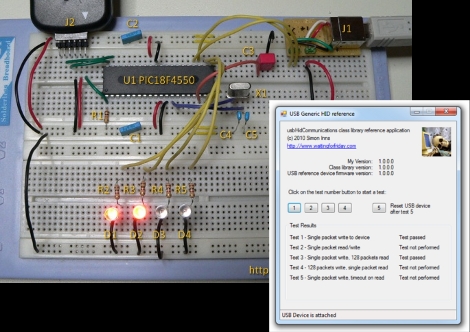
[Simon Inns] is still hard at work making USB connectivity for PIC microcontrollers easier for the hobbiest. He’s released a framework for PIC based USB devices under Windows. It includes the firmware needed for USB compatible 18F PIC chips as well as a C# class library and example programs for the Windows side of things. This goes quite a bit further than his PIC-USB tutorial but with little added effort on your end of things.

We do our USB prototyping on a breadboard just like [Simon] did in this example. He’s got a nice little USB-B connector breakout that is easy to plug into the breadboard. If you prefer to have a more stable development area, check out the one he designed. It’s a single-sided PCB made for through-hole components with just a handful of jumper wires.