Taking Killer Robots Seriously

Killer robots are a mainstay of science fiction. But unlike teleportation and flying cars, they are something that we are likely to see within our lifetime. The only thing that’s stopping countries like the USA, South Korea, the UK, or France from deploying autonomous killing machine in the very near term is that they’re likely to be illegal under current international humanitarian law (IHL) — the rules of war.

But if you just sighed in relief that the fate of humanity is safe, think again. The reason that autonomous killing machines are illegal is essentially a technicality, and worse, it’s a technicality that’s based on the current state of technology. The short version of the story, as it stands right now, is that the only thing making autonomous robotic killing weapons illegal is that it’s difficult for a robot to tell a friend from an enemy. When technology catches up with human judgement, all bets are off.

Think I’m insane? The United Nations Office at Geneva (UNOG), the folks who bring you the rules of warfare, started up a working group on killer robots three years ago, and the report from their 2016 meeting just came out. Now’s as good a time as any to start taking killer robots seriously.

Continue reading “Taking Killer Robots Seriously”

Ghostbuster Proton Pack Made From Everything

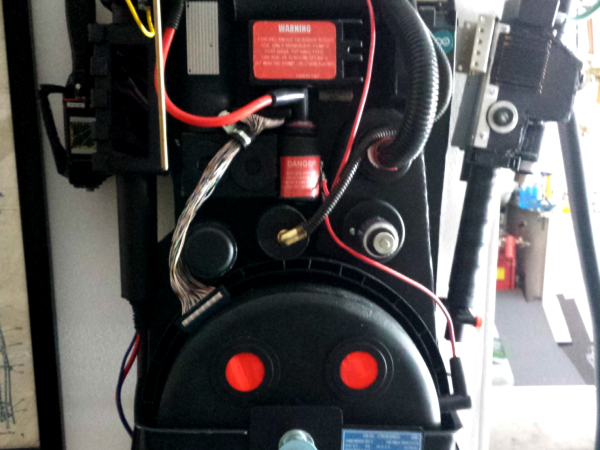
[John Fin] put a lot of work into his Ghostbuster’s proton pack prop with full-featured user control and effects. What appealed to us well beyond the exquisite build is the extra effort taken to write down the whole process in a PDF for anyone wishing to imitate him.

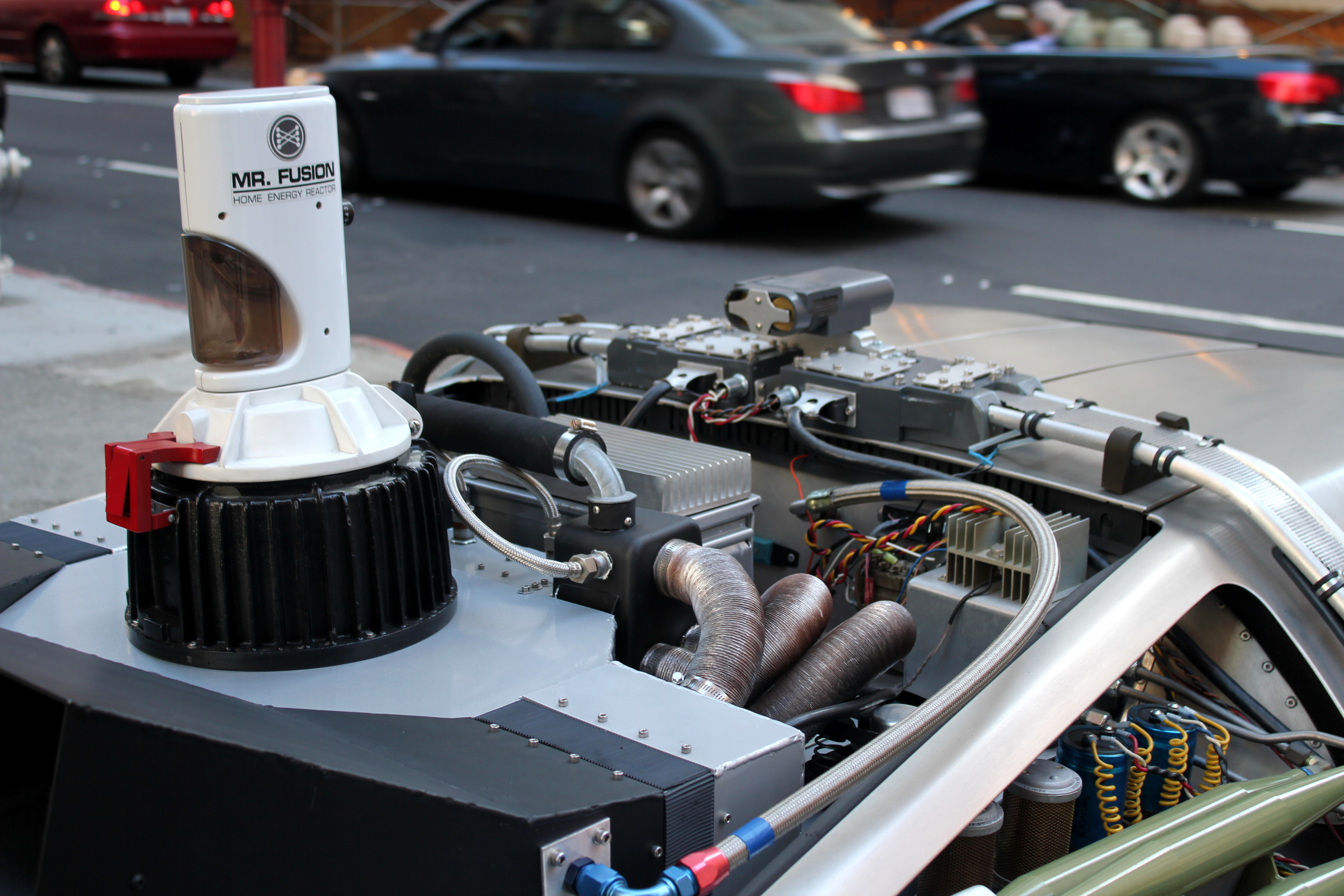
Mr. Fusion is just a Krups Coffee Grinder. Also, Santa isn't real.
Mr. Fusion is just a Krups Coffee Grinder. Also, Santa isn’t real.

We all know that a lot of famous props are creatively rearranged household items. The famous Mr. Fusion from Back to The Future is actually a Krups coffee grinder with some logos adhered.

[John]’s prop is no different. The cyclotron is a five gallon bucket. A garlic powder container fills another function. As you look at it more and more items can be picked out. Is that a spark plug wire? The handles on that are suspiciously similar to a power tool case’s. It all comes together, and while it’s not screen accurate you’d have to be an extreme prop fanatic to tell.

Naturally, the core of [John]’s prop is an Arduino. It stores the sound files on a SD Card shield. It controls all the lights sounds and motors on the prop. This isn’t quite a point and shoot. You must toggle on the power, generator, and arming mechanisms before actually firing. If you do it out of order, the electronics will issue an alarm as warning, and each step in the process has its own unique audio and animated lighting.

Since the Proton Pack went so well, he also built a PKE meter and Ghost Trap to go along with his backpack. He’s ready to take on Vigo at anytime. You can see a video of his prop in action after the break.

Continue reading “Ghostbuster Proton Pack Made From Everything”

EV History: The Lightning Precedes The Thunder

In 1988, a bunch of engineers from Hotzenwald, Germany, came together and decided that it is time for the future of mobility: A new, more modern and environmentally friendly car should put an end to fossils and emissions while still being fun to drive. “It should become a new kind of car. Smaller, lighter, cleaner – and more beautiful” is how future CEO Thomas Albiez described his mission. For the first time in automotive history, this series car would be designed as an all-electric vehicle from the start and set a new standard for mobility. The project was given the codename “Hotzenblitz” (“Hotzen Bolt”) to indicate how the idea came to them: Like a lightning bolt. The snarky regional term also came with a double meaning: Imaginary lightning bolts, used for insurance fraud.

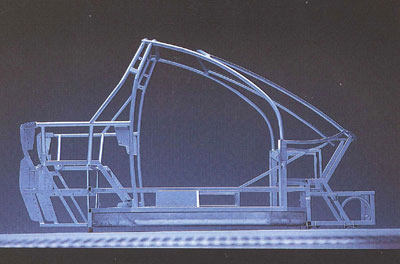
hotzenblitz_chassis
Hotzenblitz frame construction (origin unknown, image source)

Unnoticed by the rest of the world, they founded Hotzenblitz Mobile. Industrial Designer Harold Schurz was contracted to design the chassis for the Hotzenblitz, which was then modeled into a prototype chassis. The self-funded team moved fast. An external motorsports company helped to develop the tubular steel frame, and soon their vision took on shape. After the team had fitted a motor and transmission into the frame, CEO Thomas Albiez himself installed the traction battery and drive train. The team felt confident with the result, and in July 1990, during an open house day in the office, they somewhat spontaneously decided to call Green Tech entrepreneur and chocolate mogul Alfred Ritter.

Alfred Ritter had experienced financial losses after the Chernobyl Disaster. Many agricultural regions, including several hazelnut plantations that were vital to Alfred’s chocolate business, were irreversibly lost to the fallout contamination. It was then when he turned to the green energy business, founding the Paradigma group to manufacture solar collector systems and pellet heaters. When Thomas and the team called, Alfred jumped on the idea of an electric car. In the same year, Alfred Ritter and his sister Marli Hoppe-Ritter became shareholders in the company and helped to finance the future of the Hotzenblitz.

Continue reading “EV History: The Lightning Precedes The Thunder”

Voja’s EEPROM Emulator From 1991

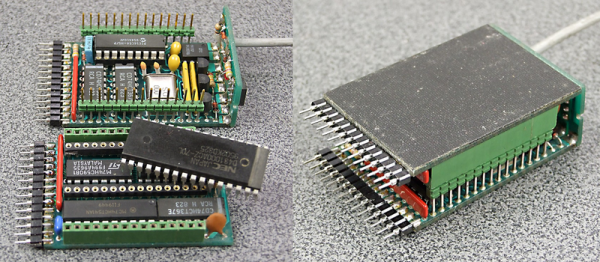
We’re glad we’re not the only hacker-packrats out there! [Voja Antonic] recently stumbled on an EPROM emulator that he’d made way back in 1991. It’s a sweet build, so take your mind back 25 years if you can. Put on “Nevermind” and dig into a nicely done retro project.

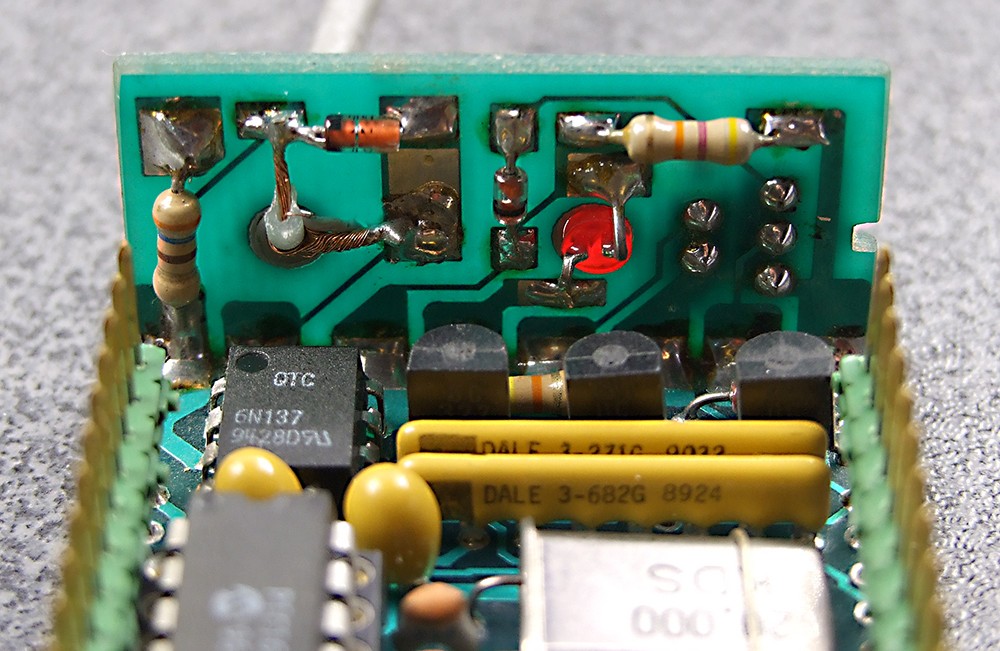
The emulator is basically a PIC 16C54 microcontroller and some memory, with some buffers for input and output. On one side, it’s a plug-in replacement for an EPROM — the flash memory of a bygone era. On the other side, it connects via serial port to a PC. Instead of going through the tedious process of pulling the EPROM, erasing and reprogramming it, this device uploads new code in a jiffy.

722351466362213815

No need to emulate ancient EPROMS? You should still check out this build — the mechanics are great! We love the serial-port backplane that is soldered on at a 90° angle. The joint is a card-edge connector electrically, but also into a nice little box, reminiscent of [Voja]’s other FR4 fabrication tricks. The drilled hole with the LED poking out is classy. We’re never going to make an EPROM emulator, but we’re absolutely going to steal some of the fabrication techniques.

[Voja] is a Hackaday contributor, badge-designer, mad hacker, inspired clock-builder, and developer of (then) Yugoslavia’s first DIY PC.

The Politest Patent Discussion, OSHW V. Patents

We’ve covered [Vijay] refreshable braille display before. Reader, [zakqwy] pointed us to an interesting event that occured in the discussion of its Hackaday.io project page.

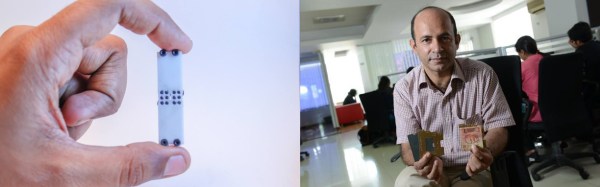
[Vijay] was inspired by the work of [Paul D’souza], who he met at Makerfaire Bangalore. [Paul] came up with a way to make a refreshable braille display using small pager motors. [Vijay] saw the light, and also felt that he could make the vibrating motor display in such a way that anyone could make it for themselves at a low cost.

Of course, [Paul], had patented his work, and in this case rightly so. As jaded as we have become with insane patent trolls, our expectation on receiving the tip was that [Paul] had sued [Vijay] out of house and home and kicked his dog while he was at it. A short google search shows that [Paul] is no patent troll, and is a leader in his field. He has done a lot to help the visually impaired with his research and inventions.

Instead we were greeted by a completely different conversation. [Paul] politely mentioned that his lawyer informed him that in order to protect his IP he needed to let [Vijay] know exactly how the information could be used. No cease and desist, in fact he encouraged [Vijay] to continue his open research as long as he made it clear that the methods described could not be used to make a marketable product without infringing on [Paul]’s patents. They’d need to get in touch with [Paul] and work something out before doing such.

[Vijay] responded very well to this information. His original goal was to produce a cheap braille display that could be made and sold by anyone. However, he did use [Paul]’s work as a basis for his variation. Since [Paul]’s commercial interests relied on his patent, there was a clear conflict, and it became obvious to [Vijay] that if he wanted to meet his goal he’d have to pick a new direction. So, he released his old designs as Creative Commons, since the CERN license he was using was invalidated by [Paul]’s patent. He made it very clear that anyone basing their work off those designs would have to get in touch with [Paul]. Undaunted by this, and still passionate about the project, [Vijay] has decided to start from scratch and see if he can invent an entirely new, unprotected mechanism.

Yes, the patent system is actually encouraging innovation by documenting prior work while protecting commercial and time investments of beneficial inventors. Well. That’s unexpected.

Kudos to [Paul] for encouraging the exploration of home hackers rather than playing the part of the evil patent owner we’ve all come to expect from these stories. Also [Vijay], for acting maturely to [Paul]’s polite request and not ceasing his work.


Hackaday Prize Entry: A Local Positioning System

Use of the global positioning system is all around us. From the satnav in your car to quadcopters hovering above a point, there are hundreds of ways we use the Global Positioning System every day. There are a few drawbacks to GPS: it takes a while to acquire a signal, GPS doesn’t work well indoors, and because nodes on the Internet of Things will be cheap, they probably won’t have a GPS receiver.

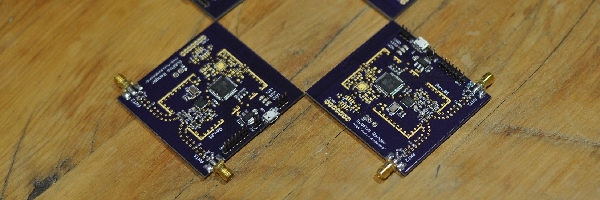
These facts open up the door for a new kind of positioning system. A local positioning system that uses hardware devices already have, but is still able to determine a location within a few feet. For his Hackaday Prize entry, [Blecky] is building the SubPos Ranger, a local positioning system based on 802.15.4 radios that still allows a device to determine its own location.

The SubPos Ranger is based on [Blecky]’s entry for the 2015 Hackaday Prize, SubPos that used WiFi, RSSI, and trilateration to determine a receiver’s position in reference to three or more base stations. It works remarkably well, even in places where GPS doesn’t, like parking garages and basements.

The SubPos Ranger is an extension of the WiFi-only SubPos, based on 802.15.4, and offers longer range and lower power than the WiFi-only SubPos system. It’s still capable of determining where a receiver is to within a few feet, making this the ideal solution for devices that need to know where are without relying on GPS.

The HackadayPrize2016 is Sponsored by:

Get Set For SAQ On Alexanderson Day With These Active Antennas

If you need to generate a radio frequency electrical signal, you will make some form of electronic oscillator. We’ll probably all be used to oscillators using transistors, tubes, logic gates or a host of other electronic technologies. Similarly if you need to generate radio frequencies at high powers, you’ll couple your oscillator to an amplifier, a relatively simple task with today’s electronic parts bin.

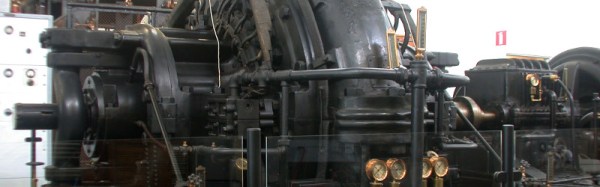
If you needed to do the same thing with a high power radio signal in the early years of the 20th century, none of these options were open to you. There were no transistors or integrated circuits, and the tubes of the day could not produce high power outputs. Radio engineers back then had to employ other solutions to the problem, one of which was the Alexanderson alternator. It’s old news we’ve covered here before at Hackaday, a high frequency alternator capable of generating hundreds of kilowatts in the VLF radio frequency range.

There is one operational Alexanderson alternator remaining in the world at the Varberg radio station at Grimeton in Sweden. It is no longer in constant use, but as a World Heritage Site and museum it is put on air a few times a year including the Sunday closest to the 2nd of July, known as Alexanderson Day. We come now to the point of this article: this year’s 3rd of July Alexanderson Day transmission is fast approaching, and since last time we covered it we signed off with a plea for a good VLF antenna design we should post a solution in good time to allow our readers to receive this year’s signal.

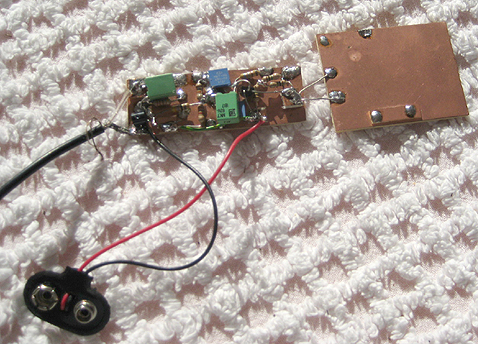
G3XBM's e-field VLF antenna
G3XBM’s e-field VLF antenna

Fixing up a receiver is easy enough, we linked to the original SAQrx VLF Receiver and the extended version in our previous coverage. Both pieces of software use your computer’s sound card as the front end of a software defined radio to receive the 17.2kHz from Grimeton. The antenna though presents a problem. You might think that attaching a long piece of wire to the microphone input would be enough, but the problem is that due to the huge wavelength of the VLF signal any reasonable long wire you might be able to assemble simply wouldn’t be long enough to deliver a good result. Clearly a different antenna is required, and the solution comes courtesy of a high-impedance active e-field antenna. This uses a FET input and a surprisingly small patch antenna to deliver a low noise floor at VLF frequencies rather than to be the amplifier you might expect.

We’ve found a couple of designs for you to look at. The first is a two transistor version you will find in various different guises on many sites. This one uses an MPF102 FET, but you should be able to substitute a J310. The second design is a little more surprising, while it is the same idea of a FET input amplifier it uses a TL071 op-amp as its active device. This is in no way an IC you’d normally expect to find in an RF circuit, however the frequency in question is not that of your normal RF.

If you build either of these antennas we hope you’ll be able to hear the Alexanderson Day transmission. The point of a high power VLF transmitter is that it has a huge coverage area, so it should be possible to receive it across all of Europe and perhaps into the eastern United States. If you are out of range though, never fear. You can always try to pick it up through a handy webSDR receiver closer to the source.

Alexanderson alternator picture By Gunther Tschuch (Own work) [ CC BY 2.5 ], via Wikimedia Commons.