Magnets Are Bad For Hardware Again

If you were around tech in the bad old days, magnets could be really bad news. They were fine on the fridge, no problem at all. Put one near a floppy disk, or a hard drive, or even a computer monitor, though, and you were in for some pain. You’d lose data, possibly permanently destroy a disk or drive, or you’d get ugly smeary rainbow effects all over your screen.

The solid state revolution has eliminated a lot of these problems. We all use SSDs, flash drives, and LCD monitors now, all of which care a lot less about flirting with magnets. However, the same can’t be said about all our modern hardware, for a magnet could cause your smartphone some major grief indeed.

Continue reading “Magnets Are Bad For Hardware Again”

Wayland Comes To Minecraft

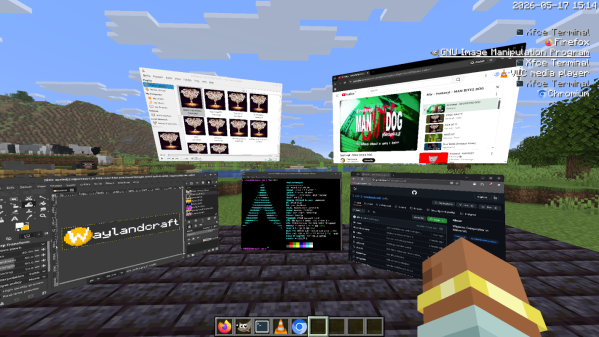
The overall adoption and implementation of Wayland — intended as a replacement for the decades-old X11 windowing system — in the Linux world has been full of fits and starts. But perhaps the most surprising adopter we’ve seen yet is this Minecraft patch which brings a full Wayland compositor into the game.

This software project, called Waylandcraft, is the brainchild of a developer known as [EVVIE] who spent a considerable amount of time and effort getting this to work. According to a post on GamingOnLinux it was also done the old fashioned way, with no AI involved.

Users wanting to run this compositor need a Linux system to run Minecraft, as well as the Fabric mod loader and a few other tools. For those wishing to show off to their friends, though, they’ll need to do so in-person as streaming the Wayland windows to other users in the server is not possible.

With everything running, you’ll be able to launch arbitrary programs and have the windows placed within the Minecraft world as if they were in-game. Users can place the windows in any orientation and can interact with them like any other desktop environment. [EVVIE] has released all of the code under the GPL for anyone wanting to try it out or build on the project itself.

If you haven’t spun up a Minecraft server at all yet, all you really need is something like an ESP32 to get started.

Continue reading “Wayland Comes To Minecraft

Building A Better Automotive Rotary Controller

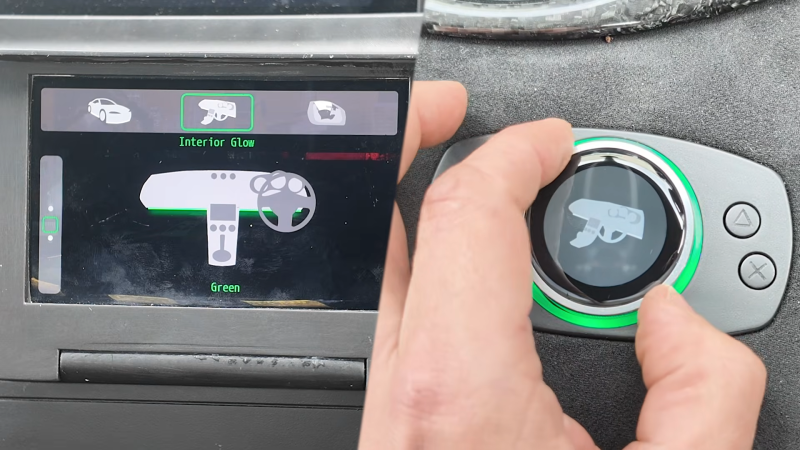
If you’ve ever spent time in a modern BMW, you’ve probably fussed about with the goofy iDrive controller. It’s a rotary knobbery slidery thing that just never really feels that good to use. [Garage Tinkering] was inspired to try and build a better version for his own car.

The first order of business was to choose the right knob as the core of the build. [Garage Tinkering] eventually landed on the Crowpanel 1.28″ rotary knob which integrates a push-button encoder, a round screen, and an ESP32-S3 all into one convenient package. He then set about designing a 3D printed housing that would integrate it into the vehicle’s interior, along with a diffuser ring for the knob’s inbuilt LEDs and some additional buttons for added control. The goal is to use the rotary control as the human interface for a broader system being implemented in the vehicle, which will feature a larger infotainment screen and multiple digital gauges. The rotary control will allow switching things like interior and underglow lighting, and display of other vehicle parameters.

The cool thing about building your own gear is that you can make it work exactly the way that suits you. We’ve seen great hacks in this realm before, too, like this rad car data display.

Continue reading “Building A Better Automotive Rotary Controller”