You’ve Got Mail: Straining The Limits Of Machine And Man

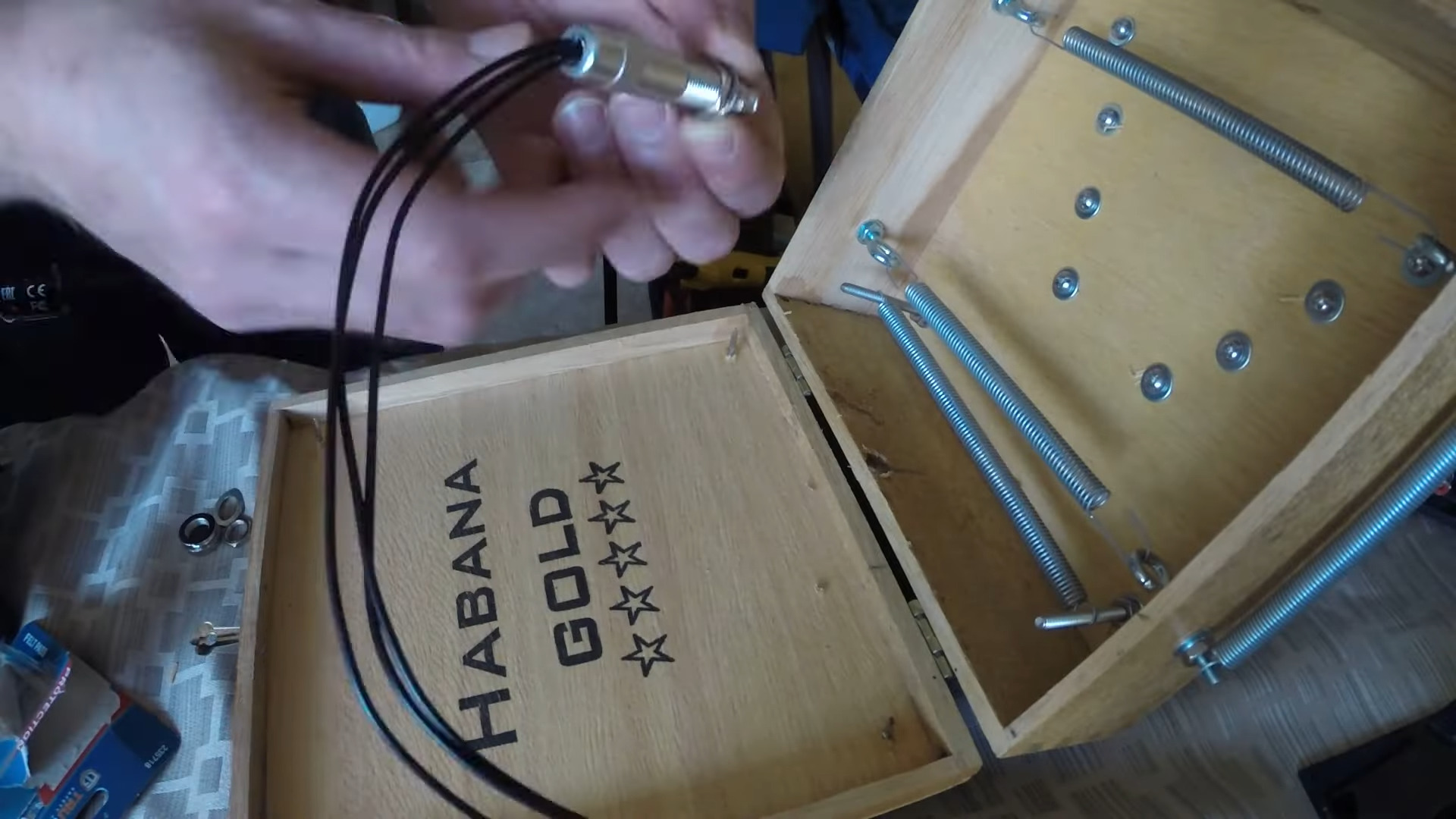
When we last left this subject, I told you all about Transorma, the first letter-sorting machine in semi-wide use. But before and since Transorma, machines have come about to perform various tasks on jumbled messes of mail — things like distinguishing letters from packages, making sure letters are all facing the same way before cancelling the postage, and the gargantuan task of getting huge piles of mail into the machines in the first place. So let’s dive right in, shall we?

Continue reading “You’ve Got Mail: Straining The Limits Of Machine And Man”

The ‘Scope Of This Kickstarter? Ten Years.

It may have taken ten years to come through on this particular Kickstarter, but a promise is a promise. In late August 2023, backers who had since likely forgotten all about the project started receiving their oscilloscope watches from creator [Gabriel Anzziani]. Whatever the reason(s) for the delay, the watch looks great, and is miles ahead of the prototype pictures.

As you may have guessed, it functions as both a watch and an oscilloscope. The watch has 12- and 24-hour modes as well as an alarm and calendar, and the ‘scope has all the features of the Xprotolab dev board, which [Gabriel] also created: ‘scope, waveform generator, logic analyzer, protocol sniffer, and frequency counter.

Internally, it has an 8-bit Xmega microcontroller which features an internal PDI, and the display is a 1.28″ E ink display. When we covered this ten years ago, the screen was the type of Sharp LCD featured in the Pebble watch. [Gabriel]’s ‘scope watch features eight buttons around the edge which are user-programmable. One of [Gabriel]’s goals was for people to make their own apps.

Of course, the Kickstarter rewards are no longer available, but if you want to build your own small, digital ‘scope, check out this DIY STM32 project.

Image via the Company Formerly Known As Twitter

Labor Day BBQs May Feature NYPD

Planning to host a large backyard wingding in the NYC metro area this weekend? Be sure to watch the skies for uninvited guests. That’s right, the NYPD are deploying drones over “large” Labor Day events and yes, even private barbecues. The strategy was announced during a briefing about J’ouvert — that’s a yearly Caribbean festival that marks the end of slavery. It generally brings crowds of thousands and draws a strong police presence to Brooklyn.

While this particular invasion may come as a bit of a shock, this certainly isn’t the first time the NYPD has deployed drones in the name of public safety or in response to emergencies. Data shows they have used them 124 times this year, which is up a staggering 31 times from the four events in 2022.

As you may have guessed, this has invited backlash from privacy and civil liberties advocates. One pointed out that this action “flies in the face of the POST Act,” a city law that requires the NYPD to provide transparency about their various surveillance tactics. The advocates cite the fact that regulations have not kept up with the proliferation of technology.

No matter what happens in the future with regulations, the NYPD can always crash large parties the old fashioned way. Usually, the neighbors will complain at some point, unless they were all invited.

Photo via Unsplash.

Re-Creating Pink Floyd In The Name Of Speech

For people who have lost the ability to speak, the future may include brain implants that bring that ability back. But could these brain implants also allow them to sing? Researchers believe that, all in all, it’s just another brick in the wall.

In a new study published in PLOS Biology, twenty-nine people who were already being monitored for epileptic seizures participated via a postage stamp-sized array of electrodes implanted directly on the surface of their brains. As the participants were exposed to Pink Floyd’s Another Brick In the Wall, Part 1, the researchers gathered data from several areas of the brain, each attuned to a different musical element such as harmony, rhythm, and so on. Then the researchers used machine learning to reconstruct the audio heard by the participants using their brainwaves.

First, an AI model looked at the data generated from the brains’ responses to components of the song, like the changes in rhythm, pitch, and tone. Then a second model rejiggered the piecemeal song and estimated the sounds heard by the patients. Of the seven audio samples published in the study results, we think #3 sounds the most like the song. It’s kind of creepy but ultimately very cool. What do you think?

Continue reading “Re-Creating Pink Floyd In The Name Of Speech”

Hackaday Podcast 233: Chandrayaan On The Moon, Cyberdecks, Hackerspaces Born At A German Computer Camp

This week, Editor-in-Chief Elliot Williams and Kristina Panos experimented with the old adage that brevity is the soul of wit. That’s right; this week, they’re all Quick Hacks, and that’s to make room for a special series of interviews that Elliot recorded at CCCamp with the pillars of US hackerspace creation. This one’s really special, do have a listen.

We still made room for the news this week: India launched Chandrayaan-3, which combines an orbiter, lander, and rover all in one. Then it’s on to the What’s That Sound results show, and while Kristina did not get it right, she did correctly identify it as being used in Whitney Houston’s “I Wanna Dance With Somebody”, as did one of the guessers who identified it as the cowbell sound from a Roland 808.

Then it’s on to the (quick) hacks, where we alternated for once just to keep things interesting. This week, Elliot is into 3D printing a clay extruder and then printing pottery with that, z-direction conductive tape, and the humble dipole antenna. Kristina is more into cyberdecks for the young and old, a reusable plant monitor, and 3D printing some cool coasters.

Check out the links below if you want to follow along, and as always, tell us what you think about this episode in the comments!

Download and savor at your leisure.

Continue reading “Hackaday Podcast 233: Chandrayaan On The Moon, Cyberdecks, Hackerspaces Born At A German Computer Camp”

Squid-Con Brings Joy To All

While we’re always happy to see accessibility aids come into fruition, most of them focus on daily tasks, not that there’s anything wrong with that. But what about having some fun? That’s the idea behind [Akaki Kuumeri]’s accessibly-awesome Joy-Con controller, the Squid-Con, which provides access to every button with just one hand. It even has tripod and AMPS mounts.

The joysticks themselves are controlled with the thumb and pinky, although some of [Akaki]’s beta testers changed it up a bit. That’s okay, because it’s designed to be comfortable in a variety of positions for either hand. As for the ABXY buttons, those are actuated using 3D-printed arms that connect to a central piece which [Akaki] calls the turbine.

But perhaps the coolest part of this project is the flexures that actuate the shoulder buttons (L, R, zL, and zR) on the controllers. It’s a series of four arms that are actuated by bringing the fingers back toward the palm. If all of this sounds confusing, just check out the video after the break.

We love flexures around here, and we’ve seen them in everything from cat feeding calendars to 6-DOF positioners to completely new kinds of joysticks.

Continue reading “Squid-Con Brings Joy To All”

Custom Font Generation Means Boss Embossing

[Attoparsec] loves learning languages, but says they have a hard time retaining anything. We find that hard to believe given the number of tongues that [Attoparsec] was able to translate into embossing plastic. That’s right, this project is about making custom font wheels for an embosser, formerly known as a label maker.

If you think this seems like a finicky and perhaps lengthy mission to undertake, you’re right. In case you’re unfamiliar, ye olde embosser uses both a positive and a negative of each glyph in order to impress the sticky-backed plastic strip. It all started when [Attoparsec] found out about the Dymo 1595, which comes with font wheels for both Japanese hiragana and katakana in addition to English.

After sacrificing the English wheel, it was time to model the wheel part itself. That was easy enough, but the characters themselves were another story. Because of how the thing works, the negative has to be bigger than the positive to provide enough room for the tape. After trying to achieve the right draft angle on the characters in several CAD packages, [Attoparsec] was told that it should be fairly easy in OpenSCAD, and it was.

Printing in resin took about five hours to do both wheels at once. Once [Attoparsec] had the workflow down, they were off to the races. In this video alone, they made Old English, Esperanto, the International Phonetic Alphabet, an alphabet created by playwright George Bernard Shaw, Palm Pilot input script, and of course, Tolkein’s Tengwar. Be sure to check out the video after the break.

Tired of turning the wheel of your embosser to make labels? Automate the process with a stepper motor or two.

Continue reading “Custom Font Generation Means Boss Embossing”