Dump Your (Old) Computer’s ROM Using Audacity

If you’ve got an old calculator, Commodore 64, or any other device that used a tape recorder to store and retrieve data, you’ve probably also got a bunch of cassettes lying around, right? Well, you can get rid of them now (or sell them to nostalgic collectors for outrageous prices) because you can just as easily dump them to Audacity, decode them and archive them on a more sane medium.

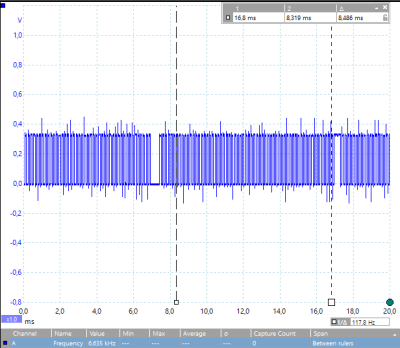
In [Kai]’s case, the computer was a Sharp Pocket Computer system, and in his post there’s a lot of detail that’s specific to that particular system. If that’s applicable to you, go read up. In particular, you’ll be glad to find that the Pocket-Tools is a software suite that will encode and decode files between the Sharp binary formats and audio. Along the way, we found similar tools for Casio pocket computers too.

For a more general-purpose approach, like if you’re trying to dump and load data from a more standard computer that uses 1200/2400 Hz FSK encoding, this Python library may be useful, or you can implement the Goerzel algorithm yourself on your platform of choice. If you’ve got a particular binary format in mind, though, you’ll have to do the grunt work yourself.

Anyone out there still using these audio data encodings? We know that ham radio’s APRS system runs on two tones. What else? Why and when would you ever transfer data this way these days?

via the Adafruit blog!

Audio Out Over UART

There’s a reason that the bog-standard serial port will never die. It’s just so robust and simple. When you need a console that will absolutely work with minimal software and hardware, UART is the way to go. Because of this, UART hacks abound. Here’s a new one to us, and a challenge to our readers.

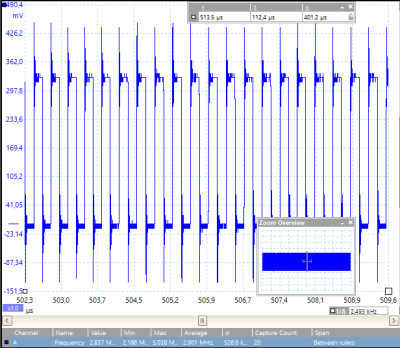
[Tiziano Bacocco] decided to use UART signals as a type of PWM to create audio. That’s right, he’s plugging the serial TX line straight into a speaker. This gives you eight possible PWM output voltage levels. The trick is using some Python code (using the awesome pyserial module) to down-quantize the audio data to fit these eight possible values and then push them out at the correct sampling rate. ffmpeg is used to pre-process the files.

Continue reading “Audio Out Over UART”

“World’s Brightest” Flashlight

With the crazy extremes of light flux density that are possible these days, we’re putting quotation marks around “world’s brightest”, but it’s abundantly clear that this flashlight build is very much too bright. No, really. Why would you want a flashlight so bright that you have to wear sunglasses to look at anything that’s within a twenty foot radius?

Because you can. [Mads Nielsen] combined 18, one hundred Watt LED units with some giant machined heatsinks, fans to cool those heatsinks, lenses, and other hardware to make a device that turns electrons into photons at an alarming rate. Each chip-on-board LED package requires 32 Volts, and they’re pairwise in series so it’s a 64 V system. A boot converter pushes up the twelve LiPo battery packs up to the required voltage.

Even with the relatively high voltage, this thing sucks in 27 A, so the power supply is distributed among four of these boost converters. All of this means thick cables and a rather hefty power switch. When you’re designing something ridiculous, all of these little details come out of the woodwork. We’ve included part one of the four-part build video here, because they’re full of great detail. [Mads] has a lot more interesting LED-related info on his YouTube channel. You can watch the showing-off video on your own time.

Continue reading ““World’s Brightest” Flashlight”

Listen To Meteors Live

When the big annual meteor showers come around, you can often find us driving up to a mountaintop to escape light pollution and watching the skies for a while. But what to do when it’s cloudy? Or when you’re just too lazy to leave your computer monitor? One solution is to listen to meteors online! (Yeah, it’s not the same.)

Meteors leave a trail of ionized gas in their wake. That’s what you see when you’re watching the “shooting stars”. Besides glowing, this gas also reflects radio waves, so you could in principle listen for reflections of terrestrial broadcasts that bounce off of the meteors’ tails. This is the basis of the meteor burst communication mode.

[Ciprian Sufitchi, N2YO] set up his system using nothing more than a cheap RTL-SDR dongle and a Yagi antenna, which he describes in his writeup (PDF) on meteor echoes. The trick is to find a strong signal broadcast from the earth that’s in the 40-70 MHz region where the atmosphere is most transparent so that you get a good signal.

This used to be easy, because analog TV stations would put out hundreds of kilowatts in these bands. Now, with the transition to digital TV, things are a lot quieter. But there are still a few hold-outs. If you’re in the eastern half of the USA, for instance, there’s a transmitter in Ontario, Canada that’s still broadcasting analog on channel 2. Simply point your antenna at Ontario, aim it up into the ionosphere, and you’re all set.

We’re interested in anyone in Europe knows of similar powerful emitters in these bands.

As you’d expect, we’ve covered meteor burst before, but the ease of installation provided by the SDR + Yagi solution is ridiculous. And speaking of ridiculous, how about communicating by bouncing signals off of passing airplanes? What will those ham radio folks think of next?

Tetris Everywhere: Character LCD Edition

Cheap character LCD displays are more versatile than we give them credit for. Most of the cheapies have a 5×8 character display, which looks blocky but legible when you have an appropriate font. Where it gets fun is that most of the LCD displays also let you upload custom characters.

Taking this to the extreme, [numeric] abused the user-defined characters to write a tiny game of Tetris that would run in the 10×16 frame that you get when you combine four characters together. It’s tiny, it’s monochrome, and doesn’t play the Troika theme (which may be a good thing), but it’s playable. Check out the video below.

Continue reading “Tetris Everywhere: Character LCD Edition”

Bistrobot: Make Me A Sandwich

Reading this article in the San Francisco Chronicle sounds very familiar if you’ve owned a hand-built robot of any kind. “Bistrobot” is a pretty sweet sandwich-making robot. It toasts bread on the fly and applies peanut butter, jelly, honey, apple butter, and/or a few other gloopy dispensable delicacies at the behest of human customers. Watch the video below and we guarantee that you’ll want to toss a couple bucks into it, even if you don’t like toasted PB&J sandwiches.

The video makes everything look peachy, like a 3D printer on a good day. Check out the jelly nozzle zig-zagging across the half-sandwich — it’s very familiar. Indeed the whole machine seems like something we could build. But as we all know, continuous duty has a way of finding the flaws in our designs. The Chronicle article is part triumph, and part tale of woe, with the builder being called in to repair the Bistrobot for the “zillionth” time.

Continue reading “Bistrobot: Make Me A Sandwich”

Reverse-Engineering DebugWire

Has this ever happened to you? You start out on a reverse-engineering project, start digging in, and then get stumped. Then you go looking on the Internet for help, and stumble across someone who’s already done exactly what you’re trying to do?

[Geekabit] wrote us with a version of this tale of woe. In his case, the protocol to be reversed was Atmel’s debugWire protocol for debugging on low-pin-count parts. There are a number of websites claiming it’s “secret” or whatever, but it actually looks like it’s just poorly documented. Anyway, [RikusW] seems to have captured all of the signals way back in 2011. Good job!

The best part of [geekabit]’s story is that he had created the Wikipedia page on debugWire himself to inspire collaboration on reverse-engineering the protocol, and someone linked in [RiskusW]’s work. When [geekabit] picked up the problem again a bit later, he did a bit of web research and found it solved — on the page that he started.

Maybe it’s not a tale of woe after all, but a tale of unintentional collaboration. Anyway, it serves as a reminder that if you’re interested in the destination more than the voyage of discovery, it never hurts to do your research beforehand. And now we all know about the low-level details of the debugWire protocol. Anyone written up a driver yet?

Thanks [geekabit] for the tip and the story! Image from ATmega32-AVR, which explains nicely how to use the Dragon in debugWire mode.