Automatic Pneumatic Harmonica

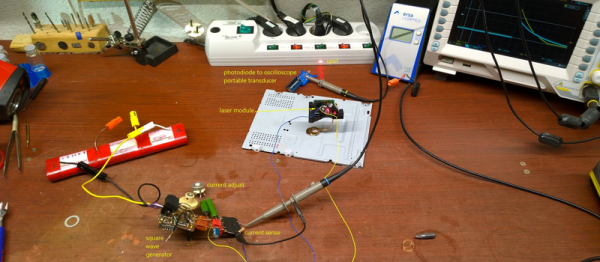
A wise man once said “If all you’ve got is a cute desktop compressor and some solenoid valves, everything looks like a robotic harmonica.” Or maybe we’re paraphrasing. Regardless, [Fabien-Chouteau] built a pneumatic, automatic harmonica music machine.

It’s actually an offshoot of his other project, a high-speed candy sorting machine. There, he’s trying to outdo the more common color-sensor-and-servo style contraptions by using computer vision for the color detection and a number of compressed-air jets to blow the candy off of a conveyor belt into the proper bins.

Continue reading “Automatic Pneumatic Harmonica”

Makerville Knit: Industrial-Strength WiFi Breakout

If you need an industrial-strength IoT product, you need an industrial-strength WiFi chipset. For our own household hacks, we’re totally happy with the ESP8266 chip. But if you need to connect to the big, scary Internet you’ll probably want state-of-the-art encryption. In particular, Amazon insists on TLS 1.2 for their Web Services (AWS), and we don’t know how to get that working on the ESP.

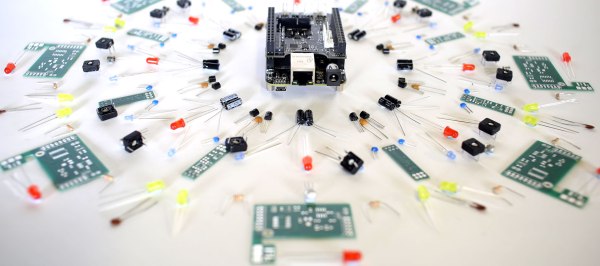
[Anuj] designed a breakout board called the knit which includes a Marvell MW300 WiFi SOC. This chip has an onboard ARM Cortex M4F running at 200 MHz, which means you’ve got a lot of everything to play with: flash memory, RAM, a floating-point unit, you name it. And Marvell’s got an SDK for using AWS that includes things like an operating system and peripheral support and other niceties. TLS 1.2 is included.

Cd_tjKoWwAApnU9_thumbnailBest of all, a MW300 breakout is reasonably affordable (though more expensive than the mass-produced ESP8266 modules, naturally) and it’s an entirely open design. [Anuj] also seems to be setting up for a production run, if you don’t feel like making it yourself.

The MW300 is in all sorts of commercial IoT designs, and it’s a battle-tested go-to for interfacing with “the cloud” securely. The only hobbyist-friendly board that’s similar is the Adafruit WICED WiFi Feather, but it’s more expensive, less powerful, and out of stock at the moment, which just shows the demand for something like this.

Of course, if you need more integrated peripherals, you could just hack up a “Hello Barbie” toy which has the same chip as well as sweet audio codecs and a nice fat flash ROM.

We think it’s neat that [Anuj] would make and test a breakout for this powerful little WiFi SOC. We don’t need one for our projects right now — we’re running in entirely insecure mode — but it’s good to know what your options are. (We’re also looking into esp-open-rtos for the ESP8266 — we know they’ve been working on TLS 1.2 encryption, but we don’t know what their status is at the moment. Anyone?)

Hacking Flappy Bird By Playing Mario

This is a hacking and gaming tour de force! [Seth Bling] executed a code injection hack in Super Mario World (SMW) that not only glitches the game, but re-programs it to play a stripped-down version of “Flappy Bird”. And he did this not with a set of JTAG probes, but by using the game’s own controller.

There are apparently a bunch of people working on hacking Super Mario World from within the game, and a number of these hacks use modified controllers to carry out the sequence of codes. The craziest thing about our hack here is that [Seth] did this entirely by hand. The complete notes are available here, but we’ll summarize the procedure for you. Or you can go watch the video below. It’s really incredible.

Continue reading “Hacking Flappy Bird By Playing Mario”

Paper Enigma Machine

It was high-tech encryption for an important period of time in the mid-1940s, so perhaps you can forgive us our obsession with the Enigma machine. But did you know that you can make your very own Enigma just using some cut out paper strips and a tube to wrap them around? Yeah, you probably did. But this one is historically accurate and looks good too!

If you just want to understand how the machine worked, having a bunch of paper rolls in your hands is a very intuitive approach. Alan Turing explained the way it worked with paper models too, so there’s no shame there. With this model, you can either make the simple version with fixed rotor codes, or cut out some extra slip rings and go all out.

What is it with Hackaday and the Enigma machine? Just last month, we covered two separate Enigma builds: one with a beautiful set of buttons and patch cables, and another in convenient wrist-watch format. In fact, one of our first posts was on a paper Enigma machine, but the links are sadly lost to bitrot. We figure it’s cool to repeat ourselves once every eleven years. (And this one’s in color!)

Hack Your Multimeter

A good multimeter (or a few of them) is an essential part of anyone’s electronics workbench. The only thing more useful than a multimeter is a logging multimeter that can take recordings over time. And the only thing more useful than that is one that can transfer that data back to your computer for analysis. But fancy meters often cost a bit of money.

[Kerry Wong] decided to take matters into his own hands and hack a serial-out port into his relatively inexpensive multimeter, giving him the ability to record anything the meter can measure roughly three times a second until he runs out of hard-drive space.

Our hack begins with the datasheet for the meter’s microprocessor. [Kerry] then tacked on a few wires, and dumped, modified, and reflashed the calibration and configuration EEPROM. With a single bit-flip in the EEPROM, he enabled serial output. With a few more, he made the backlight stay on longer, disabled auto power-off, and basically customized the meter the way he wanted it.

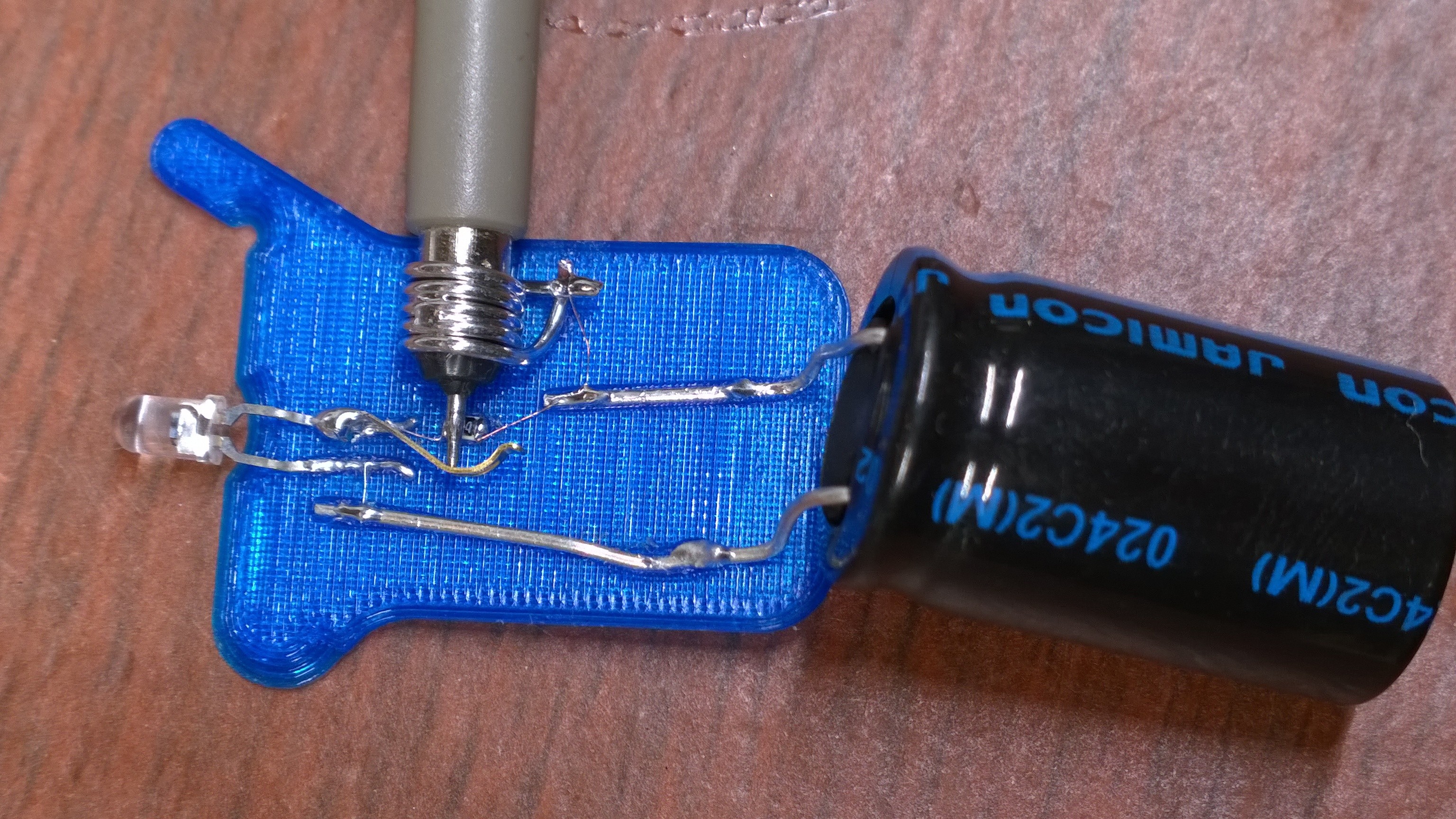
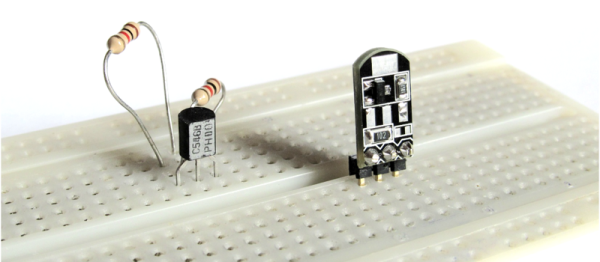
IRLink-400x202Getting the data out of the meter is the big coup, however. Not wanting to risk the computer that he’s connecting to the meter, [Kerry] knew that he needed optoisolation between the meter and the USART. He went with a beautifully minimal solution — simply wiring the meter’s serial output to an IR LED. Usually, transmitting data over IR is done by modulating the signal with a 38 kHz carrier for noise immunity. [Kerry] was going to put the receiver right up against the transmitter anyway, so he went with a plain IR photodiode on the PC side. sigrok takes care of the datalogging and display.

Adding more automation to our measurement bench has been on our to-do list for a long time now, and [Kerry]’s hack provides an inexpensive and fun way to get started. It’s the perfect companion to a computer-controlled supply. (Or two!.)

Office Supplies Hexapod Tramples Your Excuses

We all have reasons why we’re not building cool robots. “I don’t have a lasercutter.” “I don’t have a 3D printer.” [JAC_101]’s hexapod robot dances all over your excuses with its tongue-depressor body and pencil-eraser feet!

Some folks like to agonize over designs, optimizing this and tweaking that on the blackboard. Other folks just build stuff and see what works. If you’re in the mood for some of the latter, check out some of the techniques at work here. Tongue depressors make a simple frame, and servos are lashed on with zip ties in place of fancy servo mounts (or hot glue). Photoresistors are soldered directly to their load resistors, making a simple light sensor. It’s all very accessible and brutally minimalistic, but it seems to walk. (Check out the video, below.)

Arduino code is available for you to play with, naturally.

Continue reading “Office Supplies Hexapod Tramples Your Excuses”

Pong On Industrial Controllers

Programmable Logic Controllers (PLCs) are a staple of control automation. Sometime in the 60s or 70s, they replaced a box full of relays to implement the kind of “if-this-then-that” logic that turns thermostats on or directs machinery. Sometime in the 90s or 2000s, some more computing power was added, giving us the Programmable Automation Controller (PAC). And if reading Hackaday has taught us anything, it’s that if you give people a little bit of computing power, they’ll implement Pong (or Snake or Doom!).

We were sent a link where [AbsolutelyAutomation] does just that: implements a remotely-playable Pong on a bit of industrial control. Even if you don’t have a PAC sitting around, the details are interesting.

The first step is to get graphics out of the thing. The PAC in question is already able to speak Ethernet, so it’s “just” a matter of sending the right packets. Perhaps the simplest way to go is to implement the remote framebuffer (RFB) protocol from VNC, and then use a VNC client on the PC to send the graphics. (As they point out [CNLohr] has done this quite nicely on the ESP8266 (YouTube) as well.) So an RFB library was written. [AbsolutelyAutomation] points out that this could be used to make boring things like user-friendly configuration and monitoring screens. (Yawn!)

Graphics done, it’s easy to add a Pong layer over the top, using the flowchart-based programming interface that makes homage to the PLC/PAC’s usual function as an industrial controller. (Oddly enough, it seems to compile to a Forth dialect to run on the PAC.) And then you’re playing. There’s code and a (PDF) writeup available if you want more info. If you don’t have a PAC to run it on, the manufacturers have a simulator for you.

We’ve never worked with a PLC/PAC, but we know the hacker spirit when we see it. And making something that’s usually located in the boiler room play video games is aces in our book. This sparks a memory of an industrial control hacking room at DEF CON a few years back. Maybe this is the inspiration needed to spend some time in that venue this year.

We know we’ve got controls engineers out there. What’s the strangest thing you’ve programmed into a PLC?