Books You Should Read: Bil Herd’s Back Into The Storm

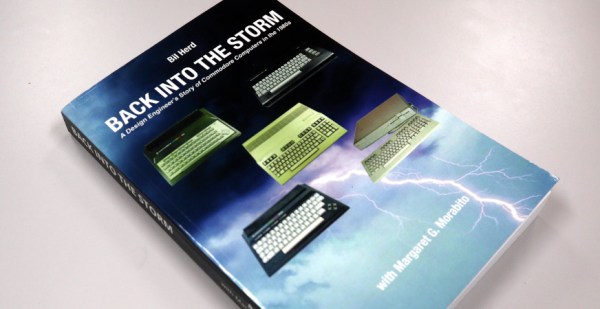
It’s a morning ritual that we guess most of you share with us; before whatever work a new day will bring to sit down with a coffee and catch up with the tech news of the moment on Hackaday and other sites. Most of us don’t do many exciting things in our everyday lives, so reading about the coolest projects and the most fascinating new developments provides us with interest and motivation. Imagine just for a moment then that by a twist of fate you found yourself taking a job at the epicentre of the tech that is changing the world,  producing the objects of desire and pushing the boundaries, the place you’d give anything to work at.

This is the premise behind our Hackaday colleague Bil Herd’s autobiographical chronicle of time in the mid 1980s during which he worked at Commodore, maker of some of the most iconic home computers of the day. We follow him through the three years from 1983 to 1986 as hardware lead on the “TED” series of computers including the Commodore 16 and Plus/4, and then the Commodore 128, a dual-processor powerhouse which was arguably the last of the big-selling 8-bit home computers.

It’s an intertwined set of narratives peppered with personal anecdotes; of the slightly crazy high-pressure world of consumer videogames and computing, the fine details of designing a range of 8-bit machines, and a fascinating insight into how the culture at Commodore changed in the period following the departure of its founder Jack Tramiel.

Continue reading “Books You Should Read: Bil Herd’s Back Into The Storm”
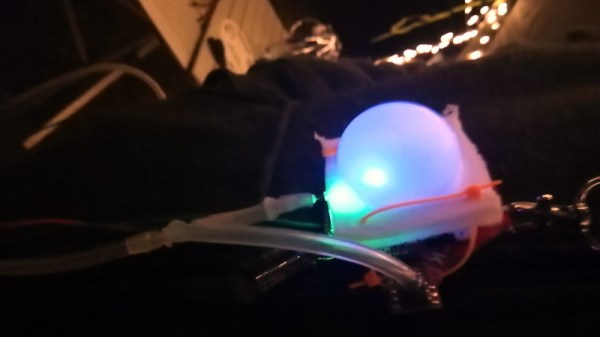
The BornHack Badge Gets A Bubble

In a year of semiconductor shortages it’s a difficult task to deliver an electronic conference badge, so this year’s BornHack camp in Denmark had an SAO prototyping board as its badge. Some people made blinkies with theirs, but that wasn’t enough for [Inne] who had to go a step further with a light-up pneumatic bubble badge. It’s based upon a previous project producing silicone inflatable bubbles, but in a portable badge form.

On the front of the PCB is a multi-colour LED for illumination, while on the back is a small microcontroller board, a pressure sensor, and a motor driver circuit. A small air pump and battery sits in a pocket connected by a cable and a flexible tube, allowing the bubble to inflate at will. An interesting detail was the use of a cut-down hypodermic needle to carry the air through the silicone wall of the bubble. When seen up close at the camp it was an unnervingly organic effect, if there’s an uncanny valley of badges this is it.

We don’t see much in the way of soft robotics on these pages, so this happy crossover with BadgeLife is a special treat. It’s not entirely alone here though.

ARM’s Chinese Venture Goes Sour

We’re used by now to many of the more capable microcontrollers and systems-on-chip that we use having an ARM core at their heart. From its relatively humble beginings in a 1980s British home computer, the RISC processor architecture from Cambridge has transformed itself into the go-to power-sipping yet powerful core for manufacturers far and wide. This has been the result of astute business decisions over decades, with ARM’s transformation into a fabless vendor of cores as IP at its heart. Recent news suggests that perhaps the astuteness has been in short supply of late though, as it’s reported that ARM’s Chinese subsidiary has gone rogue and detatched from the mothership taking the IP with it.

It seems that the CEO of the Chinese company managed to retain legal power when sacked by the parent company over questionable ties with another of his ventures, and has thus been able to declare it independent of its now-former parent. It still has the ARM IP up to the moment of detatchment and claims to be developing its own new products, but it seems likely that it won’t receive any new ARM IP.

What will be the effect of this at our level? Perhaps we have already seen it, as more Chinese chips such as the cheaper STM32 clones are likely to get low-end ARM cores as a result. It seems likely that newer ARM IP will remain for now in more expensive non-Chinese chip families, but in the middle of a semiconductor shortage it’s likely that we wouldn’t notice anyway. Where it will have a lasting effect is in future Chinese joint ventures by non-Chinese chip companies. Seeing ARM’s then-owner Softbank getting their fingers burned in such a way is likely to provide a disincentive to other companies considering a similar course. Whether ARM will manage to resolve the impasse remains to be seen, but it can hardly be a help to the rocky progress of their Nvidia merger.

Building A Hundred-Year-Old Radio Transmitter

Our Hackaday team is spread across the world, but remains in easy contact through the magic of the Internet. A number of us hold amateur radio callsigns, so could with a bit of effort and expenditure do the same over the airwaves. A hundred years ago this would have seemed barely conceivable as amateurs were restricted to the then-considered-unusable HF frequencies.

Thus it was that in December 1921 a group of American radio amateurs gathered in a field in Greenwich Connecticut in an attempt to span the Atlantic. Their 1.3 MHz transmitter using the callsign 1BCG seems quaintly low-frequency a hundred years later, but their achievement of securing reception in Ardrossan, Scotland, proved that intercontinental communication on higher frequencies was a practical proposition. A century later a group from the Antique Wireless Association are bringing a replica transmitter to life to recreate the event.

A free-running oscillator is today rarely seen in a radio transmitter, but at the time their single-tube Colpitts oscillator using a UV-204 transmitting tube would have been considered a stable source. That fed a 1KW power amplifier using three more UV-204s in parallel, which in turn fed a Marconi-style T antenna design with an earth counterpoise of multiple radial wires. The replica was originally built for an event in 1996, and substitutes the similar 204A tube for the now unobtainable UV-204. Even then, hundred-year-old tubes are hard to find in 2021, so they could only muster a single working example for the PA.

All in all it’s a very interesting project, and one of which we hope we’ll hear more as the anniversary approaches. If we can get the transmission details we’ll share them with you, and let’s see whether the same distances can be traversed with the more noisy conditions here in 2021.

To demonstrate how advanced this transmitter was for 1921, take a look at the Alexanderson alternator, its mechanical contemporary.

Reporting From BornHack 2021: Hacker Camps Making It Through The Pandemic

In a normal summer we would be spoiled for choice here in Europe when it came to our community’s events, with one big camp and a host of smaller ones near and far. Only the most hardcore of travelers manage to make it to all of them, but it’s usually possible to take in at least one or two over the season. But of course, this isn’t a normal summer. Many of us may now be vaccinated against COVID-19, but we remain in the grip of a global pandemic. The massive Dutch MCH camp was postponed until 2022, and most of the smaller camps have fallen by the wayside due to uncertainty. But one hacker camp carried on.

BornHack in Denmark was the world’s only in-person summer hacker event of 2020, and on its return last week made it the only such event in Europe for 2021. Having secured a ticket earlier in the year when they went on sale, I navigated the tricky world of cross-border European travel in a pandemic to make my way to the Hylkedam scout camp on the Danish isle of Fyn for a week in the company of hackers from all over Northern Europe. BornHack had achieved the impossible again, and it was time to enjoy a much-needed week at a hacker camp.

Continue reading “Reporting From BornHack 2021: Hacker Camps Making It Through The Pandemic”

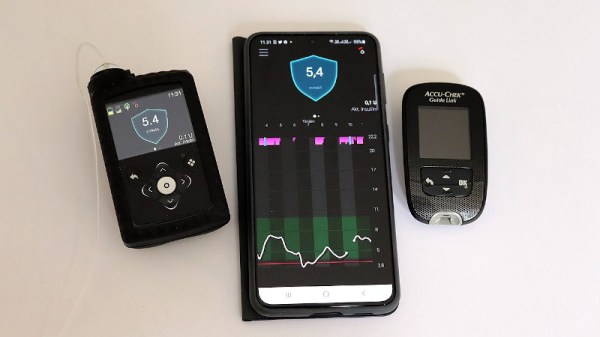
The Curious Case Of The Radio Amateur And The Insulin Pump

A substantial part of gaining and holding an amateur radio licence relates to the prevention of radio interference. In days past this meant interference to analogue television broadcasts, but with ever more complex devices becoming commonplace in homes it applies to much more. This has hit the news in Marion County Florida, where a radio amateur in a senior’s community has shut down his radio station after a potential link emerged between it and another resident’s insulin pump. There is a legal challenge ongoing that relates to the complex’s rules over transmitting antennas.

It’s obviously a serious occurrence for an insulin pump to be affected by anything, and it sounds as though the radio amateur concerned has done the right thing. But it’s clear that something has gone badly wrong in this case whether it’s due to the amateur radio transmissions or not, because for a manufacturer to produce a medical device so easily affected by RF fields should be of concern to everyone. We’d hope that the FCC might take an interest in this story and get to the bottom of it in an impartial manner, because whether it’s the radio amateur at fault, the insulin pump, or something else entirely, it presents a risk to anyone dependent upon such a device.

Perhaps this might also be a case for the ARRL, as we’ve reported before they have some form when it comes to radio investigations.

[Main image source: MailariX, CC-BY-SA 4.0]

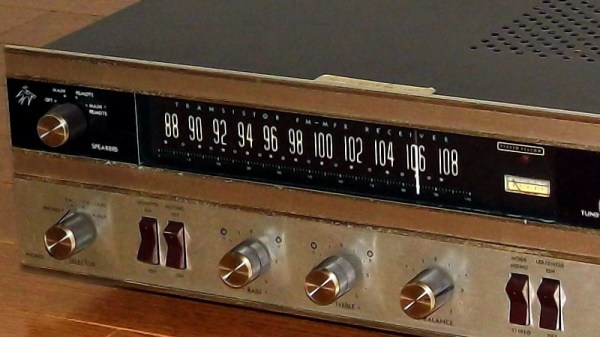
FM Radio, The Choice Of An Old Generation

Had the pandemic not upended many of this summer’s fun and games, many of my friends would have made a trip to the MCH hacker camp in the Netherlands earlier this month. I had an idea for a game for the event, a friend and I were going to secrete a set of those low-power FM transmitters as numbers stations around the camp for players to find and solve the numerical puzzles they would transmit. I even bought a few cheap FM transmitter modules from China for evaluation, and had some fun sending a chiptune Rick Astley across a housing estate in Northamptonshire.

To me as someone who grew up with FM radio and whose teen years played out to the sounds of BBC Radio 1 FM it made absolute sense to do a puzzle in this way, but it was my personal reminder of advancing years to find that some of my friends differed on the matter. Sure, they thought it was a great idea, but they gently reminded me that the kids don’t listen to any sort of conventional broadcast radio these days, instead they stream their music, so very few of them would have the means for listening to my numbers stations. Even for me it’s something I only use for BBC Radio 4 in the car, and to traverse the remainder of the FM dial is to hear a selection of easy listening, oldies, and classical music. It’s becoming an older person’s medium, and it’s inevitable that like AM before it, it will eventually wane.

There are two angles to this that might detain the casual hacker; first what it will mean from a broadcasting and radio spectrum perspective, and then how it is already influencing some of our projects.

Continue reading “FM Radio, The Choice Of An Old Generation”