Make A Set Of Headphones From Scratch

There are a variety of ways to enjoy your audio, of which headphones are one. Making a set of headphones is a straightforward enough project, but [madaeon] has taken the art to a new level by building the headphone drivers from scratch rather than using an off-the-shelf pair.

The result is a set of moving coil drivers with a construction technique involving using the semi-opaque thin window from an envelope as a diaphragm and as a former for the coil. Cyanoacrylate adhesive holds everything in place. The diaphragm is suspended across the mouth of a cardboard tube with the coil positioned above a magnet, resulting in the minimum moving mass necessary for as good a sound reproduction as possible. Judge for yourself, there’s a video that we’ve placed below the break.

The drivers are placed in a set of 3D-printed on-ear holders, and while they probably won’t match an expensive set of commercial headphones, we’d hazard a guess that they won’t have too bad quality. At the very least, it’s an interesting design to base further experimentation on.

Surprisingly few home made speaker or headphone drivers have made it onto these pages, probably because of the ubiquity of the ready-made article. An exception is this flexible PCB speaker, and of course we’ve also talked about home made electrostatic speakers. Continue reading “Make A Set Of Headphones From Scratch” →

AAA Powered LoRa Mailbox Sensor Goes The Distance

As more of the world’s communication moves into the electronic realm, a casualty has come in the physical mail. Where once each new day might have brought with it a bulging mailbox, today it’s not uncommon for days to pass with not even so much as a bill or a coupon book. For [Eivholt] this presents a problem: he doesn’t want to miss a parcel but most visits to the mailbox are futile. His solution is a LoRa-connected mailbox monitor that sips power from a pair of AAA batteries to the extent that so far it’s run for over two years on a single set.

At its heart is a single board, a Talk2 Whisper Node. This packs a low-power version of the ATmega328 microcontroller alongside a LoRa radio and an efficient power regulator allowing it to draw only 8.70 uA in standby mode, waking up only for extremely short periods to check for mail and report via LoRa to The Things Network. The sensor is simply a microswitch, selected after finding a reed switch problematic to install. Finally an SDR was used to debug the operation of the radio.

The write-up also provides an introduction to extreme low power projects, including some tips on measuring such tiny currents. Even if you have no interest in a mailbox, any tricks that can help maximize power efficiency are always worth taking a look at. Check out the video after the break to see this radio-equipped mailbox in action.

Continue reading “AAA Powered LoRa Mailbox Sensor Goes The Distance” →

Gravity-Defying Cosmetics Explained By Science!

There probably comes a point in every female technical journalist’s career at which she covers her first make-up story and wonders aloud whether this is what her life has come to. But this make-up story involves some physics, and follows a series of viral videos in the TikTok community in which specialist cosmetics vloggers were surprised to see lip gloss apparently levitating — defying gravity — from the ends of its applicators. This caught the attention of [Steve Mould], who followed up on his hunch that static electricity might be responsible. What follows in the video below the break are a variety of attempts to recreate and characterise the phenomenon.

The tried-and-trusted approach of rubbing feet on the carpet failing to cause any movement in the damp atmosphere of a British January, he’s off to try a Van de Graaff generator Even the hefty electrostatic charge from that failed to produce more than a tiny blip, but did at least give a suggestion that the effect might be electrostatic.

Finally he was able to replicate the beauty vloggers’ results using the FunFlyStick electrostatic toy, with satisfying threads of lip gloss heading off into the air. The FunFlyStick is an interesting device in its own right, being a Van de Graaff generator in toy form and capable of generating significant quantities of charge. The flying lip gloss is an interesting phenomenon, but speaks further about just how much electrostatic charge can accumulate on mundane objects in a dry climate. Those of in damper climes would do well to take note before we travel.

Continue reading “Gravity-Defying Cosmetics Explained By Science!” →

The Red Dwarf Talkie Toaster Made Real

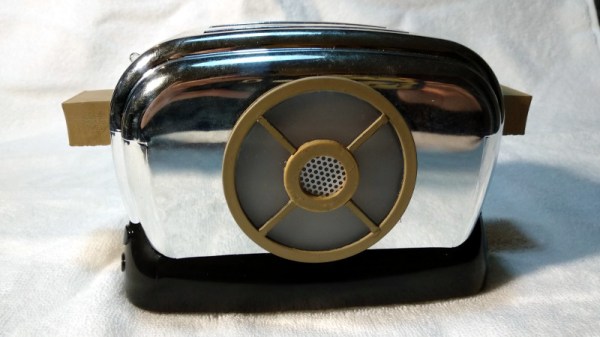
It’s cold outside, there’s no kind of atmosphere, you’re all alone, more or less. More or less meaning that you share the gigantic mining ship that is your home on the other side of the galaxy with an ineffectual android, a humanoid descended from your cat, a holographic representation of your dead colleague who’s a complete smeghead, and a really annoying sentient toaster that’s obsessed with bread products. If all this rings a bell, then maybe you’re familiar with the cult BBC TV series, Red Dwarf.  It’s a show that evidently [Bill Dudley] has spent too much time watching, because he’s created a really convincing replica of that talking toaster.

The base toaster is a toy appliance with a little clockwork ejector for toy toast, that comes with plenty of space inside and is easy to accessories for the classic Talkie Toaster look. Inside is an off-the-shelf MP3 player board and a home-made PCB which drives a set of LEDs behind the speaker grille in time with the audio. The result won’t make any toast, waffles, or even crumpets, but it will delight any Red Dwarf fans who might be passing, whether someone has smoked them a kipper or not.

Surprisingly this is not the first Talkie Toaster build we’ve seen. If they met, would they have a harmonious conversation about bagels?

Ultra-Rare Nintendo Play Station Prototype Hits Auction Block

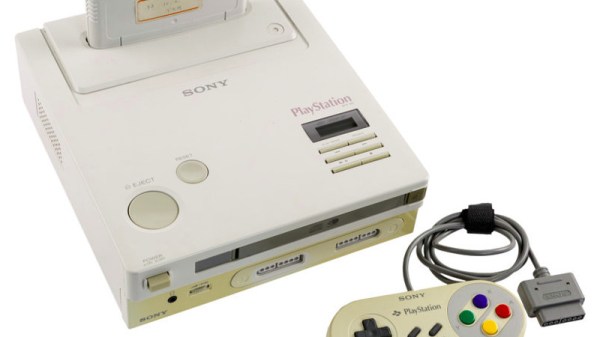
If you are interested in such things, you can buy a 1990s Sony Play Station via Heritage Auctions. We’re sure this will have caught your interest, after all it’s not every day you get the chance to catch such a machine. But before you call us out for seemingly reporting the news of an unremarkable sale featuring the runaway success story of 1990s gaming, take a look at the first sentence again. This is not a PlayStation, the ubiquitous grey console of the 1990s, but a Play Station, said as two words rather than one. This ill-fated collaboration between Sony and Nintendo was intended to be an SNES with a CD-ROM drive, but the project faltered and all that remained was the almost mythical tale of a few prototype consoles.

So far there has only been one of these devices that has surfaced, and this is the machine in the auction. So what seemed as though it might be a mundane console turns out to be one of the rarest machines ever created, a true Holy Grail of console collecting.

This machine has a known provenance, and has appeared on these pages before. In 2016 Ben Heck did a teardown to reveal the combination of Sony CD drive and SNES motherboard, and by 2017 he had it working with some homebrew games. There was no official software produced for this console, so it seems the lucky purchaser may have only homebrew games with which to try their console.

At the time of writing the auction is standing at $57,600, and we’d expect this to increase significantly. So you may not have the chance to own the Play Station, but with such a rare machine it’s always worth noting its appearances. It’s also worth remembering that there was more than one of them produced, in fact when your scribe was working in the same industry in the 1990s a senior colleague talked about having been shown one during dealings with Nintendo UK a few years earlier. The machine on sale today may be the only one we know to have survived, but it’s a fair possibility that there are others still gathering dust in long-forgotten archive boxes or collections of gaming hardware junk. Keep an eye out, you might just find your own rarest console ever produced!

Star Wars Themed Laser Badge: All That Is Missing Is The Pew Pew Sound Effect

In the quest to advance the art of the electronic badge, the boundaries of what is possible to manufacture in small quantities are continually tested. Full-colour PCBs, injection moulding, custom keyboards, and other wow factor techniques have all been tried, leading to some extremely impressive creations. With all this innovation then it’s sometimes easy to forget that clever design and a really good idea can produce an exceptional badge with far more mundane materials.

The 10th InCTF cybersecurity contest held at Amrita, Kerala, India, had a Star Wars themed badge designed by Team bi0s for the event. It takes the form of a Millennium Falcon-shaped PCB, with a NodeMCU ESP8266 board mounted on it, a shift register, small OLED display, and the usual array of buttons and LEDs. The fun doesn’t stop there though, because it also packs a light-dependent resistor and a laser pointer diode that forms part of one of its games. Power for this ensemble comes courtesy of a set of AA cells on its underside.

They took a novel approach to the badge’s firmware, with a range of different firmwares for different functions instead of all functions contained in one. These could be loaded through means of a web-based OTA updater. Aside from a firmware for serial exploits there was an Asteroids game, a Conway’s Game Of Life, and for us the star of the show: a Millennium Cannon laser-tag game using that laser. With this, attendees could “shoot” others’ LDRs, with three “hits” putting their opponent’s badge out of action for a couple of minutes.

Unusually this badge is a through-hole design as a soldering teaching aid, but its aesthetics do not suffer for that. We like its design and we especially like the laser game, we look forward to whatever next Team bi0s produce in the way of badges.

This isn’t the first badge packing a laser we’ve seen, at last year’s Def Con there was a laser synth badge. No laser tag battles though.

HackIt: Why Aren’t We Hacking On The LED Printer?

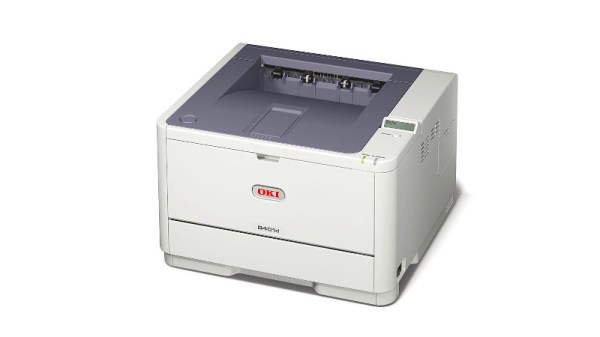
Strings of LEDs are a staple of the type of project we see here at Hackaday, with addressable devices such as the WS2812 in particular having changed beyond recognition what is possible on a reasonable budget. They’ve appeared in all kinds of projects, but are perhaps most memorable when used in imaging projects such as screen-like arrays or persistence-of-vision systems. There’s another addressable LED product that we haven’t seen here, which is quite a surprise considering that it can be found with relative ease in junk piles and has been on the market for decades. We’re talking about the LED printer, and the addressable LED product in question is a very high density array of LEDs the width of a page, designed to place an image of the page to be printed on the toner transfer drum.

Continue reading “HackIt: Why Aren’t We Hacking On The LED Printer?” →